
South Korea Rice Tender 2026 65,394 Tonnes Opportunity for India
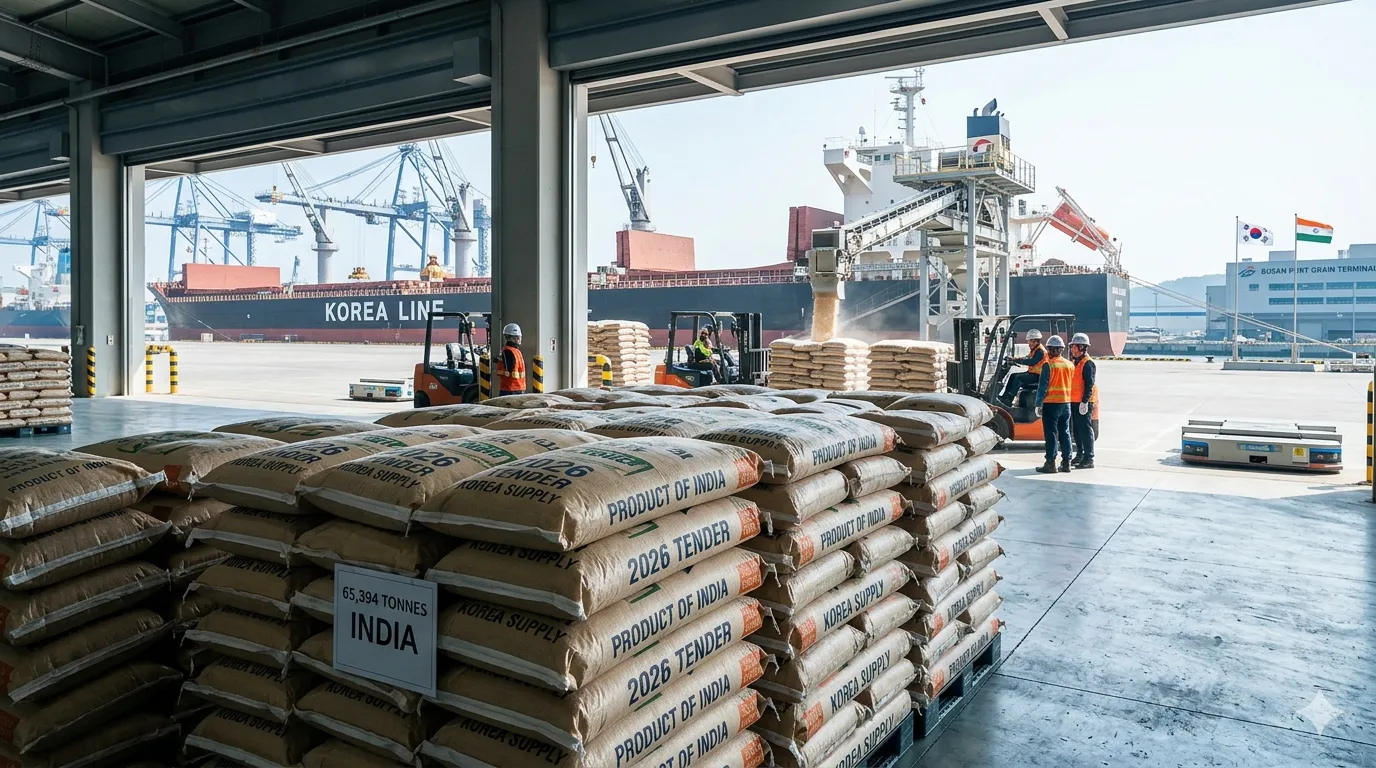
South Korea has launched a major South Korea rice tender, inviting international suppliers to bid for 65,394 tonnes of rice. The tender, issued by the AgroFisheries and Food Trade Corporation, requires bids to be submitted by April 21, 2026, with shipments scheduled in phases from June to December. The tender primarily seeks non-glutinous brown long grain and medium grain rice, and all samples must undergo quality analysis before final approval.
A Significant Opportunity for India’s Rice Exports
This South Korea rice tender presents a strategic opportunity for India, the world’s largest rice exporter. Indian rice, including basmati, non-basmati, and brown rice, is known for its high global quality. Successfully participating in this tender can help India increase not just export volumes but also the value of rice exports, especially in premium markets like South Korea.
India has expanded into several new international markets over the past few years. Including South Korea in this growing list can enhance the country’s global market share, particularly for high-quality rice varieties.
Competition and India’s Advantage
Global rice trade is highly competitive. Countries such as Thailand, Vietnam, and Pakistan are also eyeing this tender. India’s competitive edge lies in its variety of rice, which includes long grain, medium grain, and brown rice. By ensuring quality certification, timely shipment, and competitive pricing, Indian exporters can secure a significant portion of the tender.
A leading rice trader noted, “South Korea demands strict quality standards, but it also pays a premium price for the right product.” This highlights the importance of value-added rice exports over raw exports, encouraging Indian suppliers to enhance milling, processing, and packaging capabilities.
Why This Tender Matters Globally
The South Korea rice tender is not just a procurement opportunity; it signals a shift among premium importers toward diversified sourcing. As countries seek multiple sources for high-quality rice, India can leverage its strong export infrastructure to expand into Japan, Korea, and Europe.
Participation in this tender aligns with the broader strategy of moving from raw rice exports to value-added rice products, which has been a growing trend in international markets. By upgrading supply chains, Indian exporters can meet premium market demands, increase margins, and secure long-term trade relationships.
Conclusion: India Poised to Gain from South Korea Rice Tender
The South Korea rice tender represents a critical opportunity for India to strengthen its global presence in premium rice markets. By focusing on quality, timely shipments, and competitive pricing, India can not only meet the tender requirements but also enhance its position as a leading global rice exporter. This move could pave the way for greater market diversification and higher value in international rice trade.