
Rice Exports Under Pressure: Global Demand Slows as Prices Fall
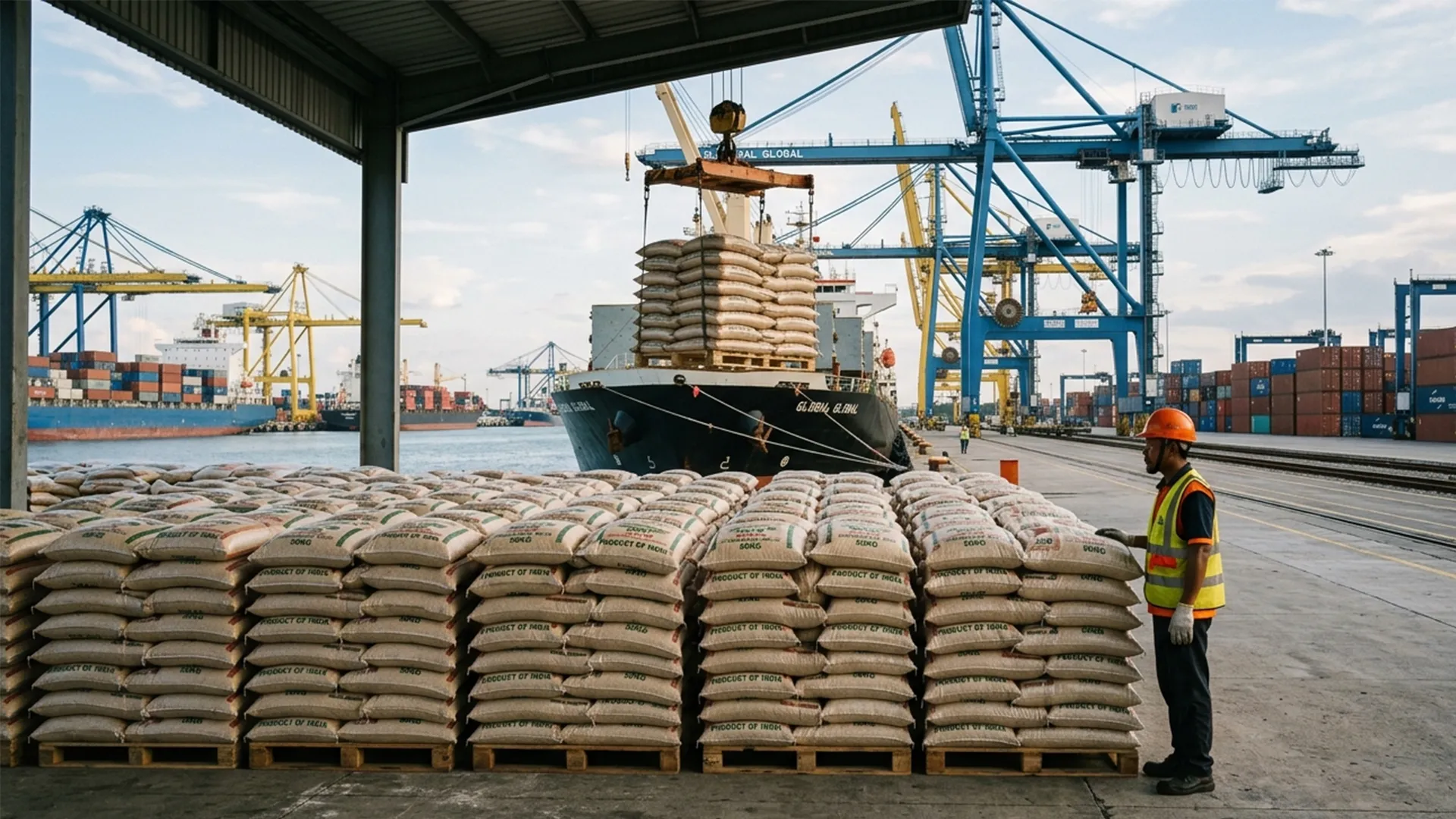
Rice Exports Under Pressure Global Demand Slows as Prices Fall
Global rice exports are witnessing a noticeable slowdown as prices soften and demand patterns shift across major importing regions. India, the world’s largest rice exporter, is experiencing both price corrections and declining earnings, raising concerns across the global rice sector and rice trade ecosystem.
The latest data shows a fall in basmati and non-basmati rice prices, driven not by weak production but by weakening global demand, geopolitical disruptions, and policy shifts. As a result, rice exports from India are under pressure even after record production levels.
West Asia Crisis and Supply Chain Shock in Rice Exports
One of the biggest disruptions has come from West Asia. The conflict around the Hormuz Strait has severely impacted logistics, insurance costs, and payment cycles. This has directly affected rice exports to Iran, one of the largest buyers of Indian basmati rice, along with UAE and Saudi Arabia.
Trade disruptions have led to delayed contracts and cancellations, causing uncertainty in shipments. This has contributed significantly to falling export earnings and reduced buyer confidence in rice exports by country dynamics, where India once held a dominant position.
Global Oversupply and Falling Prices
Another major factor is global oversupply. Countries like Vietnam, Thailand, Pakistan, and China have reported strong harvests, pushing global rice production to record levels. This surplus has created downward pressure on prices across international markets.
In the broader agricultural sector, high inventories and weak demand growth have intensified competition. As a result, rice exports have become more price-sensitive, with buyers negotiating aggressively or switching suppliers.
Africa’s Structural Shift Away from India
A major long-term challenge is emerging in West Africa, traditionally a strong market for India’s non-basmati rice. Countries such as Nigeria, Ghana, and Côte d’Ivoire are now diversifying imports and boosting local production.
This shift has significantly impacted rice exports to West Africa, as Vietnam and Thailand gain market share. Nigeria’s rising domestic yield improvements have also reduced dependence on imports, reshaping global supply chains in the rice trade ecosystem.
Policy Instability and Loss of Buyer Trust
India’s export policy volatility has also played a critical role. Sudden bans and duty changes on non-basmati rice exports in recent years disrupted long-term contracts. These policy shifts created uncertainty among importers, especially in Africa.
Such unpredictability has weakened India’s image in the India rice exports market segment, pushing buyers to diversify suppliers. Countries that once depended heavily on India are now building strategic reserves and strengthening domestic production.
Impact on Farmers and Domestic Market
The impact of falling global prices is now visible at the farm level. Lower export demand is pushing mandi prices closer to MSP levels, particularly for farmers in Punjab, Haryana, Uttar Pradesh, and southern states.
In the rice exports by country competition, India’s farmers are indirectly facing income pressure due to global market shifts. This also increases procurement burden on government agencies managing buffer stocks.
Outlook: Diversification and Value Addition
Experts suggest that India must diversify export destinations and reduce dependence on a few regions. Expanding into Japan, Southeast Asia, and Latin America can stabilize demand.
Value addition is also crucial. Moving from raw exports to processed rice products like parboiled rice, rice flour, and rice bran oil can improve margins. Strengthening branding in premium segments will help stabilize long-term rice exports from India.
At the same time, stable policy frameworks are essential to rebuild trust in global markets. Predictable export rules will help restore confidence in rice trade partnerships.
Conclusion
The current decline in rice exports is not just a price correction—it reflects deeper structural changes in global demand, policy trust, and trade diversification.
While India remains a dominant player in the global rice sector, sustaining leadership will require consistency, innovation, and stronger engagement with emerging markets. Without these changes, competition in global rice exports will continue to intensify.