
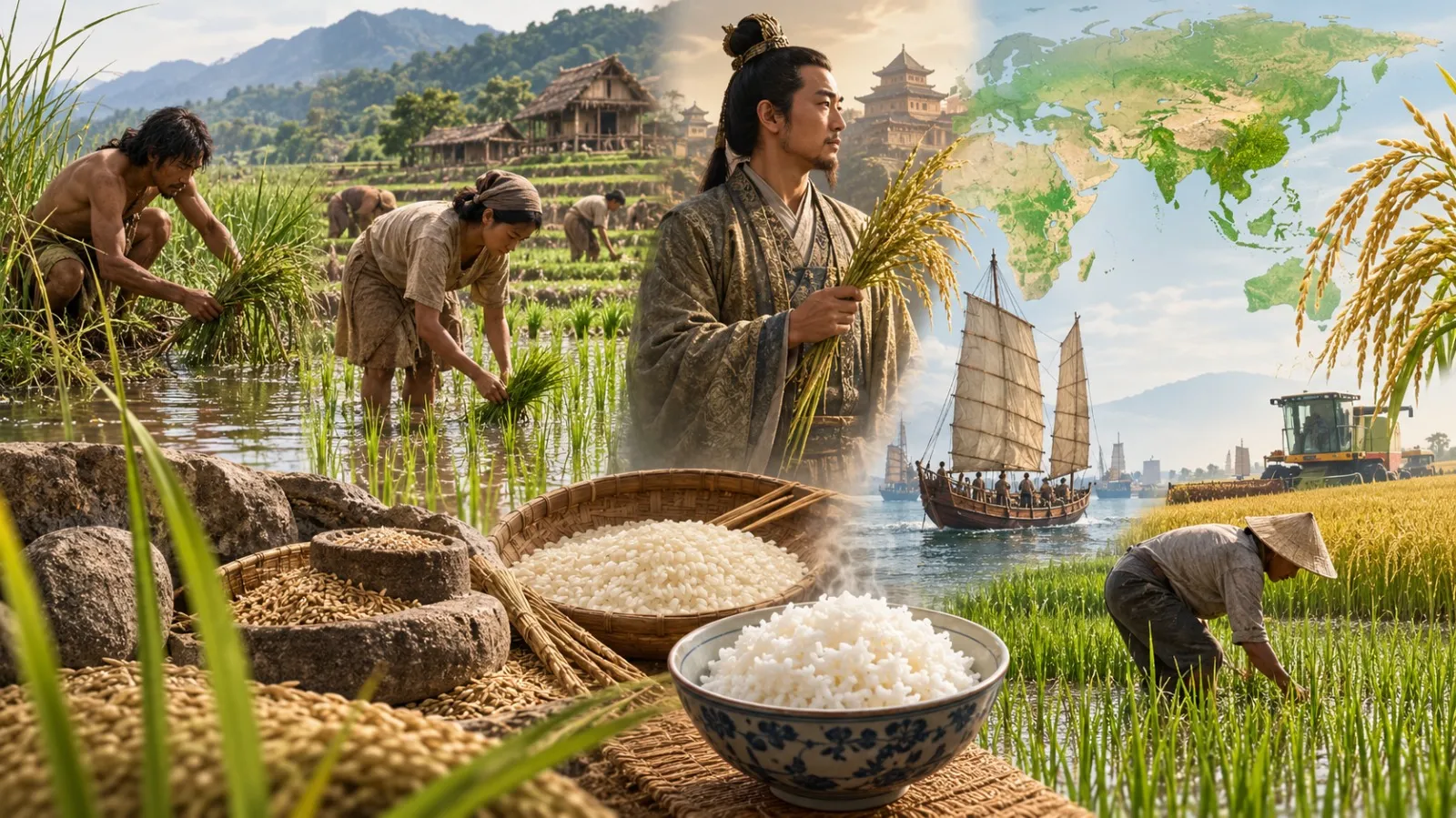
History of Rice How One Grain Became World's Most Important Food
For thousands of years, rice has been more than just another staple crop. It has sustained civilisations, shaped cultural customs, and provided the basis for global trade. Today, rice remains a fundamental crop, as more than half of the world’s population relies on it as their main source of nutrition. This is without a doubt one of the most critical agricultural goods in human history.
From Asia’s fertile lands to the supermarket shelves, this is the history of rice.
The Ancient Origins of Rice
It is hard to say precisely when rice was first cultivated, as there is no official record. However, it is believed that ten thousand years ago, people living in present-day China were the first to domesticate wild rice. At the same time, on the Indian subcontinent, ancient farmers also experimented with growing rice.
The achievements of these early farmers allowed rice to become one of the most prolific crops on the planet.
The Spread of Rice Cultivation to Other Parts of Asia
Rice cultivation rapidly expanded beyond its place of origin as farmers across Asia adopted new growing methods. Traders and travellers helped spread advanced farming knowledge and improved rice varieties, transforming agriculture in India, Thailand, Vietnam, Myanmar, Cambodia, Indonesia, Japan, and the Philippines. Rice cultivated across the mountainous landscapes has long been the backbone of livelihoods for farming communities. Additionally, farmers developed new irrigation methods that are still used nowadays.
Today, Asia remains the centre of the world’s rice production and consumption.
The Spread of Rice to Other Continents
Beyond Asia, rice was first brought to Middle Eastern markets and European ports by ancient traders. Later, during the Age of Exploration, rice was exported to Africa and America by both the Portuguese and the Spanish. Moreover, the enslaved labourers from Africa played a crucial role in rice cultivation in North America. They introduced their knowledge of rice growing into slave colonies in South Carolina and Georgia. Thus, rice became a valuable export product there.
Nowadays, rice is an essential part of the diet for millions of people. It has come a long way from domestication in Asia to becoming a global crop of great economic importance.
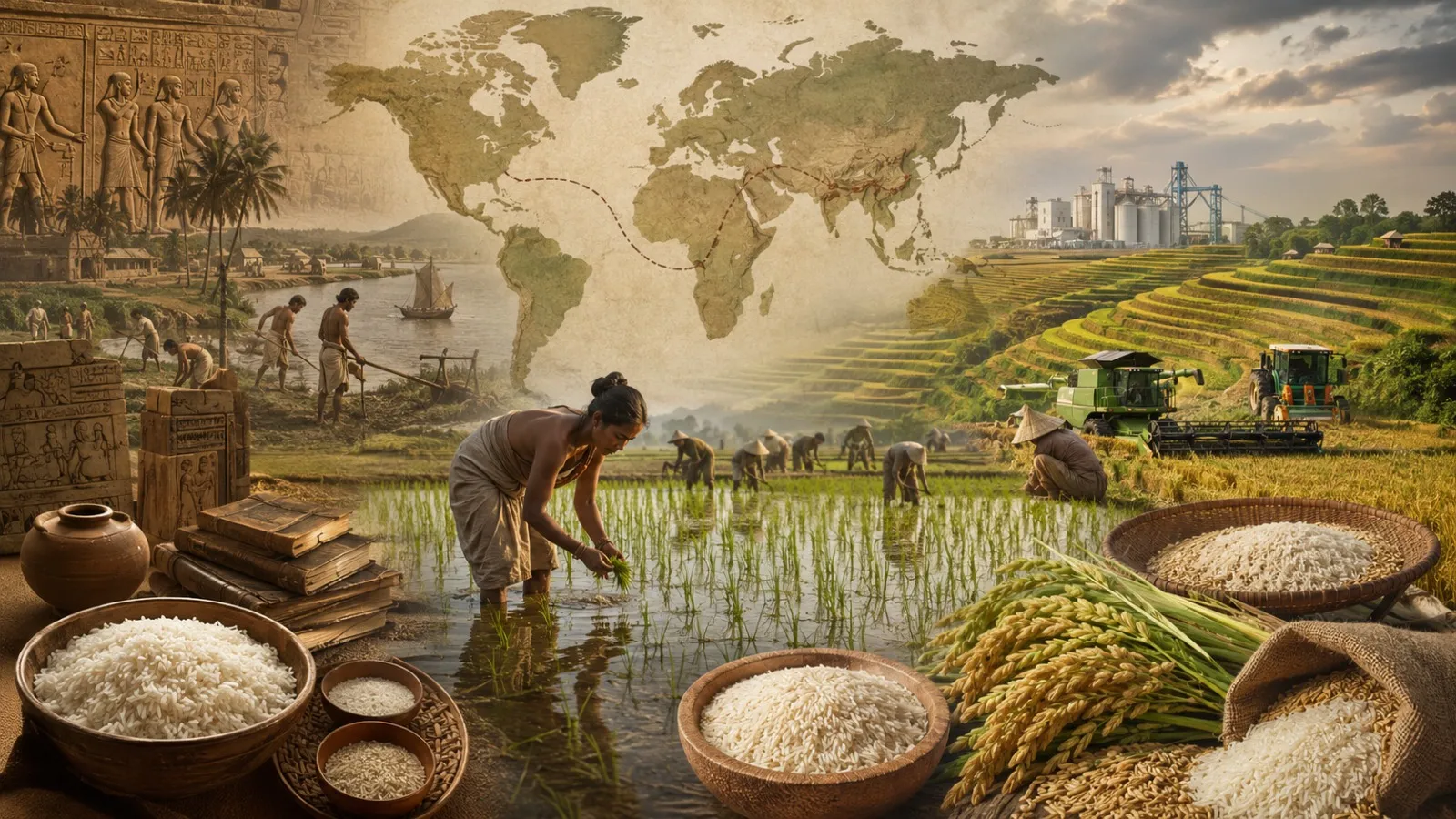
The Cultural Significance of Rice
No other crop holds so much cultural and symbolic significance as rice. In Indian culture and mythology, rice is associated with prosperity, fertility, riches, and good harvests. Rice holds deep cultural and spiritual significance, serving as a key element in India’s religious ceremonies and traditional rituals.
For instance, it is used to feed newborn babies during special ceremonies. It is also common in Asian countries to throw rice during wedding celebrations or at least to have it present during the ceremony. The Japanese people honour the bountiful harvest with special rituals and festivals. Meanwhile, the government of Thailand hosts the Royal Ploughing Ceremony. For many Asian cultures, rice is a symbol of life and abundance, as well as a token of gratitude for a good harvest.
Factors Contributing to the Popularity of Rice Worldwide
There are several reasons why rice became one of the most critical food staples in history. Firstly, this crop was relatively easy to grow in different climates and had a wide range of adaptations. Secondly, farmers domesticated numerous varieties of rice, such as Basmati, Jasmine, sticky, Arborio, and many others. Some of them are more suitable for specific cuisines, while others have adapted to growing in particular climatic conditions.
Other factors contributing to rice’s popularity are its affordability, nutritional benefits, ease of preparation, and high yield. For these reasons, rice has become one of the most consumed foods in the world.
Rice: A Vital Source of Food for Millions of People
Today, rice is the primary source of food for more than 3.5 billion people on the planet. In developing countries, it plays the most significant role in terms of calories per person. Furthermore, rice farming directly impacts the livelihood of millions of people, as it is a major agricultural crop in many Third-world countries.
The most prominent rice-producing countries are China, India, Bangladesh, Indonesia, Vietnam, Thailand, Pakistan, and many others. Notably, India has become the world’s largest exporter of rice. This country exports both basmati and non-basmati rice to other continents, including Asia, Africa, Europe, and the Middle East. Thus, it plays a crucial role in satisfying the growing demand for rice.