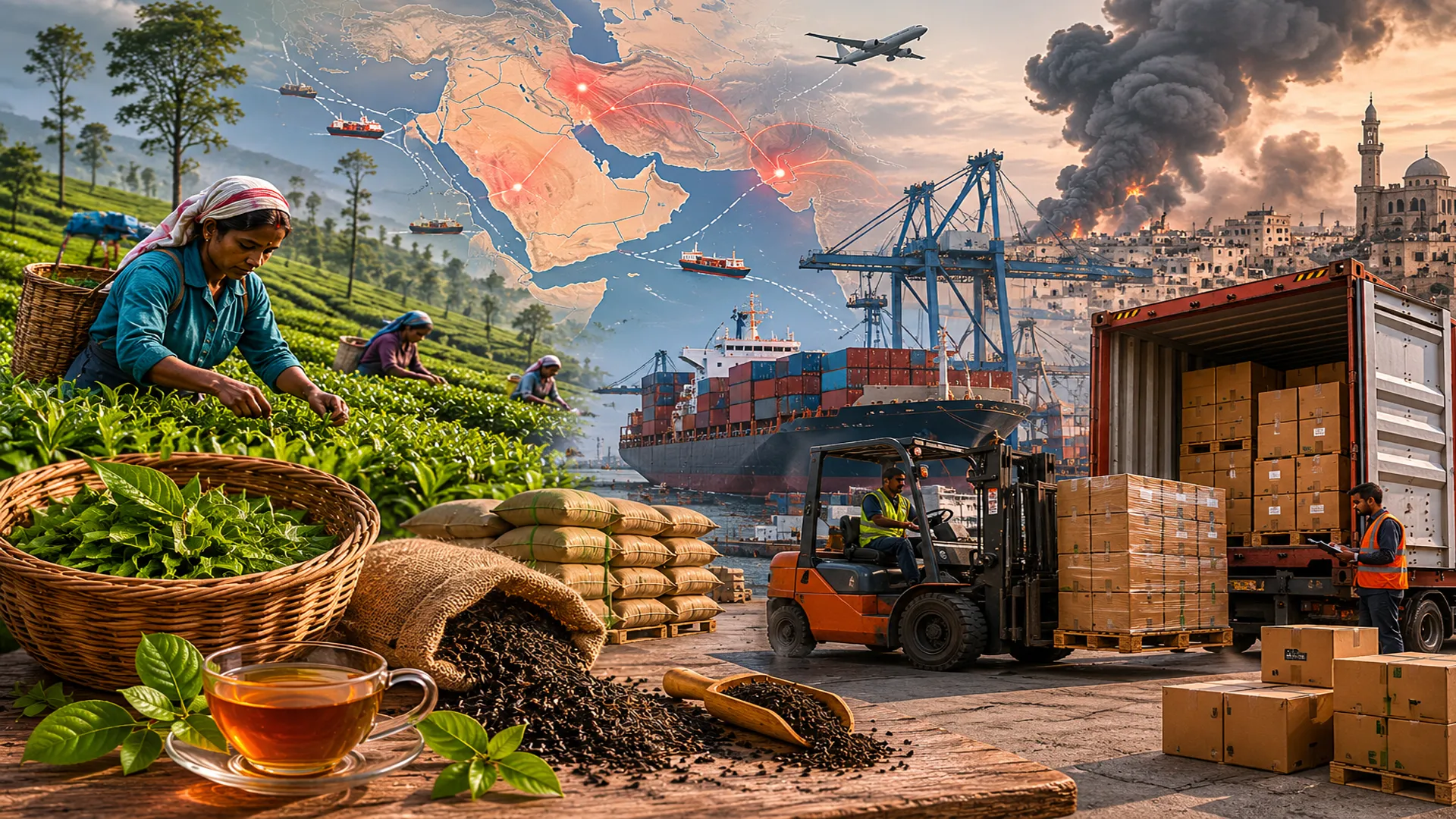
India’s tea export growth is facing fresh uncertainty as the escalating West Asia crisis disrupts major shipping routes and increases freight costs across global trade networks. Exporters are concerned that delays in cargo movement and rising transportation expenses could impact shipments to key international markets despite strong overseas demand.
India recently achieved record growth in tea exports, supported by rising global consumption and improved demand from countries in Europe, the Middle East, and Asia. However, ongoing geopolitical tensions in West Asia are creating logistical challenges for exporters dependent on maritime trade routes passing through the region.
The disruption has also contributed to volatility in tea prices, as higher shipping costs and delivery delays affect market supply chains. Industry experts warn that prolonged instability could put pressure on exporters already dealing with fluctuating input costs and competitive global pricing.
At the production level, India’s strong tea production and extensive tea plantation network continue to support export volumes. Premium-quality tea leaves from Assam, Darjeeling, and South India remain in high demand across global markets. However, concerns over timely delivery and increased logistics expenses may influence future trade performance.
Analysts believe that if the crisis intensifies, countries dependent on Indian tea may look for alternative suppliers, potentially affecting long-term tea supply dynamics. Rising freight costs could also impact tea imports in several consuming nations, further reshaping international trade flows.
Despite the challenges, India’s tea industry remains optimistic that strong demand and diversified export markets will help sustain growth momentum in the coming months.