
India’s Ethanol production strategy is entering a new phase in the 2026-27 Ethanol Supply Year (ESY). The government has excluded sugarcane juice, sugar syrup and B-Heavy Molasses from ethanol procurement tenders, while allowing C-Heavy Molasses to remain an eligible source.
The decision reflects concerns over sugar availability and production, particularly after weak rainfall in Maharashtra and Karnataka. With Oil Marketing Companies (OMCs) requiring around 1,100 crore litres of ethanol, grain-based production is expected to fill a larger share of the demand.
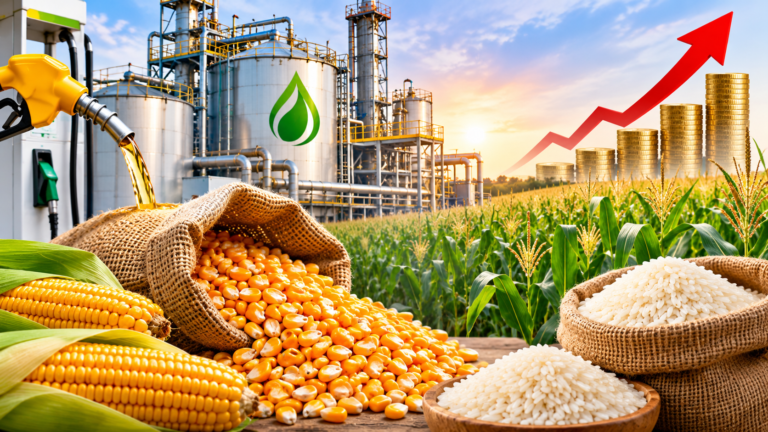
Initial industry offers reportedly reached 1,934.5 crore litres, including 1,140.4 crore litres from maize, 457.8 crore litres from FCI rice and 239.6 crore litres from damaged foodgrains.Maize accounted for nearly 59% of the proposed supply, compared with around 45% in the previous year’s initial allocation. However, these are proposals, not confirmed purchases. An allocation of approximately 518 crore litres from maize is expected.
Ethanol Production: Why Maize Demand Is Raising Food Security Concerns?
The growing demand for Ethanol production is creating concerns beyond the fuel sector. Maize is also a major ingredient in poultry feed, accounting for approximately 55-60% of the diet of broiler and layer chickens, depending on the feed formula. Industry estimates suggest maize requirements for ethanol could increase from 13 million tonnes to nearly 16 million tonnes, a rise of around 22%.
Higher maize prices could increase production costs for poultry and dairy businesses, potentially affecting the prices of eggs, chicken and milk. The Economic Survey 2025-26 also highlighted concerns that rising ethanol demand and administered prices could influence farmers’ crop choices, affecting agricultural diversity and food security.
Can Rice Stocks Support Ethanol Production?
India’s rice stocks offer another option. According to Food Corporation of India (FCI) data, the central pool held approximately 390.53 lakh tonnes of rice and 479.92 lakh tonnes of wheat on September 1, 2026.
The government has also increased the target under the Open Market Sale Scheme (OMSS) for rice to 50 lakh tonnes. By October 31, around 25 lakh tonnes had already been sold. Meanwhile, Ethanol from rice remains an important part of the government’s strategy. The price of ethanol produced from surplus rice supplied by FCI has been fixed at Rs 60.32 per litre. For the first three quarters of ESY 2026-27, the tender provides a ceiling of 324 crore litres from surplus FCI rice and 160 crore litres from damaged foodgrains. These are separate source-wise limits, not an allocation exclusively for rice.
What Lies Ahead for India’s Food and Fuel Security?
India’s buffer stock of rice and wheat remains strong, but maize availability could become a weak link if demand from ethanol plants and the poultry industry rises simultaneously. Another concern is the possibility of an El Nino weather event affecting agricultural production and rainfall.
The challenge for policymakers will be balancing fuel requirements, farmers’ incomes, exports and affordable food supplies. Ultimately, Ethanol production is no longer just an energy policy issue. It is increasingly connected to food prices, agricultural choices and national food security. The biggest question remains: Can India protect its food stocks, maintain exports and meet its fuel requirements if adverse weather conditions put agricultural production under pressure?