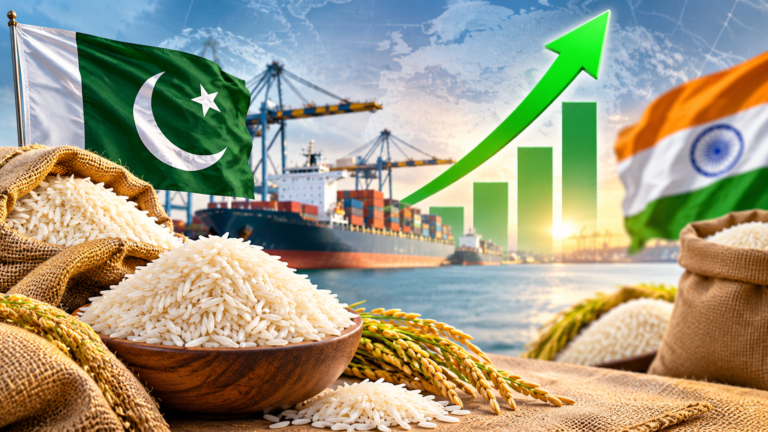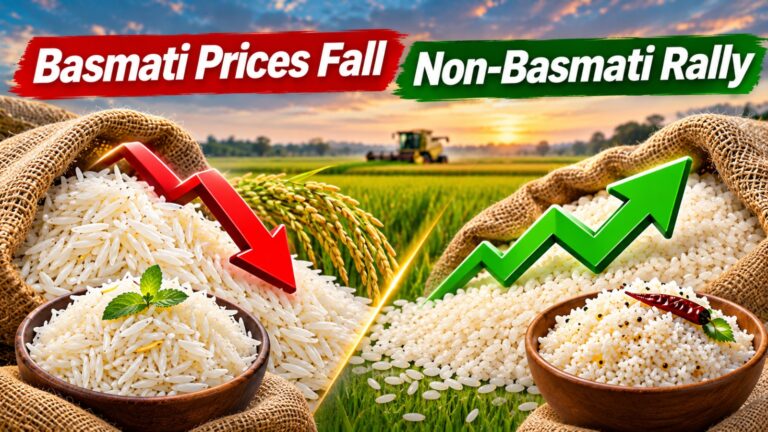

Prices are fluctuating within India’s rice industry. Despite there being enough new rice available to push down basmati rice prices, other varieties have been in higher demand and thus prices are increasing. Southern India is currently responsible for this.
Between November 1st 2026, 1121 Basmati Steam rice price decreased by six percent to an average of Rs 94 per kg. City prices varied and included: Delhi (Rs 108), Jaipur (Rs 99), Bengaluru, Chennai and Pune (both at Rs 94) and Surat which had the lowest rice prices (Rs 86).
Prices for 1121 Basmati Golden Sella rice have also fallen, decreasing by five percent to Rs 83 per kg. 1718 Basmati Steam rice has too decreased in value by one percent to an average of Rs 93. Pusa Steam rice has remained steady at Rs 85 per kg.
Whilst some basmati rice is moving against this trend, other basmati varieties are still highly sought after and therefore seeing their price increase. 1509 Basmati Steam rice has in fact increased in price by two percent to an average of Rs 82 per kg.
Alongside basmati rice, which is impacted by export and variety demand, it seems that rice supply is also impacting upon the price of different varieties.
Supply problems in southern India are fuelling non-basmati rice price rises
Even though basmati rice is now generally lower in price, non-basmati rice is faring well. A number of non-basmati rice varieties are widely eaten in southern India.
Unfavourable monsoon conditions and declining paddy land in sections of India have resulted in more restricted supply projections. Consequently, key non-basmati rice varieties such as Sona Masoori and Ponni are experiencing price growth.
Sona Masoori Raw is one example of such a variety. Nationally, this rice has increased in price by nine percent and is now valued at Rs 63 per kg. Especially in Chennai, prices have risen by a marked twenty percent to become Rs 75 per kg. Delhi too has seen a price rise of eleven percent to Rs 83. In Jaipur and Bengaluru, prices were Rs 78 and Rs 75 per kg.
Prices for Ponni Parboiled rice have also gone up by four percent to Rs 54 per kg. Once more, the most significant rise was in Chennai, where prices rose sixteen percent to Rs 68. Both Bengaluru and Hyderabad charge Rs 57 per kg.
As previously highlighted, favoured rice varieties are additionally seeing price growth. IR 64 Parboiled rice has increased by three percent to be worth Rs 41 per kg. And, PR 11/PR14 Steam rice has also increased in value, this time by four percent to Rs 52 per kg.
This then shows that even rice sent for the general Indian market and for processing can also be impacted by supply.

Broken rice is also subject to price change
On a national level, the indicative wholesale broken rice price rose by one percent to become Rs 35 per kg. Once more, this was in comparison to the September period.
Within cities, prices were; Chennai (Rs 36), Bengaluru (Rs 35), Hyderabad (Rs 34), Pune (Rs 39), Kolkata (Rs 32) and Surat (Rs 36) per kg.
This follows on from the government’s national average ‘broken’ rice wholesale price which has increased by around five percent between October 10th and November 2nd.
There is also much interest in the possibility of export restrictions being placed on broken rice. Exporters have expressed concerns about this. Until the government announces any fresh guidelines however, it is unclear what will transpire.
Broken rice is utilised for feeding animals and within a number of industries. Therefore, any changes to broken rice supply and/or exports can in turn affect the buying behaviour and price points for many areas.
City price disparity

Alongside underlining how general supply and demand issues are affecting India’s rice market, the latest price study also draws attention to the difference between national and city rice prices. Whereas nationally, Sona Masoori rice is worth Rs 63 per kg, in Delhi it is valued at Rs 83. Hyderabad’s HMT rice price has moreover rocketed to Rs 77 per kg; an increase of Rs 30 from the September comparison.
Furthermore, city specific rice prices have also been sustained for particular rice varieties. Chennai’s Seeraga Samba rice price has risen by Rs 18 to become Rs 133 per kilo. Similarly, Pune’s Indrayani rice price has moved up to Rs 75 per kilo.
This therefore emphasises how city related issues (for example, supply, transport, distribution and demand) can all play a role in determining rice price. For rice millers, wholesalers, exporters and bodies, national rice price information may not accurately represent true buying costs.
Diverse market trends are affecting the market at this time
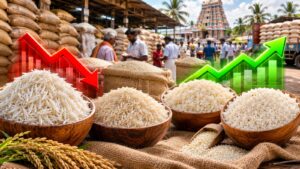
Recent wholesale rice price information highlights how India’s rice market is becoming increasingly split. Different rice varieties react in various ways to new rice supply, production and demand related issues.
Although enhanced new rice supply is behind basmati rice price declines, selected export focused rice varieties are still performing well. Presently, limited paddy supply within southern India is causing price growth for non-basmati rice, such as Sona Masoori and Ponni, as well as for other non-basmati rice varieties.
Adding to this market complexity is the rice price growth and the uncertainty over the possible imposition of export restrictions upon broken rice.
In order to successfully deal with existing rice market price trends, rice millers, exporters and major buyers need to appropriately control their buying costs and supply security.
It will be crucial over the next few weeks to assess whether current basmati and non-basmati rice price trends are merely temporary and seasonal in nature or if they are long term in duration.