
Bangladesh Fruit Exports Plunge
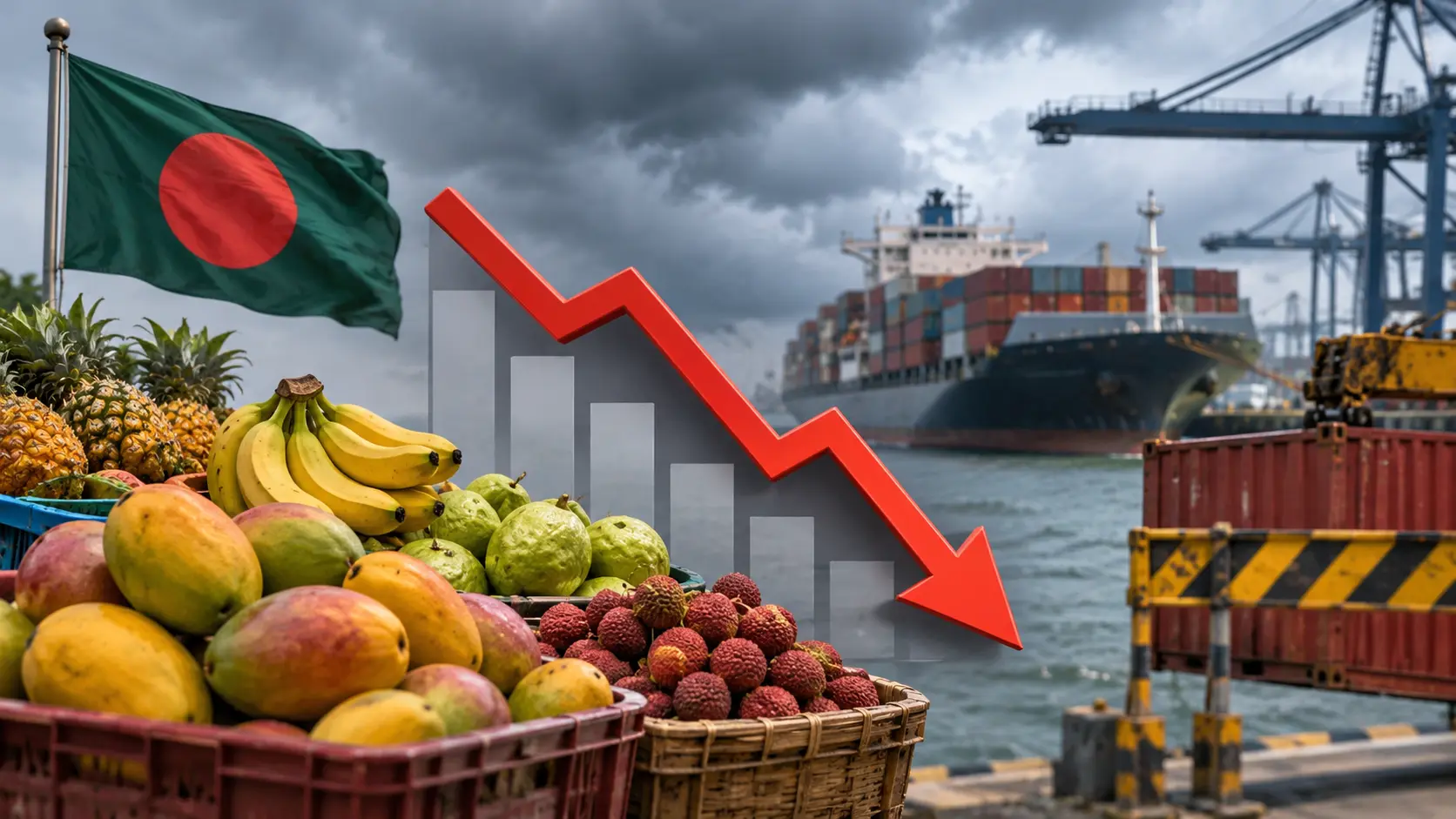
Bangladesh’s fruit exports have witnessed a sharp decline, with export earnings dropping 76% year-on-year to US$7.38 million during July–September 2026, compared with US$30.86 million in the same period last year. Global shipping disruptions, rising freight costs and infrastructure challenges are putting significant pressure on the country’s fruit industry.
According to reports, disruptions around the Strait of Hormuz have affected international shipping routes, while freight costs have increased nearly fourfold. These challenges have made overseas shipments more expensive, creating difficulties for exporters and fruit farmers seeking access to international markets. The rising transportation expenses are also making Bangladesh’s fruit exports less competitive in overseas markets.
The decline in fruit exports is highlighting longstanding weaknesses in Bangladesh’s agricultural export infrastructure. Limited cold storage capacity, inadequate testing facilities and insufficient traceability systems are affecting the country’s ability to maintain fruit quality and meet international export standards.
Mangoes and jackfruits, two important export-oriented fruits from Bangladesh, are particularly affected by these challenges. Without proper post-harvest handling, storage and quality certification facilities, exporters face difficulties in delivering fresh produce to overseas buyers.
The situation could also have wider implications for domestic fruit production, fruit prices and farmers’ incomes. Higher transportation expenses and reduced export demand may create additional financial pressure in the agricultural supply chain. Industry stakeholders believe that improving cold-chain infrastructure, modernising testing facilities and strengthening traceability systems will be essential to restoring export competitiveness.
As global logistics remain uncertain, Bangladesh’s fruit industry faces the challenge of reducing shipping costs while improving product quality. Addressing these issues will be crucial to reviving fruit exports, supporting fruit farmers and expanding the country’s presence in international markets.