
How Does Coconut Shell Price Surge Threaten India’s Activated Carbon Exports?
How Does Coconut Shell Price Surge Threaten India’s Activated Carbon Exports?
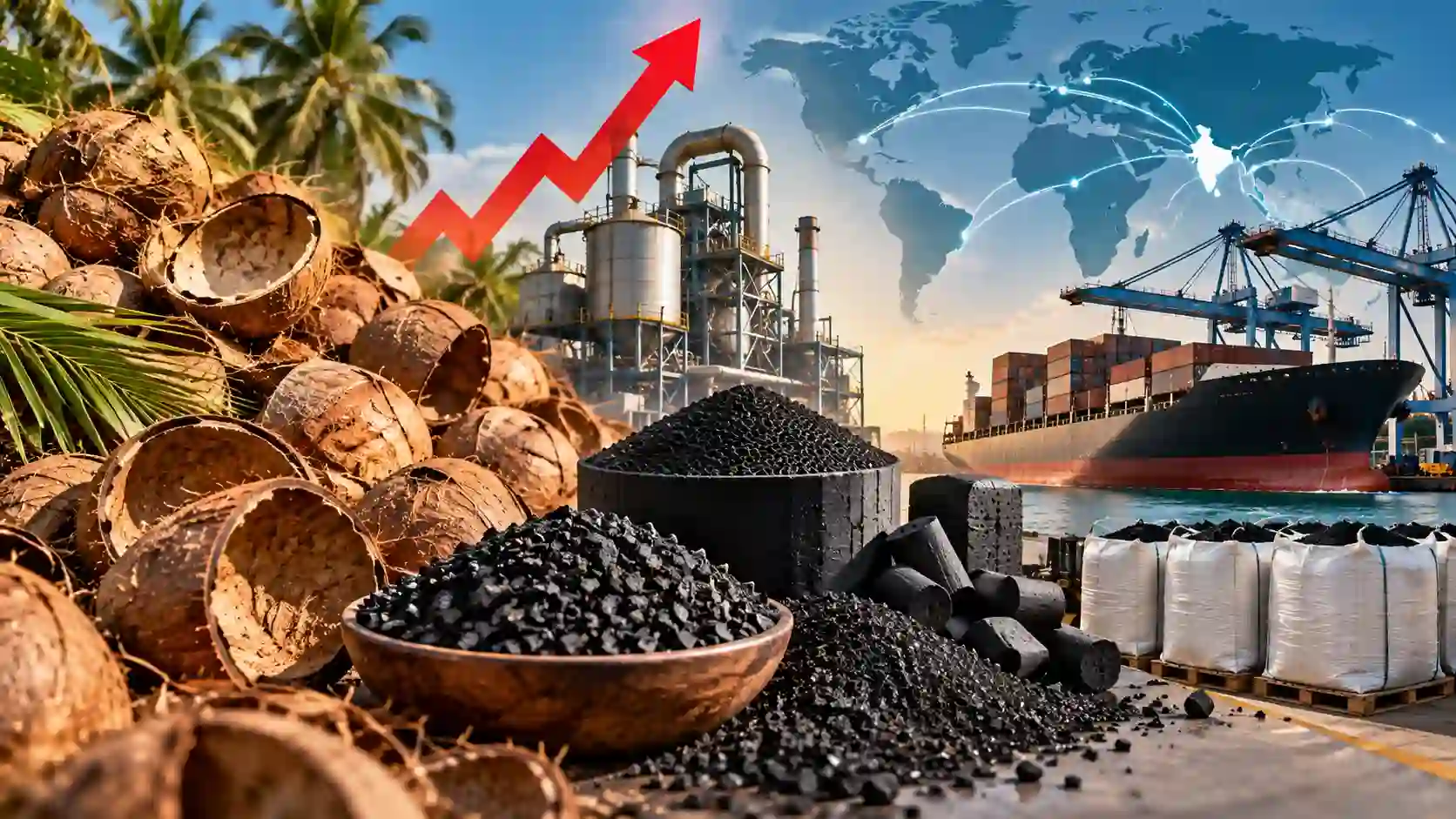
According to reports, a surge in coconut shell prices is threatening India’s activated Carbon exports, as the Activated Carbon Manufacturers Association of India has raised concerns regarding the uncontrolled rise in coconut shell prices. The body has stated that the rising cost of raw materials is making Indian activated carbon manufacturers increasingly uncompetitive against Chinese suppliers.
Moreover, the association in its annual meeting, highlighted that the Chinese producers are purchasing whole coconuts from Indonesia and the Philippines to manufacture activated carbon. Then, it is further exported to African and European markets at lower prices. On the contrary, in Southern Indian states, Coconut shell prices have been rising sharply with no mechanism to regulate the market, which has put Indian producers at a disadvantage.
What Are Difficulties Faced By India’s Activated Carbon Exports ?
The association has decided to issue monthly indicative prices for coconut shells to producers, with the aim of better regulation and stability to the market. In addition, the price for September has been fixed at ₹105–₹107 per kg, while the range for October has been set at ₹98–₹100 per kg. Not only this, but the association will seek the GST authorities for the inclusion of coconut shell and Charcoal under the GST framework. Currently, Coconut shell and Charcoal are the GST regime and have nil tax. The association believes bringing them under a regulated Tax mechanism could help enhance transparency and control in the market. Surprisingly, the industry is trapped in several difficulties despite India’s activated carbon exports standing at around ₹4,700 crore.
The difficulties are tariff-related issues in the US, high raw material costs and growing competition from Chinese suppliers in the markets that were traditionally served by Indian manufacturers. Moreover, the ongoing Middle East conflict has further aggravated the difficulties by rising freight costs and decreasing the availability of export vessels.