

Nepal Halted Power Exports To Bangladesh. But Why?
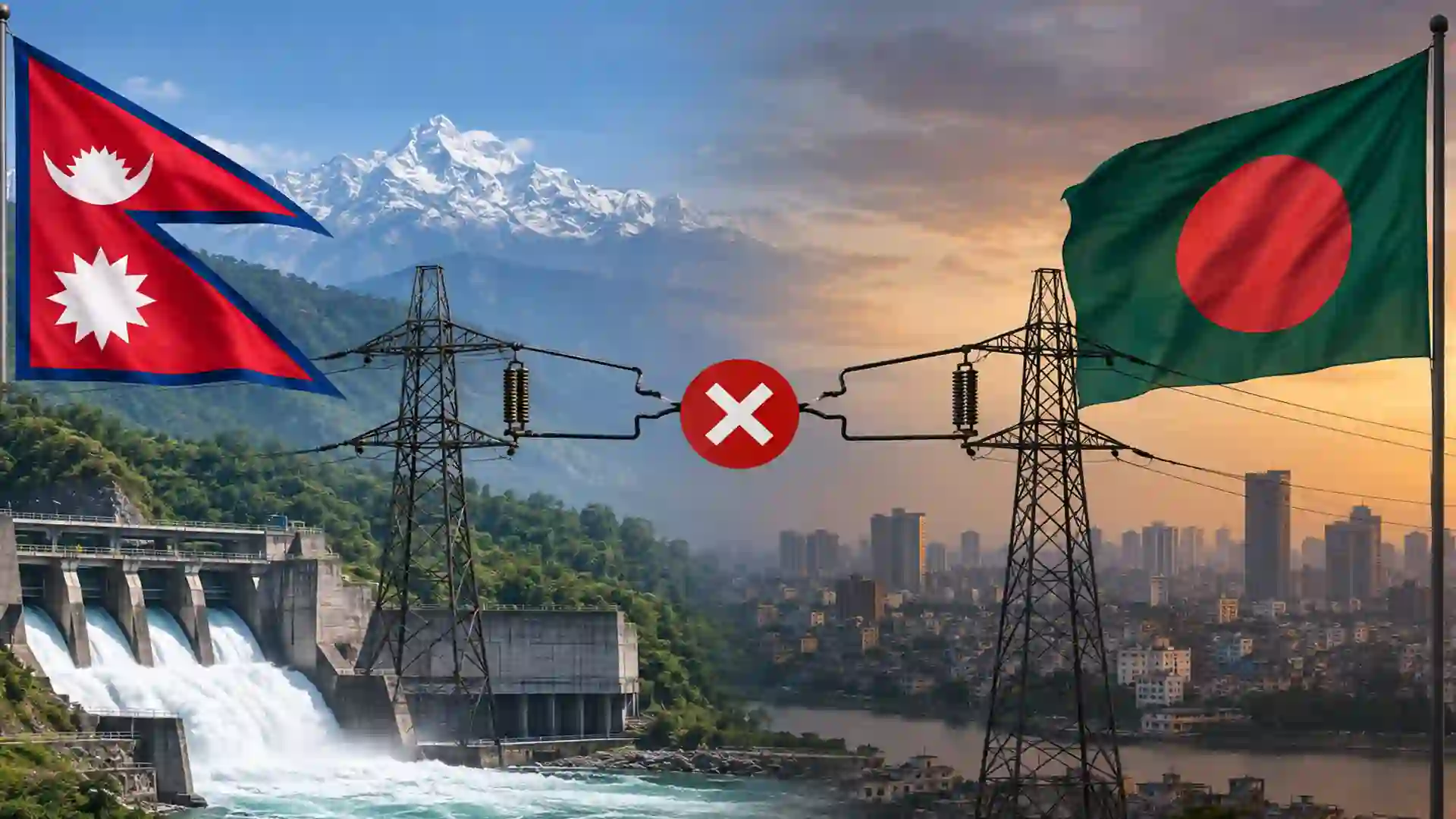
Nepal Halted Power Exports To Bangladesh. But Why?
On August 26, Nepal’s hydropower system was damaged by the flash floods which swept through the Bhotekoshi and Trishuli river systems and halted Power exports to Bangladesh. The floods killed at least 1,250 people by September 3. Not only that, but the floods damaged 15 hydropower plants and critical transmission infrastructure and wiped out nearly 750 MW of electricity generation. As per reports, around 900 hydropower workers are missing.
Nepal halted all power exports. But why?
Now, the disaster has disrupted Nepal’s electricity exports, with supplies to Bangladesh halted. In addition, the spokesperson for Nepal’s Minister of Energy, Water Resources and Irrigation stated that the Floods damaged that 22 mega watt Chimime and 24-megawatt Trishuli hydropower projects, which have since stopped generating electricity. Reports revealed that Nepal halted all power exports.
Bangladesh wants Nepal’s hydropower. Here’s Why?
Both countries have complementary electricity needs, and the summer monsoon gives Nepal surplus hydropower, which Bangladesh can use to diversify its energy sources. In the dry winter, these roles reverse somewhat. The flood-affected country faces shortages while Bangladesh’s demand dips, making cross-border trade beneficial in both directions over the year.
According to the Nepal Energy Authority, in 2025-2026, Nepal’s total installed capacity climbed to 4.1 GW, but monthly peak domestic demand was only nearly 2.5 GW. Electricity exports bring total demand up to about 3.2 GW.
According to energy think-tank Ember, Bangladesh has 32 GW of installed power generation capacity, 98 per cent of which is reliant on fossil fuels. The country wants to diversify sources to meet its current demand. Besides this, Bangladesh aims to cover 20 per cent of its electricity needs from non-imported renewables by 2030.
Therefore, energy trade between Nepal and Bangladesh makes economic sense.