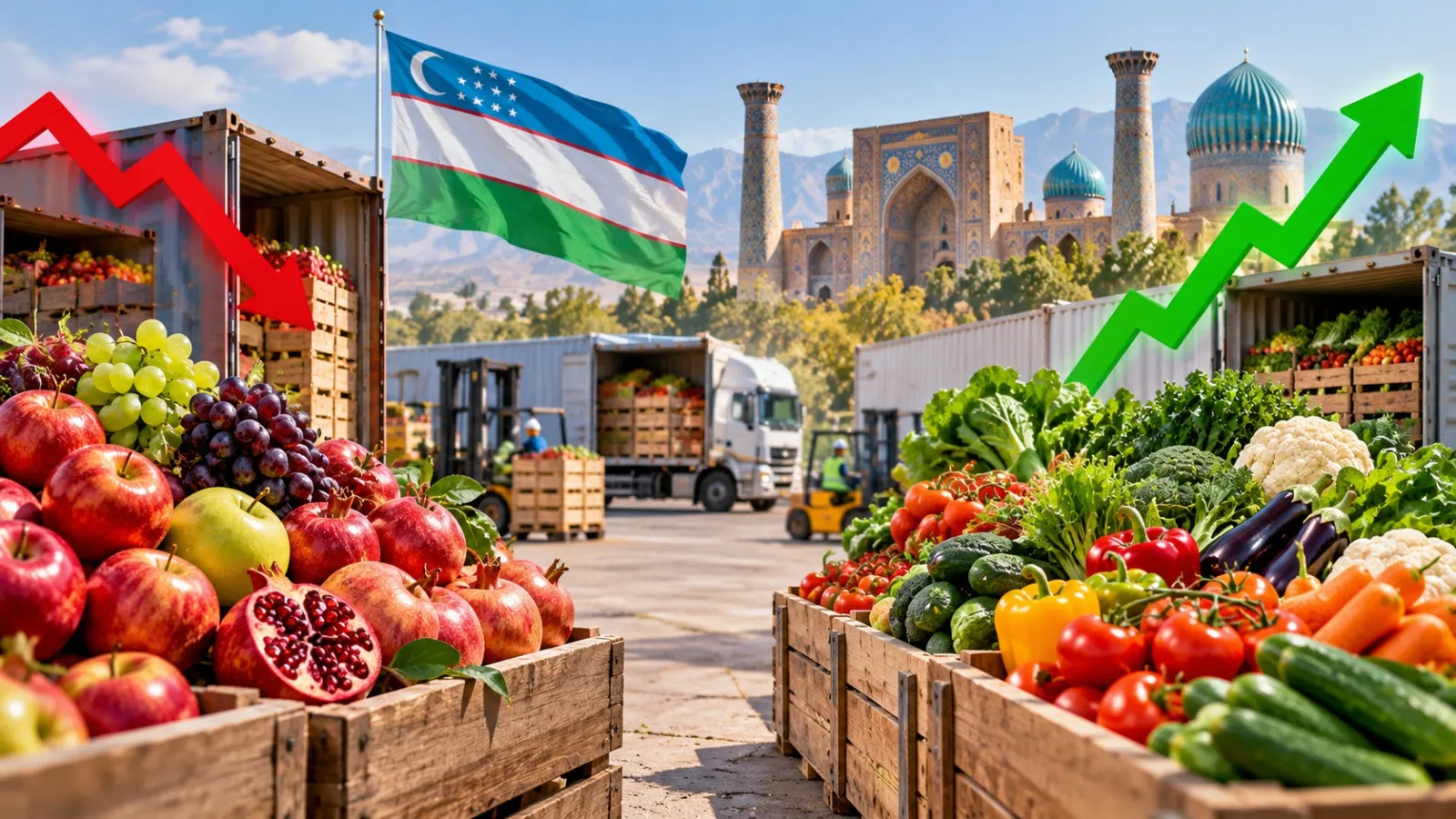
Uzbekistan’s fruit exports decreased 6.6% to $1.18 billion during January-August 2026. It highlights rising pressure on the country’s agricultural export sector. Export volumes dropped 1.4% to 1.44 million tonnes during the period, as weaker shipments of several major fruits placed on overall trade.
Particularly, the decrease was visible in fruit exports, with apricots and cherries recording significant drops. Changing international fruit demand and market conditions have influenced the performance of Uzbekistan’s fruit sector. It raised questions about future fruit production and export opportunities.
On the contrary, vegetable exports showed stronger performance during the first eight months of the year. Moreover, shipments of onions and cabbage increased, helping offset part of the decline in fruit shipments. The growth suggests that Uzbekistan’s vegetable production and export supply are finding stronger opportunities in overseas markets.
However, the country’s agricultural trade also witnesses a sharp rise in imports. Imports of fruits and vegetables jumped 29.7% to $381.6 million. The increase signals changing domestic fruit demand and vegetable demand, while also pointing to potential gaps between domestic production and market requirements.
In addition, maintaining a reliable fruit supply and competitive pricing will remain important as international markets emerge for exporters. Similarly, stable vegetable supply could help Uzbekistan boost its position in regional markets.
According to latest figures, there is a mixed picture for Uzbekistan’s agricultural trade. While fruit exports remain under pressure, rising vegetable exports show a positive signal. Future trends in fruit production, vegetable production and global demand will be significant factors shaping the country’s export performance.