

US-Iran War: How the Conflict Could Strengthen the US Dollar?
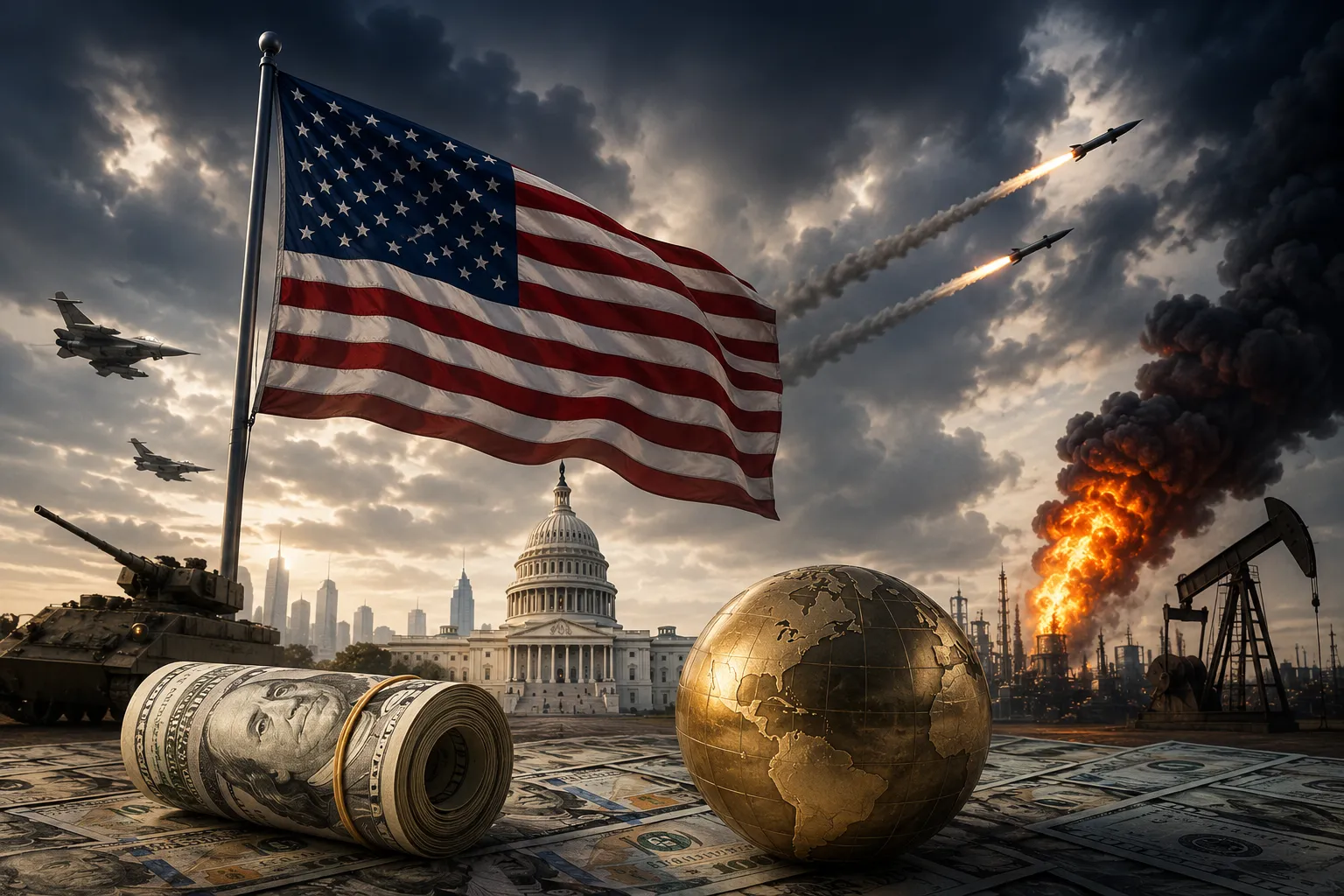
US-Iran War: How the Conflict Could Strengthen the US Dollar?
Significantly, the US-Iran War is no longer just a geopolitical conflict. Its impact is increasingly being felt in global financial markets, crude oil prices and currencies, with the US dollar is becoming one of the biggest pieces of the puzzle.
The conflict has put the global energy market under pressure, particularly due to uncertainty surrounding the Strait of Hormuz, one of the world’s most important oil-shipping routes. Nearly, one-fifth of global oil shipments normally pass through the waterway, meaning any prolonged disruption can generate fears of tighter supply and higher crude oil prices.
Why Does the US Dollar Matter Amid US-Iran War?
Oil is predominantly traded internationally in US dollars. So when geopolitical tensions push crude prices higher, countries that rely heavily on imported oil need more dollars to pay for those imports. Particularly, this becomes significant for countries including India.
Notably, a prolonged rise in crude oil prices can increase India’s oil import bill and raise demand for dollars. Meanwhile, geopolitical uncertainty can encourage investors to look for the relative safety and liquidity of US dollar assets. This combination can put additional pressure on emerging-market currencies. Moreover, the Indian rupee has already been trading near the ₹95-per-dollar level, with higher crude prices and a stronger US dollar among the factors weighing on the currency.
US-Iran War and the Oil-Dollar Connection
The relationship can be understood through a simple chain: US-Iran conflict → Hormuz disruption fears → higher crude prices → higher demand for dollars → pressure on the rupee. If oil prices remain elevated for an extended period, the consequences could go beyond the currency market. Higher energy costs can rise transportation and production expenses, potentially adding to inflationary pressures.
For India, this is especially significant because the country relies heavily on imported crude oil. A weaker rupee makes dollar-denominated oil imports more expensive in rupee terms which create another channel through which geopolitical tensions can reach consumers.
Also Read
Could the US-Iran Conflict Challenge the Dollar?
In addition, there is also a bigger question surrounding the US-Iran conflict: could the war escalate efforts by some countries to reduce their dependence on the US dollar?
Iran has previously explored alternative currencies and payment arrangements for oil trade, whereas discussions nearly yuan-based energy transactions have added to the wider debate over de-dollarisation. But, replacing the dollar in global energy trade is a much bigger challenge than simply changing the currency used in individual transactions. Besides this, the dollar’s deep role in global finance, trade and international reserves means that geopolitical tensions alone are unlikely to displace it quickly.
What Could Happen Next?
The direction of oil prices, the US dollar and emerging-market currencies will depend heavily on how the US-Iran conflict develops and whether normal shipping through the Strait of Hormuz can be restored. For India, the equation is particularly important: higher oil prices plus a stronger dollar can mean a weaker rupee, a larger import bill and greater inflation risks. So the US-Iran conflict is not just a story about war and geopolitics. It is also a story about oil, the US dollar, currencies and the global economy—and its effects could eventually reach the everyday consumer.