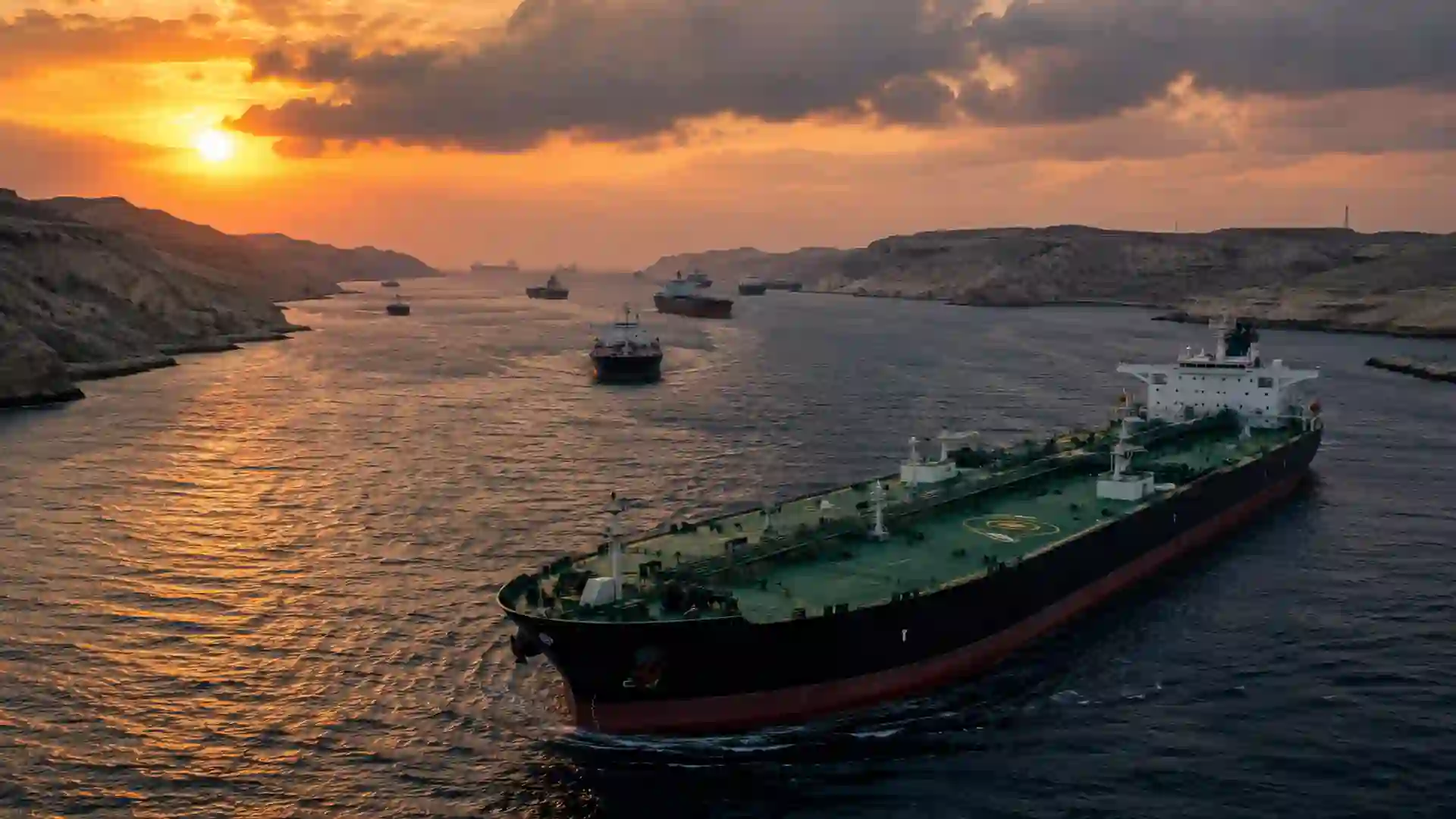
The Strait of Hormuz crisis is intensifying rapidly, which is raising fresh concerns regarding global oil supplies, shipping routes and energy prices. Notably, it is a strategic waterway, located between Iran and Oman and one of the world’s most significant maritime routes for crude oil transportation. Moreover, any prolonged disruption could have consequences well beyond the Middle East.
Iran Recent Attacks Near Strait Of Hormuz
According to reports, Iran has launched multiple anti-ship cruise missiles from Sirik in southern Iran. In its aftermath, an oil tanker was reportedly struck off the coast of Oman in the southern corridor of the strait and caught fire. The incident has escalated the concerns over the safety of commercial vessels operating through the region. Meanwhile, Iran and Oman are working towards an agreement involving alternative shipping routes through the Strait of Hormuz. However, uncertainty remains over when normal maritime traffic could resume.
Iran-US Tensions Add to Uncertainty
The situation is further complicated by rising tensions between Tehran and Washington. US President Donald Trump has stated that the United States is only semi-negotiating with Iran and plans to allow economic pressure on Tehran to increase. At the same time, Iranian Foreign Minister Abbas Araghchi, has said there are no direct talks with the US. Also, Tehran has signaled that the strait will not reopen until Washington fulfill its demands, including lifting the naval blockade. This standoff has increased fears of a prolonged oil shipping disruption, which could affect global crude supplies and push energy prices higher.
What About the Energy Markets?
In addition, the impact is already visible in the energy market. WTI crude is trading around $78.82 a barrel, whereas Brent crude is nearly at $84.38. A sustained disruption in the region could put additional upward pressure on crude oil prices, particularly if concerns about supply shortages intensify.
For major oil-importing countries, higher crude oil prices can quickly convert into increased fuel, transportation and production costs. India could be particularly vulnerable due to its substantial dependence on imported crude oil.
A prolonged disruption around Hormuz could therefore increase India’s oil import bill, while also putting pressure on fuel prices, logistics expenses and broader inflation.
Why Netanyahu Rejected Trump’s Gaza plan?
The geopolitical situation is becoming even more complicated due to the developments in Gaza. Israeli Prime Minister Benjamin Netanyahu has dismissed a US-backed proposal that would require Hamas to disarm in exchange for an Israeli withdrawal from Gaza. Netanyahu has insisted on what he calls genuine disarmament, whereas Hamas maintains that Israel must first end its military campaign. The disagreement creates another potential source of tension between Netanyahu and Trump.
With US-Iran War tensions, Middle East shipping risks, rising oil prices and the Gaza conflict developing simultaneously, markets are watching closely for signs of a broader economic shock. The major question now is whether diplomatic efforts can restore safe passage through Hormuz before disruptions begin to significantly affect global energy markets and economies.