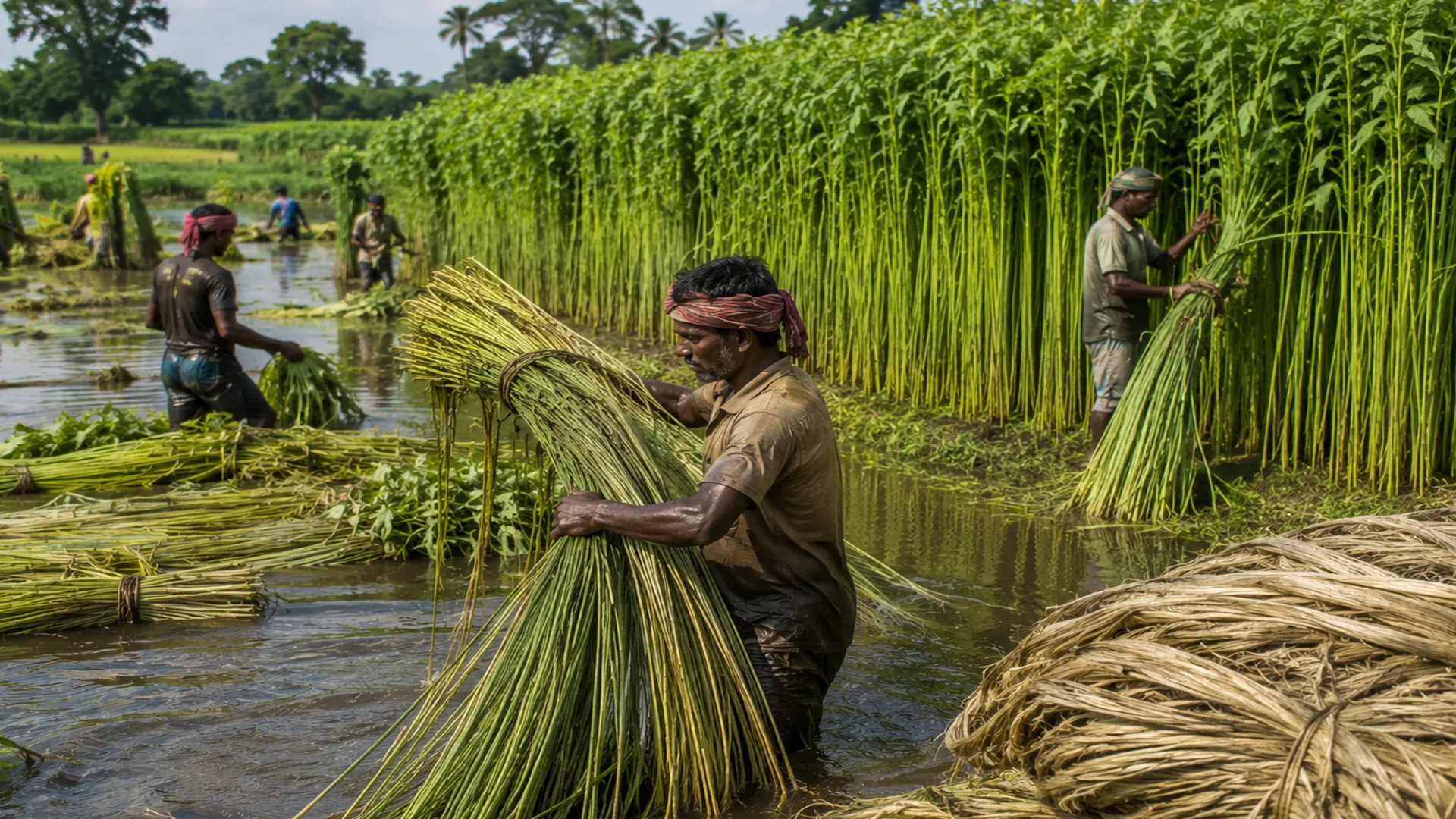
The Jute Crops in West Bengal have given a positive signal. The projected bumper and early harvest of 95–100 lakh bales for the 2026–27 season brings relief to the stressed sector. After facing a severe raw material shortage, the industry grappled with rising Jute Prices, decreasing output, and frequent mill shutdowns. It is weakening the entire Jute Industry. Now, improved cultivation practices and favourable weather conditions have boosted Jute Production, making sure stronger availability of raw materials. This increase is expected to balance the disrupted Jute Supply chain, which had earlier suffered from low inventory levels and high procurement costs.
The effect is already present in the market, as forward contract prices have started softening, indicating relief for manufacturers and traders. With better access to raw jute, mills are likely to resume normal operations, enhancing employment and restoring production capacity in key clusters in West Bengal.
According to Experts, this recovery in Jute Crops could mark a turning point for the sector, especially if demand remains steady in domestic and export markets. The revival also boosts India’s position in eco-friendly packaging, where jute products play an important role.
Generally, increasing Jute Production and stabilising Jute Prices are expected to bring balance to the jute industry and support farmers, mill owners, and exporters.