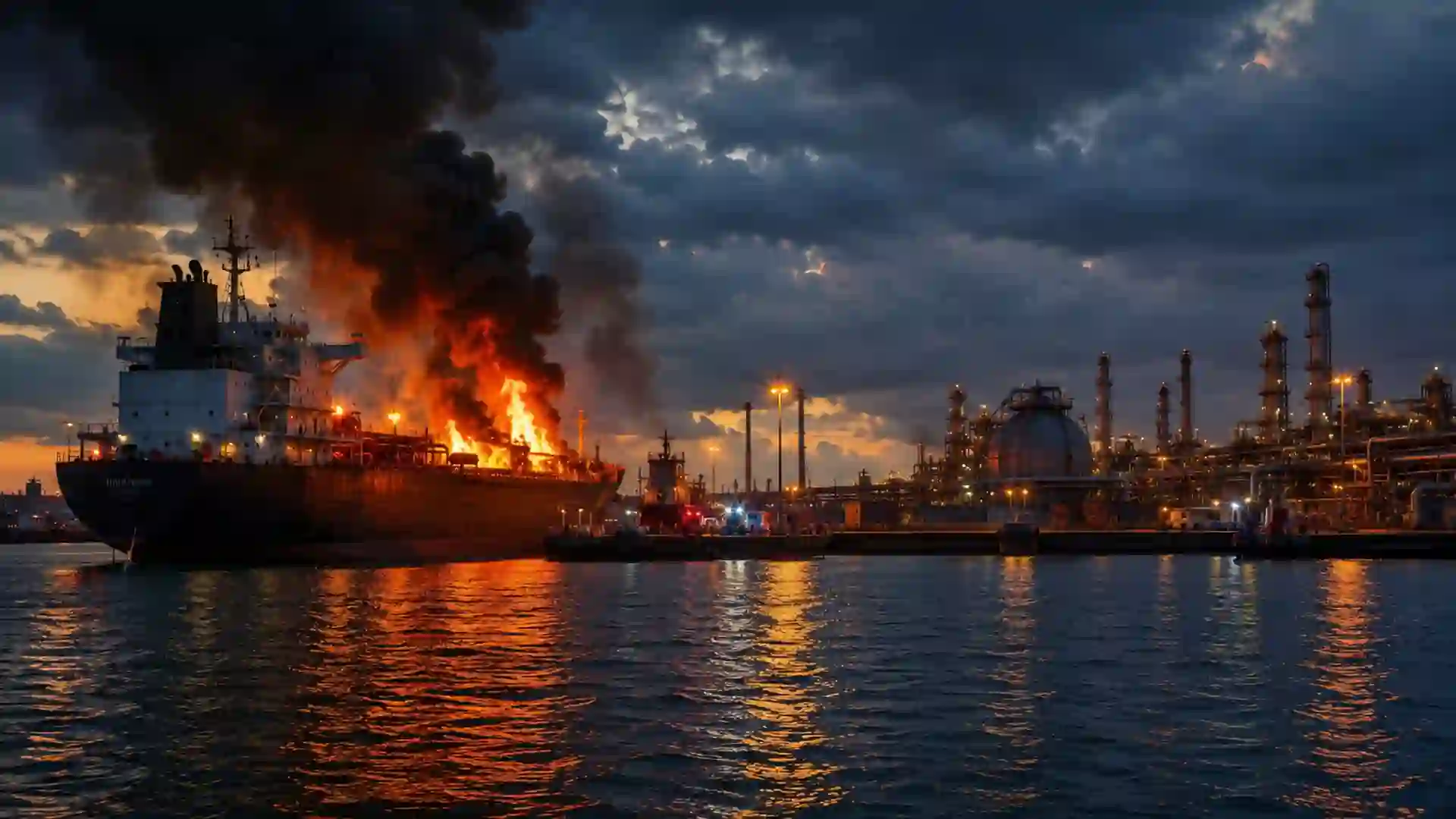
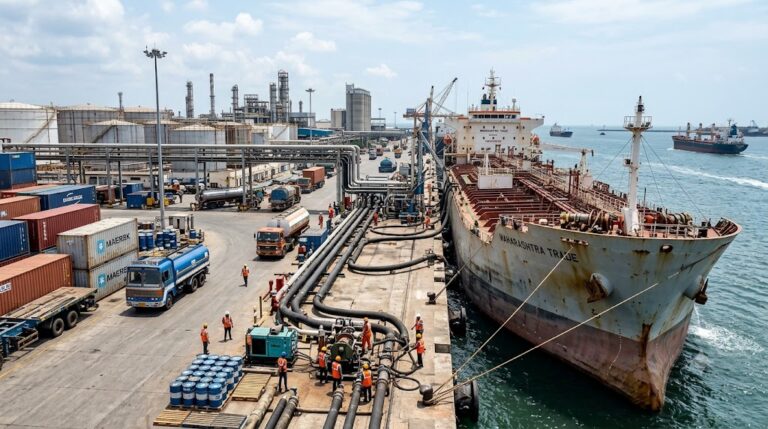
The Middle East Conflict has taken another dramatic turn, with rising tensions extending beyond Iran and the United States. A fresh attack on Egypt has added another layer of uncertainty, raising concerns over energy security, global trade routes, and financial markets. As per the latest reports, Egypt witnessed its first attack since the conflict began after a drone strike targeted two gas vessels at Damietta Port, which is one of the country’s key energy hubs located near the Suez Canal. Moreover, no casualties were reported; the incident has triggered concerns due to the strategic importance of the Suez Canal. Notably, it is one of the world’s busiest shipping routes.
The Suez Canal plays a significant role in global trade, transporting large volumes of oil and other commodities between Asia and Europe. Any disruption to this route could impact international supply chains and create fresh pressure on energy markets.
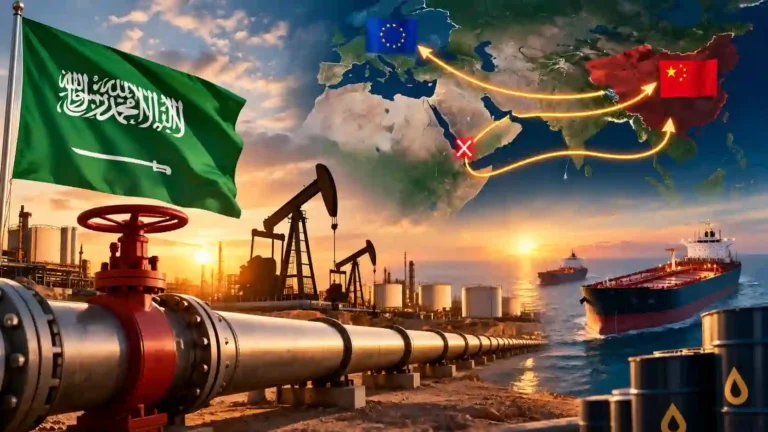
How key shipping routes face disruptions due to Middle East Conflict?
At the same time, tensions have intensified in the region, with fresh US strikes on Iranian targets and growing fears that more countries could get pulled into the conflict. As the war expands beyond Iran, the biggest concern for the global economy is no longer just security; it is energy supply. That’s because if key shipping routes like the Suez Canal or the Strait of Hormuz face disruptions, oil supplies could tighten, pushing crude prices sharply higher. And for India, which imports nearly 85% of its crude oil, that could translate into higher fuel prices, rising inflation, and increased costs for businesses and consumers.
Markets have shown cautious optimism
For now, however, markets are showing cautious optimism. WTI crude traded around $84 per barrel, while Brent crude was near $89 per barrel, both easing from earlier highs. Investors seem to believe that global oil supplies have not yet suffered a major disruption. That confidence was reflected in Indian markets as well.
The Sensex closed near 77,930, gaining around 274 points. Whereas the Nifty 50 ended near 24,317, up roughly 67 points. In addition, IT stocks led the rally, with Auto and Oil & Gas sectors also contributing to the gains.
But here’s the question from every investor: If attacks begin targeting critical energy infrastructure and major trade routes, such as Egypt’s ports, how long can oil prices and stock markets remain calm? The next development in the Middle East Conflict may not just affect global politics; it could directly impact fuel bills, inflation, and investments worldwide.