
GST Council Eyes 5 Major Reforms Under GST 2.0: Faster Refunds, Easier ITC and Changes to Prosecution Rules
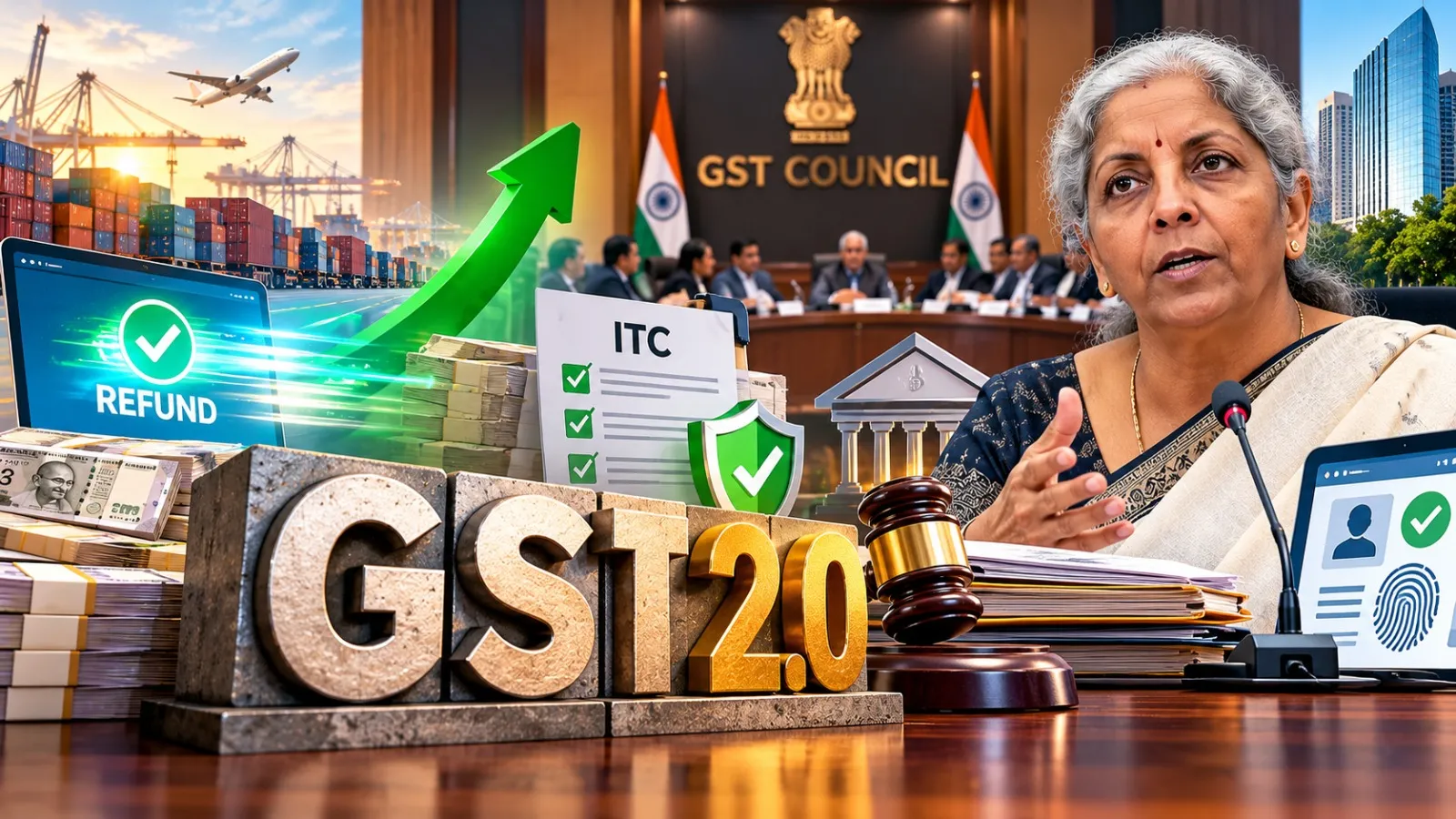
GST Council Eyes 5 Major Reforms Under GST 2.0: Faster Refunds, Easier ITC and Changes to Prosecution Rules
New Delhi, October 8, 2026: The 57th meeting of the GST Council is focused on a new set of reforms aimed at making India’s indirect tax system faster, simpler and more business-friendly.
After the major GST rate rationalisation undertaken in the previous phase, the latest reform agenda is focused largely on ease of doing business, faster refunds, input tax credit, GST registration and the powers of tax authorities.
Five proposals in particular could have a significant impact on businesses and taxpayers.
1. GST Refunds Could Come Within 17 Days
One of the biggest proposals under consideration is a major reduction in the time taken to process GST refunds.
Under the proposed framework, a refund application could be acknowledged within 10 days, followed by processing within another seven days. This would bring the targeted timeline to around 17 days.
The proposal also envisages faster release of a substantial portion of eligible refund claims through a risk-based mechanism.
For exporters and businesses with significant working-capital requirements, faster GST refunds could provide a major cash-flow benefit.
2. Changes Proposed in GST Arrest Powers
The GST Council is also considering changes to the provisions governing arrest by tax authorities.
The proposed reform seeks to put stronger safeguards around the arrest of taxpayers and make judicial oversight an important part of the process.
The objective is to ensure that criminal enforcement is focused on serious cases of tax evasion and fraud, rather than routine compliance disputes.
However, the proposal has emerged as one of the more sensitive issues under discussion, with some states raising concerns about weakening the enforcement powers available to tax authorities.
3. Criminal Prosecution Threshold May Rise to ₹5 Crore
Another significant proposal is to increase the threshold for criminal prosecution in GST-related cases.
The threshold being discussed could rise from ₹1 crore to ₹5 crore.
If implemented, the change would mean that relatively smaller cases of tax discrepancies or evasion would be less likely to result in criminal prosecution.
The broader objective is to distinguish between genuine compliance failures and serious, deliberate tax evasion.
For small and medium-sized businesses, such a move could significantly reduce the fear of criminal proceedings arising from relatively smaller disputes.
4. Genuine Buyers Could Get Greater ITC Protection
Input Tax Credit is another major area of reform.
The proposed changes seek to provide greater protection to genuine taxpayers who have purchased goods or services and complied with their own GST obligations, even where the supplier subsequently defaults on tax payment.
The issue has been a major concern for businesses because a compliant buyer can sometimes face disruption in its ITC chain due to the actions of another party.
The proposed framework aims to create a more balanced system in which genuine businesses are not automatically penalised for a supplier’s default, while safeguards against fraudulent ITC claims remain in place.
5. GST Registration Could Become Faster and More Technology-Driven
The GST registration process is also set for further simplification.
The reform agenda focuses on greater automation, technology-based verification and reduced dependence on manual intervention by tax officials.
Biometric Aadhaar authentication is also part of the broader effort to strengthen taxpayer verification and prevent fraudulent registrations.
The government is looking to create a system where genuine businesses can obtain registration more quickly, while technology is used to identify suspicious or high-risk applications.
GST 2.0: The Focus Shifts From Rates to Administration
The significance of these proposals goes beyond individual changes.
The first phase of GST reform was largely about bringing multiple indirect taxes under one framework. The next phase is increasingly about making that framework work better for businesses.
Faster refunds can improve working capital. A simpler ITC mechanism can reduce disputes. Easier registration can lower the cost of starting and operating a business. And clearer safeguards around enforcement can create greater confidence among taxpayers.
The larger message from the reform agenda is clear: GST 2.0 is increasingly about ease of compliance and ease of doing business.
However, businesses should distinguish between proposals discussed by the GST Council and changes that have formally come into effect. The final provisions will depend on the Council’s recommendations and subsequent government notifications.
If implemented in their proposed form, these reforms could represent one of the most significant efforts yet to make India’s GST system more taxpayer-friendly while retaining strong safeguards against fraud and tax evasion.