
Indian Agricultural Exports: Can India Win Global Trust?
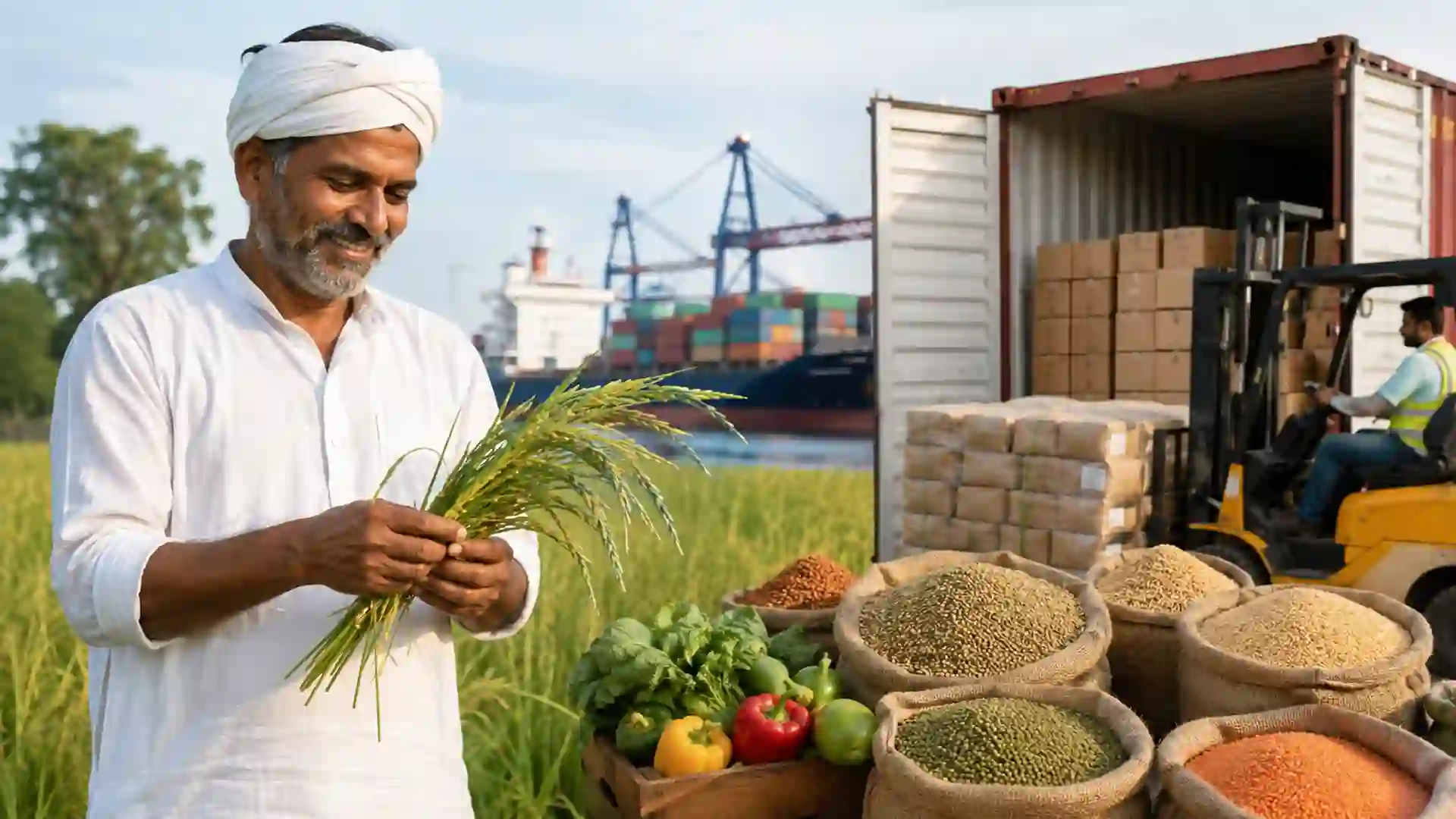
Imagine producing some of the world’s finest mangoes, rice and spices only to have those products stopped at an international border. This is the challenge currently facing Indian agricultural exports, as several countries raise concerns regarding food safety, certification, pesticide residues, and quality-control procedures. Since Japan has raised concerns over the fumigation, disinfection and certification of Indian mangoes. Not only this, but China has taken action against some Indian rice exporters following alleged GMO-related concerns. Moreover, Indian spice shipments have faced scrutiny over pesticide residue levels in certain markets. For India, the issue is no longer simply about how much food it can produce, but whether it can consistently prove that its food meets international standards.
Indian Agricultural Exports: Supply Chain Gaps Need Urgent Attention
Significantly, the problem goes beyond a few rejected shipments. India is among the world’s largest agricultural producers, but its farmers and exporters operate within a highly fragmented supply chain. As a product can move from a farmer to an aggregator, trader, processor and finally an exporter, making it difficult to track the use of pesticides, fertilisers, storage conditions and handling practices at every stage. In addition, India needs stronger cold-chain infrastructure, modern pack houses and internationally accredited testing laboratories. Exporters can face problems even when the underlying agricultural products are of high quality without these systems. Therefore, strengthening food safety, quality assurance and traceability can become vital to expanding India’s presence in global markets.
Indian Agricultural Exports Need Better Traceability and Protection
To boost Indian agricultural exports, India should make digital traceability a core part of export agriculture. Every export-bound product could have a digital record covering its farm origin, inputs used, testing, processing, packaging and transportation. Also, the country should increase internationally accredited laboratories near major agricultural hubs so exporters can identify problems before products reach foreign ports. Meanwhile, farmers need protection when overseas markets suddenly close. An export-loss insurance or compensation mechanism could provide temporary support when shipments are rejected because of regulatory disputes or sudden import restrictions.
From Indian Agricultural Exports to Global Food Brands
Moreover, India should focus on value-added agricultural exports. Instead of depending heavily on raw commodities, the country can increase processed, packaged and branded food products. This can generate higher revenues, create jobs and encourage better quality-control practices in the supply chain. Generally, the future of Indian agricultural exports will depend not simply on producing more, but on building global confidence in Indian food. India already has the farms, farmers and production scale. What it needs now is a transparent, traceable and reliable system that can convince international buyers that “Made in India” also means safe, consistent and globally trusted.