

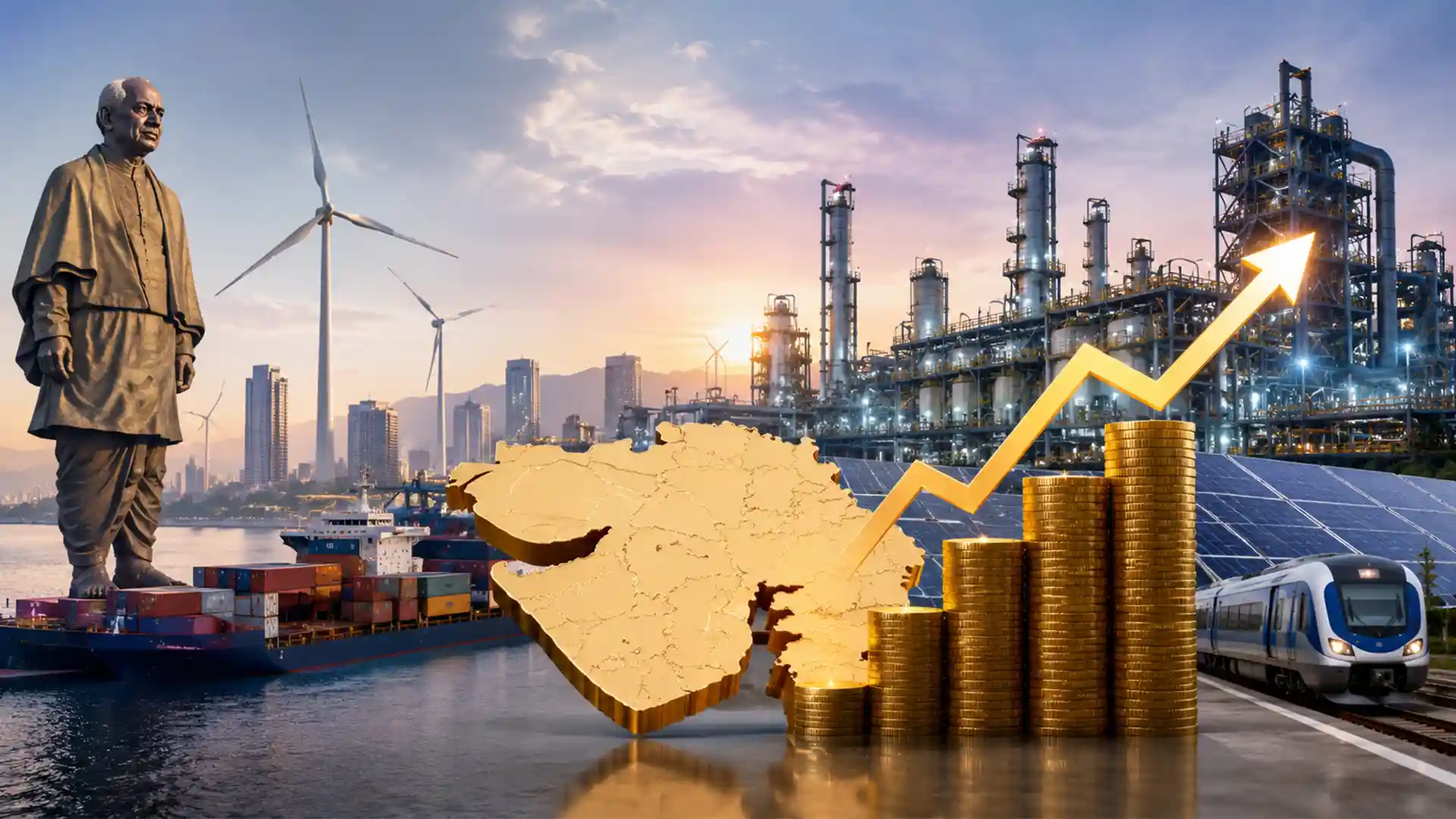
Viksit Gujarat Industrial Policy 2026 ₹10 Lakh Crore Investment Dream – Ambitious Blueprint or Achievable Reality
Gujarat continues to lead India’s investment story. As of December 2025, the state had attracted a cumulative $60.6 billion in Foreign Direct Investment (FDI), outpacing traditional frontrunners like Maharashtra and Karnataka. Its contribution to India’s national GDP has edged up from 8.2% to 8.4%. On June 15, 2026, Chief Minister Bhupendra Patel launched the Viksit Gujarat Industrial Policy 2026 from Gandhinagar’s Mahatma Mandir, setting an ambitious target: ₹10 lakh crore in investments over the next five years.
This isn’t just another policy document. The government calls it a blueprint to transform Gujarat into a global industrial powerhouse. But with India’s entire defence budget hovering around ₹6.8 lakh crore, a single state promising ₹10 lakh crore in fresh investments raises an obvious question — is this an inspiring vision or an over-optimistic target?
In this explainer, we break down what the policy actually offers, who stands to gain, and the real challenges that will determine whether it succeeds.
The Five Pillars of Gujarat Industrial Transformation
The policy rests on five key pillars designed to address both immediate growth needs and long-term competitiveness.
1. Boosting Research & Development
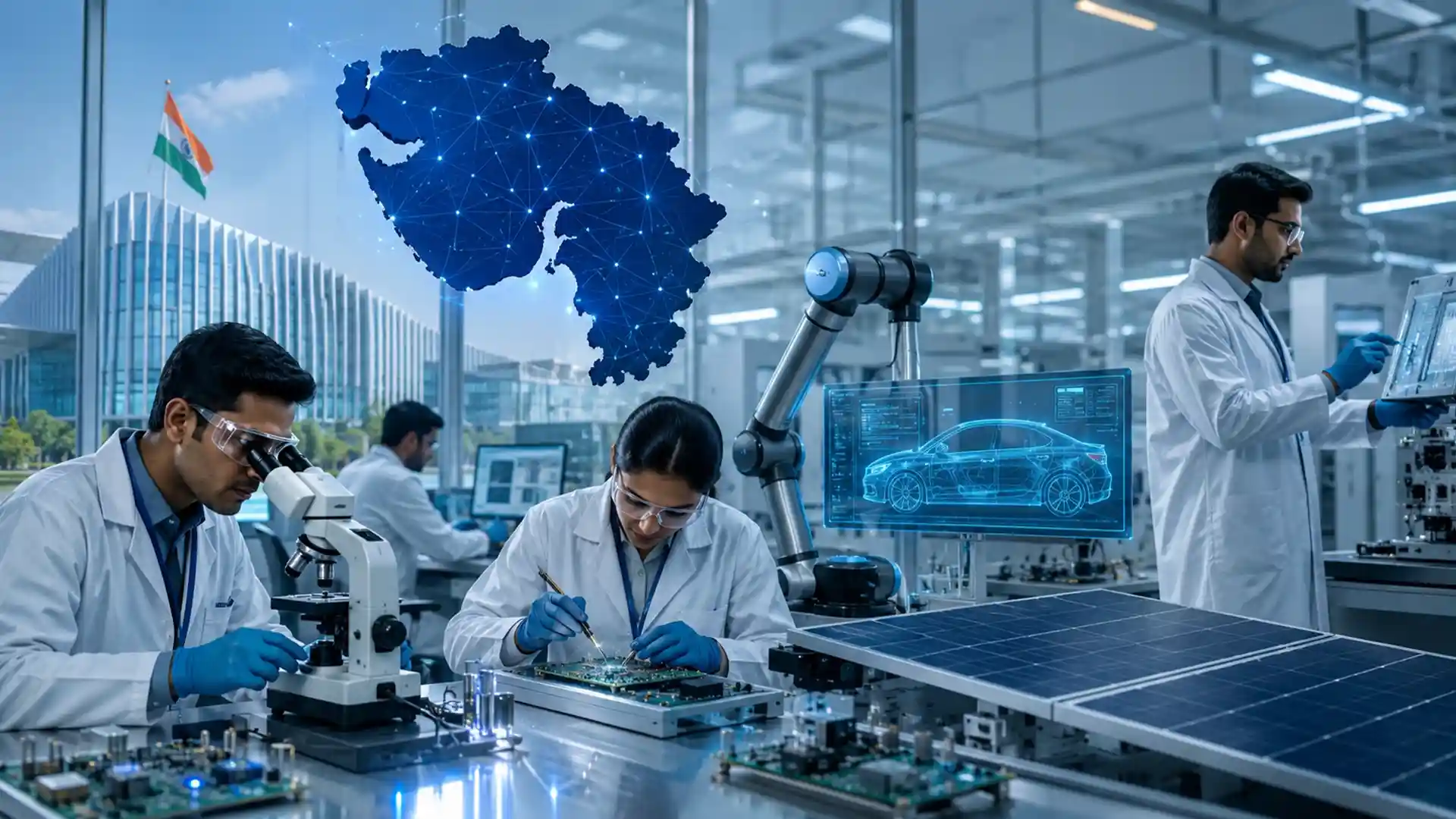
One of the most notable features is the strong push for Gujarat R&D incentives. The policy offers 50% capital subsidy for R&D centres and up to 20% subsidy on building costs. For the first five R&D centres with a minimum investment of ₹300 crore each, the state promises ₹50 crore per year for five years.
This is significant because India has long been strong in manufacturing assembly but weak in original design and innovation. Many global firms still conduct core research in the US, Japan, Germany, or South Korea. Gujarat wants to change that equation by making serious R&D financially attractive and strengthening Gujarat manufacturing growth.
2. Ultra Mega Projects
 A new category called Ultra Mega Projects Gujarat has been created for investments of at least ₹10,000 crore that also create a minimum of 3,000 jobs. Such projects in Category-A talukas can get up to 40% incentive support, and 35% in Category-B talukas, spread over 12 years.
This red-carpet approach targets the biggest industrial players ready to make transformative commitments and strengthen Gujarat as a leading Gujarat manufacturing hub.
3. Special Support for MSMEs
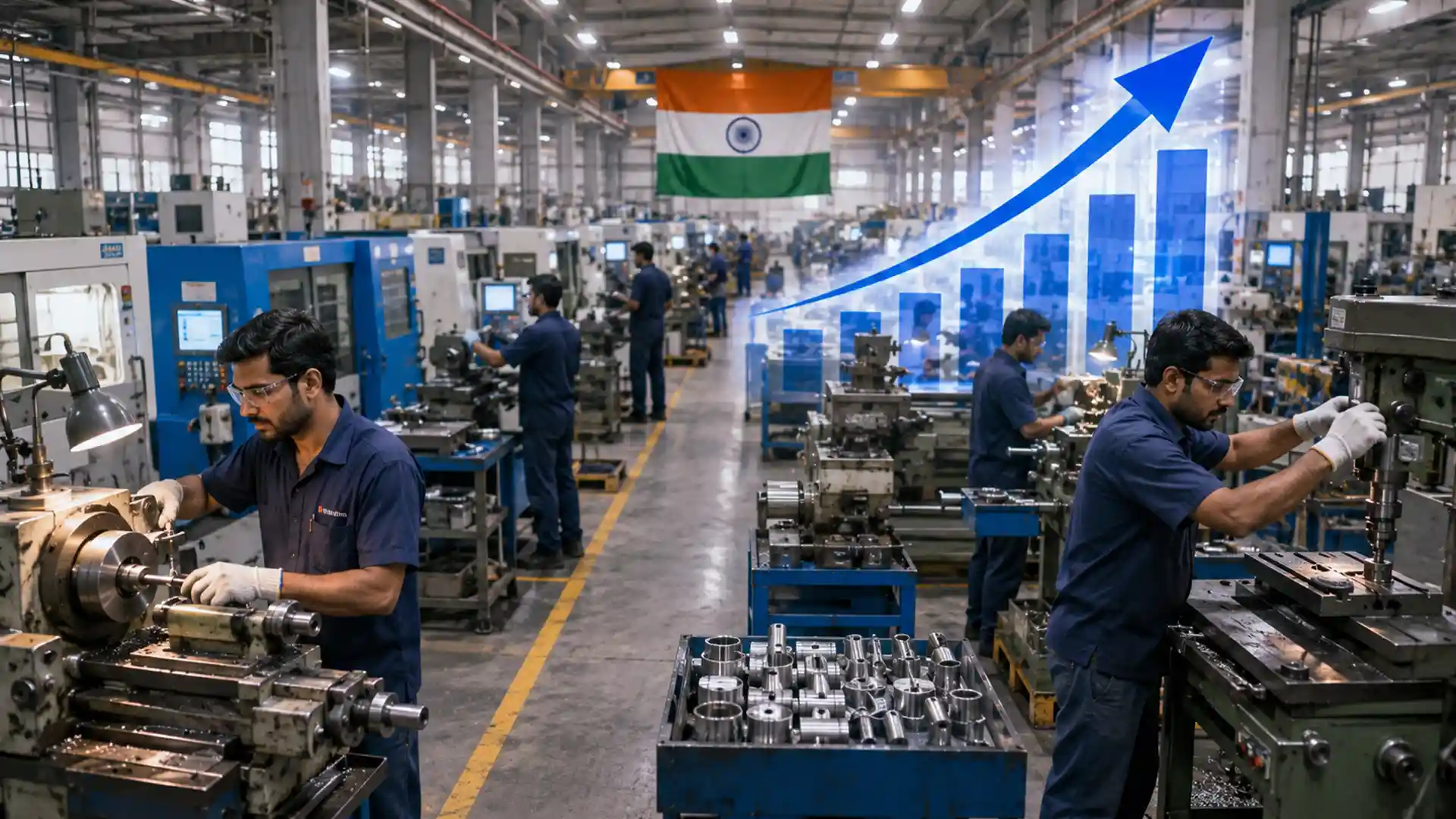
Recognising that small and medium enterprises form the backbone of employment, the policy introduces a dedicated incentive framework under Gujarat MSME incentives. MSMEs in Category-A areas can avail up to 45% effective incentive support through a mix of capital subsidy, interest subsidy, and power tariff benefits.
Gujarat has already seen strong momentum — ₹86,418 crore invested in MSMEs in the last five years, generating over three lakh jobs. The new policy aims to accelerate this further and improve Gujarat export growth
4. Project THRIVE – Decentralising Industry
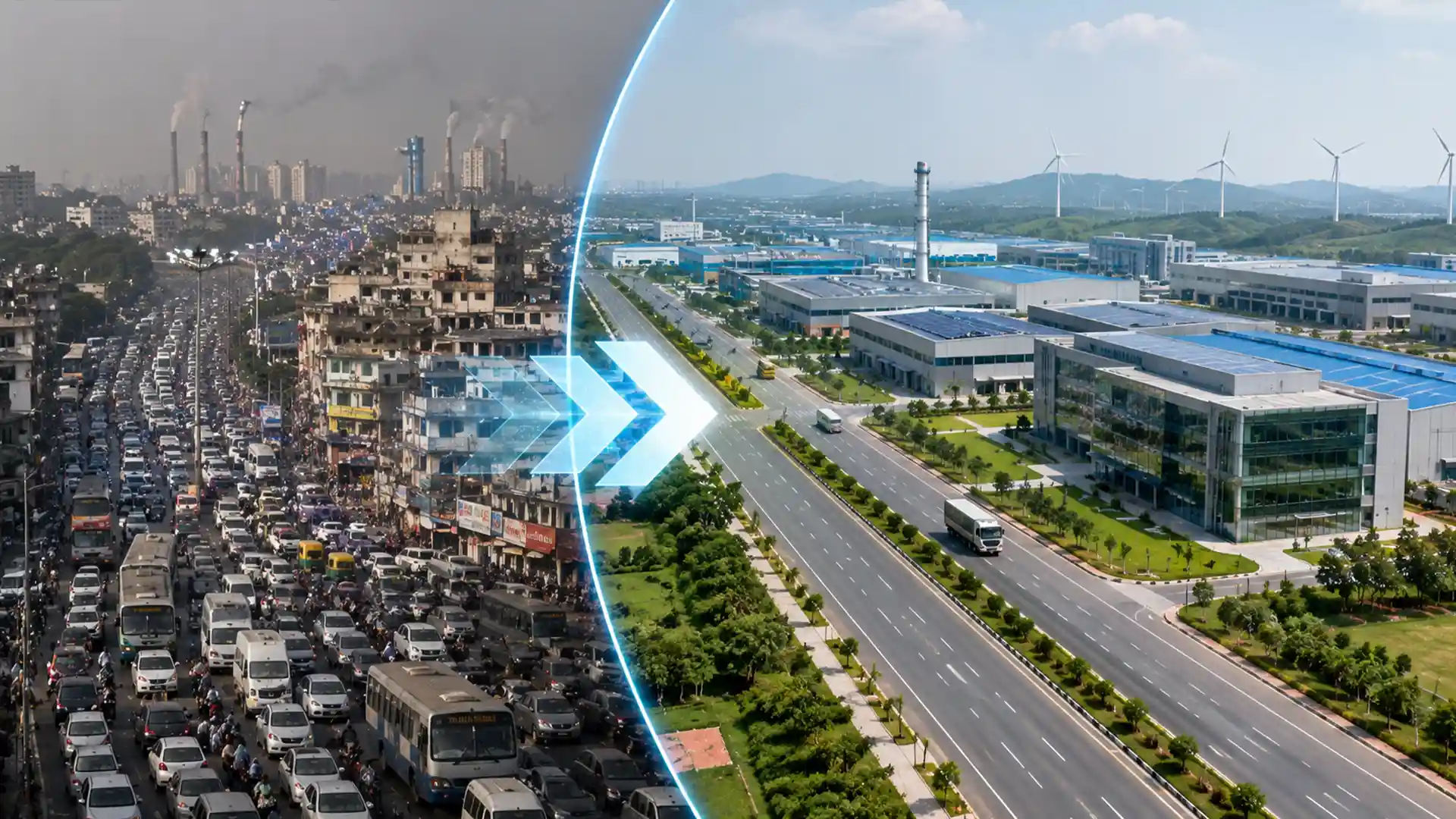
Perhaps the most innovative component is Project THRIVE Gujarat (Transition for Harmonized Relocation and Inclusive Vibrant Economy). It seeks to shift industries out of congested cities like Ahmedabad, Surat, and Vadodara to reduce pressure on urban infrastructure, traffic, and pollution.
Units that relocate will be treated as new units, eligible for full incentives, wage support, housing assistance, and easier land conversion. The idea is to let cities breathe while developing newer industrial hubs through improved Gujarat infrastructure development.
5. Focus on 21 Thrust Sectors
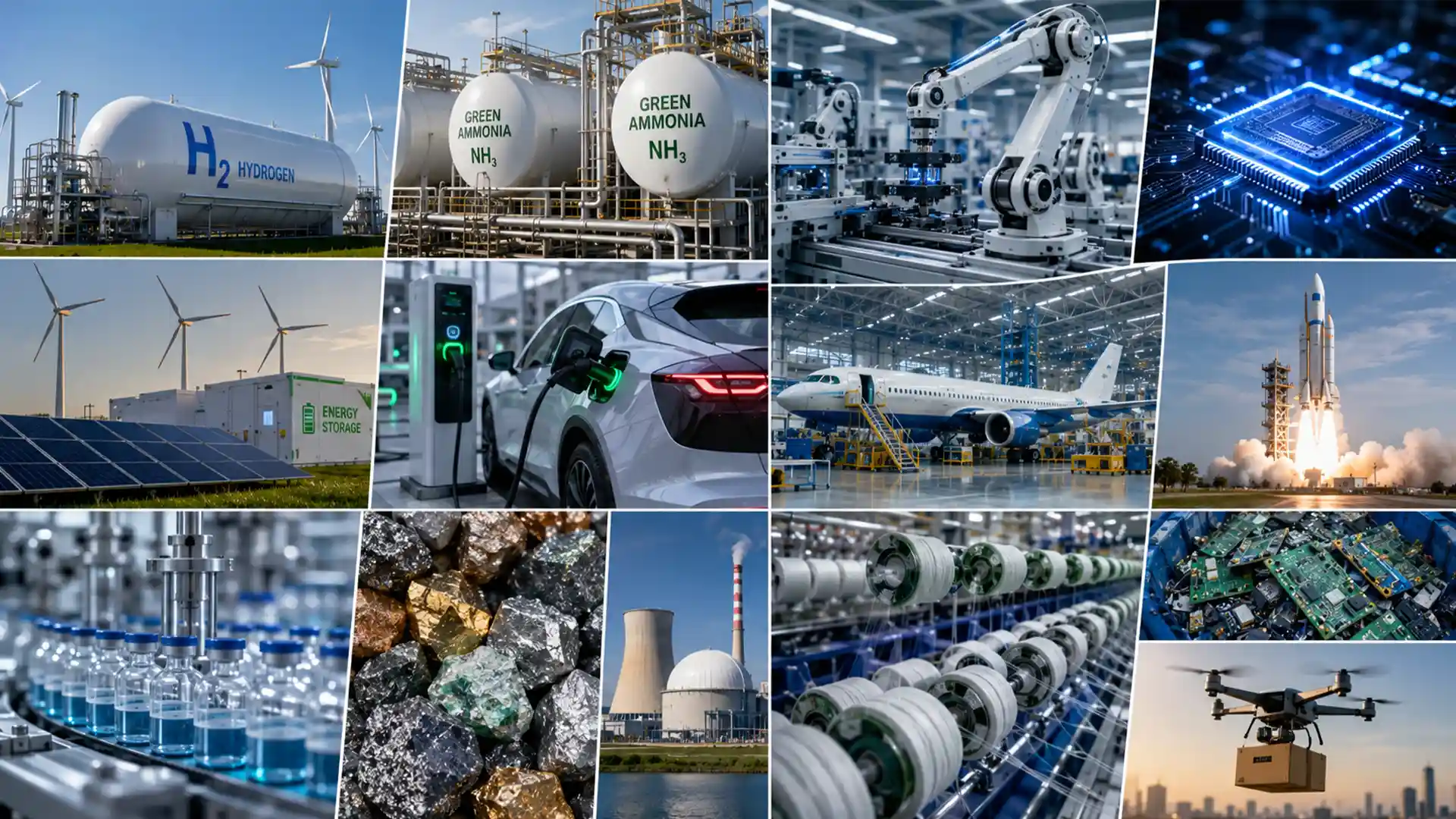
The policy identifies 21 forward-looking sectors that are expected to shape the global economy between 2030 and 2050. These include green hydrogen, green ammonia, electrolysers, renewable energy equipment, battery storage, electric mobility, aerospace, space manufacturing, semiconductors, pharmaceuticals, critical minerals, nuclear power equipment, textile recycling, e-waste recycling, robotics, and drones.
By aligning incentives with future industries rather than yesterday’s sectors, Gujarat is trying to position itself at the forefront of Gujarat future industries and the next industrial revolution.
Who Benefits and How?
For the State
Gujarat’s long-term vision is to contribute 10% to India’s national GDP and become a $3.5 trillion economy by 2047. Successful implementation could create lakhs of jobs, boost tax revenues, and drive infrastructure development, particularly in Tier-2 and Tier-3 cities.
The state’s world-class ports — Mundra, Kandla, Hazira, and Pipavav — give it a natural export advantage, especially as global supply chains shift under the China+1 strategy.
This supports Gujarat’s broader Gujarat economic growth model, built around industrial expansion, exports, and investment-friendly policies.
For Businesses

MSMEs stand to gain the most immediate benefits through generous incentive packages. Startups get sustenance allowances up to ₹30,000 per month and seed funding up to ₹40 lakh, with extra support for high-tech, fintech, biotech, and green ventures.
Women entrepreneurs receive additional interest subsidies, rental assistance, and dedicated programmes. These initiatives support Gujarat investment policy 2026 goals of inclusive industrial growth.
For the Country
When Gujarat succeeds in semiconductors, green hydrogen, or aerospace, the gains extend beyond state borders. A stronger Gujarat strengthens India’s tech ecosystem, energy security, and defence manufacturing capabilities.
The state’s push for Gujarat semiconductor investment and advanced industries supports the national Make in India Gujarat vision.
Other states are already studying Gujarat’s initiatives, such as the SIR (Special Investment Region) Act, showing a demonstration effect.
The Big Questions: Potential Weaknesses
No serious analysis can ignore the gaps. The policy is ambitious, but ambition alone doesn’t guarantee success.
Scale of the Target
₹10 lakh crore over five years means roughly ₹2 lakh crore annually. While Vibrant Gujarat Summits regularly generate massive MoUs — ₹5.78 lakh crore in one recent edition alone — the conversion rate from MoU to actual investment on the ground remains a challenge across India.
Gujarat has a better track record than most, but execution will determine whether this Gujarat investment policy 2026 achieves its targets.
R&D Incentives Too Restrictive?
The ₹300 crore minimum threshold and limit to only the first five centres may exclude many innovative startups and mid-sized firms. True innovation often emerges from smaller labs rather than only mega centres.
Implementation Challenges of Relocation
Project THRIVE Gujarat sounds excellent on paper, but moving established industries is difficult. Supply chains, skilled workers, and logistics are already clustered in existing cities.
New locations will need robust roads, reliable power, water, and housing before companies shift voluntarily. This demands exceptional coordination and advance Gujarat infrastructure development.
Skill Gap in Advanced Sectors
Targeting semiconductors, robotics, green hydrogen, and aerospace is forward-looking, but these sectors require highly specialised talent.
Without proper skill development, industries may rely on imported expertise or recruit talent from other states.
Environmental Sustainability
Gujarat already has pollution hotspots like Vapi and Ankleshwar. Heavy industrial expansion in green sectors must be matched with strict environmental enforcement.
Balancing rapid growth with ecological protection remains one of the toughest challenges for Gujarat industrial development.
The Bigger Picture
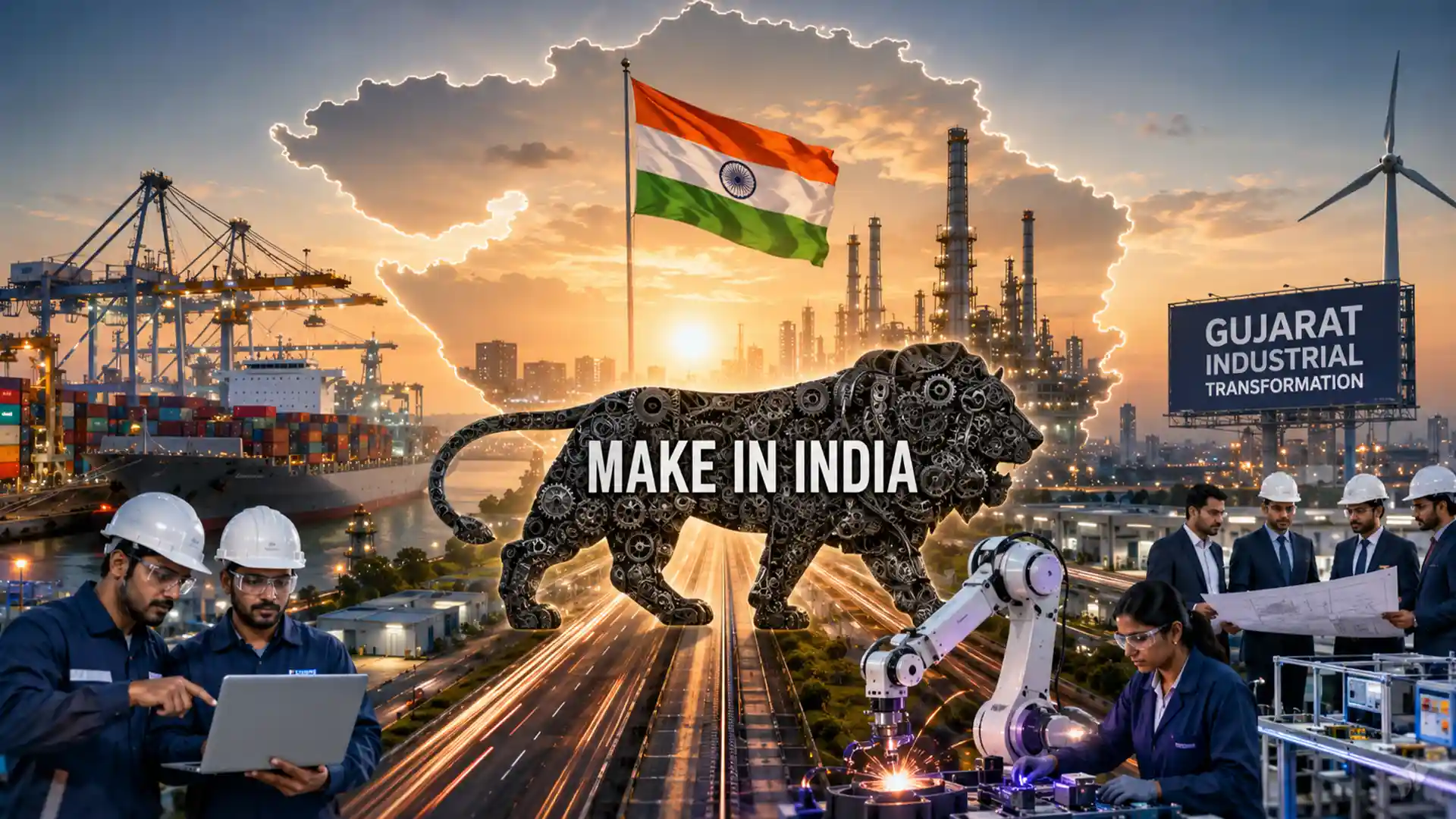
There was a time when “Made in Germany” meant uncompromising quality, “Made in Japan” stood for precision engineering, and “Made in China” represented unmatched scale.
The world is now waiting for “Made in India” to mean something equally powerful — not just assembly, but design, innovation, and high-value manufacturing.
Gujarat’s policy builds on the state’s proven strengths: proactive governance, excellent port infrastructure, and an ecosystem that continues to attract major players.
The next five years will reveal whether this ₹10 lakh crore vision becomes a powerful dream or an economic reality that reshapes Gujarat and India’s industrial future.
If Gujarat delivers, it could become a model for Gujarat industrial transformation and contribute significantly to the vision of Viksit Bharat.