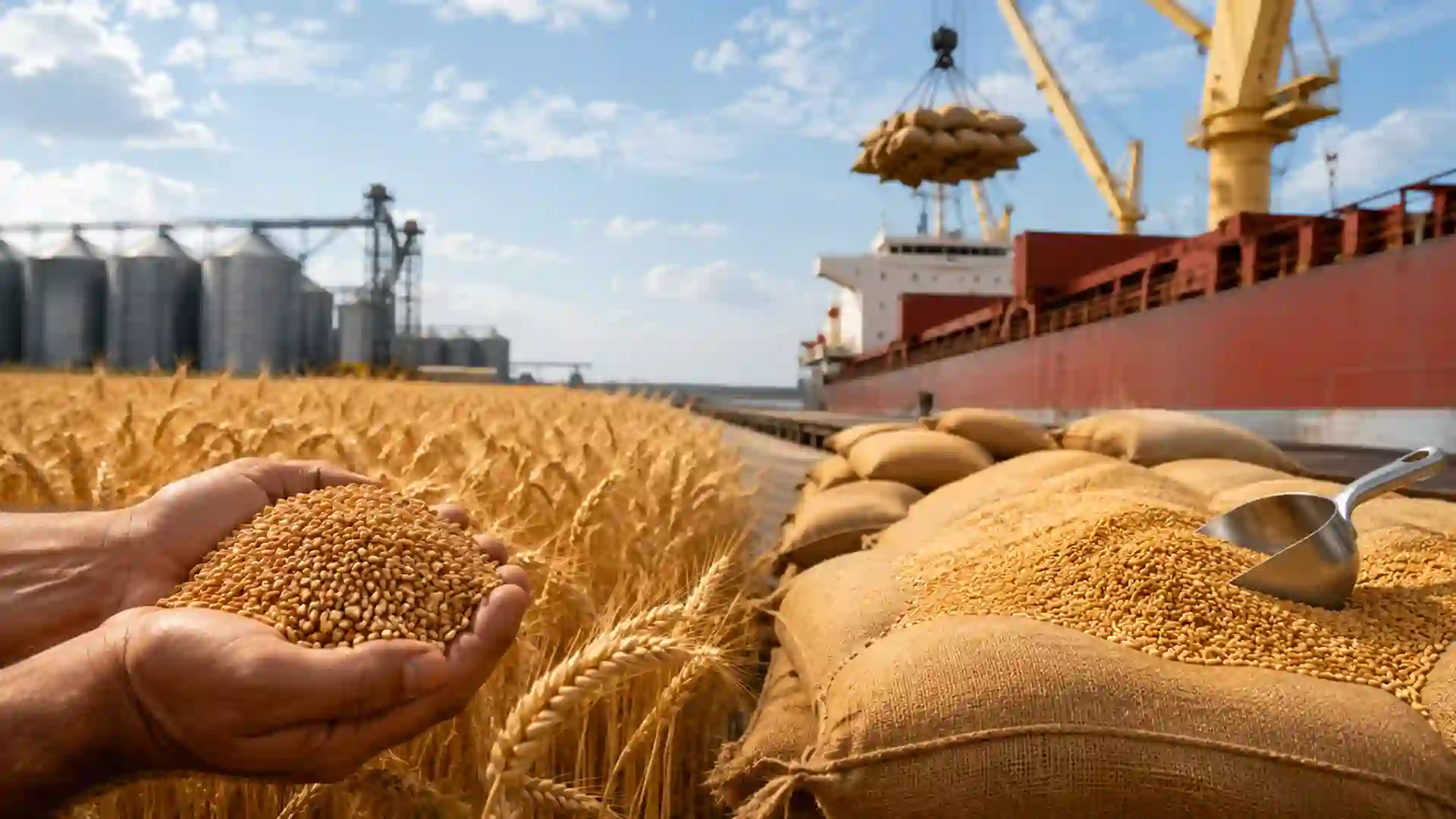
According to sources, India has lifted the wheat export ban, enabling traders to resume overseas shipments after government stocks reached comfortable levels. The move comes as food-security concerns have eased and wheat inventories are at healthy levels.
But the removal of the ban on wheat exports may not immediately translate into a major rise in overseas shipments. Currently, Indian wheat is priced higher than several international alternatives, making it less competitive in global markets. Therefore, traders expect exports to increase gradually rather than surge immediately.
Nevertheless, the decision could create new opportunities for wheat farmers and exporters. Moreover, Strong government procurement has helped build substantial wheat stocks, providing greater confidence about domestic availability while creating room for international trade.
Global market conditions could also support Indian exports. Disruptions to major grain supply routes and firmer international wheat prices could improve the export outlook. However, domestic wheat prices remain the key challenge for Indian traders. For wheat production, the policy shift signals greater confidence in domestic supplies. For farmers, stronger export opportunities could potentially improve market access and returns if Indian wheat becomes more competitive internationally.
The major question now is whether India’s large wheat stocks and strong production will translate into substantial exports—or whether high domestic prices will continue to keep Indian wheat less competitive in global markets.