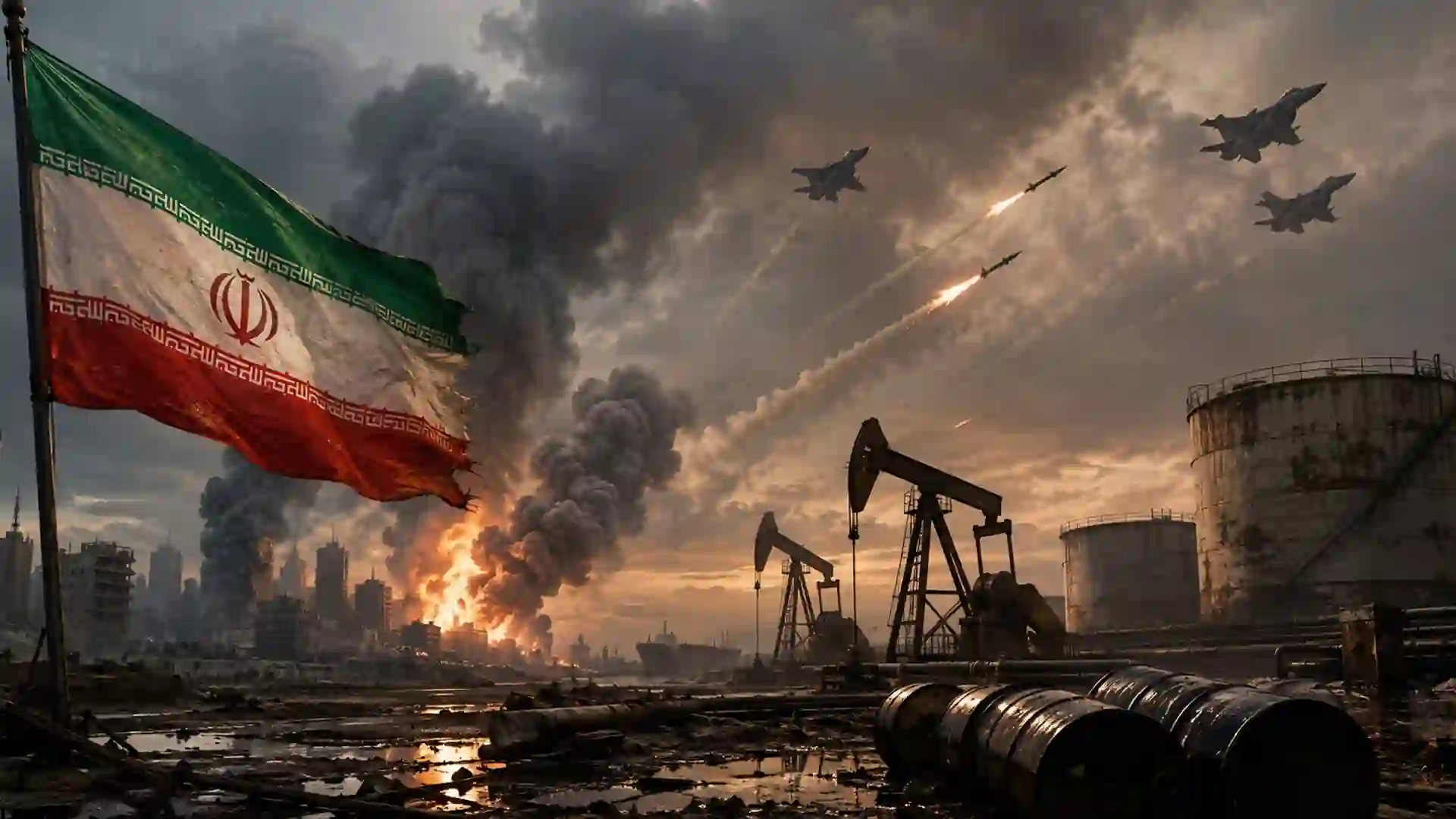
When a conflict moves beyond the battlefield and begins damaging an entire economy, its impact can quickly spread across borders. The US-Iran war is now raising concerns not only about regional security but also about inflation, energy markets and the global economy.
US-Iran war: Trump rejects extension of MoU
US President Donald Trump has said Washington does not want to extend its memorandum of understanding with Iran, which expired on Monday.Not only this, but he called on Tehran to surrender. He has also claimed that discussions are taking place with Iran’s Revolutionary Guard Corps, although the IRGC has denied such talks.
Iran’s Economy Under Severe Pressure
The growing Middle East conflict is placing Iran’s economy under a huge strain. According to reports, Iran’s inflation rate has reached nearly 66%, whereas food and beverage prices have reportedly surged 128% year-on-year.
For households, the situation is becoming extremely difficult. A working-class family reportedly needs nearly 90 million tomans a month to cover basic expenses, compared with approximately 25 million tomans for a minimum-wage worker. Particularly, this widening income gap underscores the severity of Iran’s economic crisis.
Iranian rial has also fallen to record lows
The Iranian rial has also fallen to record lows against the US dollar on unofficial markets which add further pressure to household budgets and increase the cost of imported goods.
Strait of Hormuz Could Become the Next Major Risk
The Strait of Hormuz continues to be essential to the security of the world’s energy supply.Notably, any escalation that disrupts oil shipments through the strategic waterway could send crude oil prices sharply higher. Brent crude has been trading nearly $91.45 per barrel, whereas WTI crude has reached approximately $85.22. Further supply disruptions could push Brent Crude and WTI prices higher, increasing inflationary pressure for energy-importing nations.
Impact on India and Global Markets
For India and other major oil importers, higher oil prices could increase import bills, put pressure on the rupee and make inflation harder to control. Global investors are also closely monitoring oil prices, the dollar and interest-rate expectations.
Therefore, the US-Iran war is no longer only a geopolitical issue. It could affect energy costs, food prices, currencies and borrowing conditions worldwide. The significant question now is how much additional shock the Iranian economy and global markets can absorb.