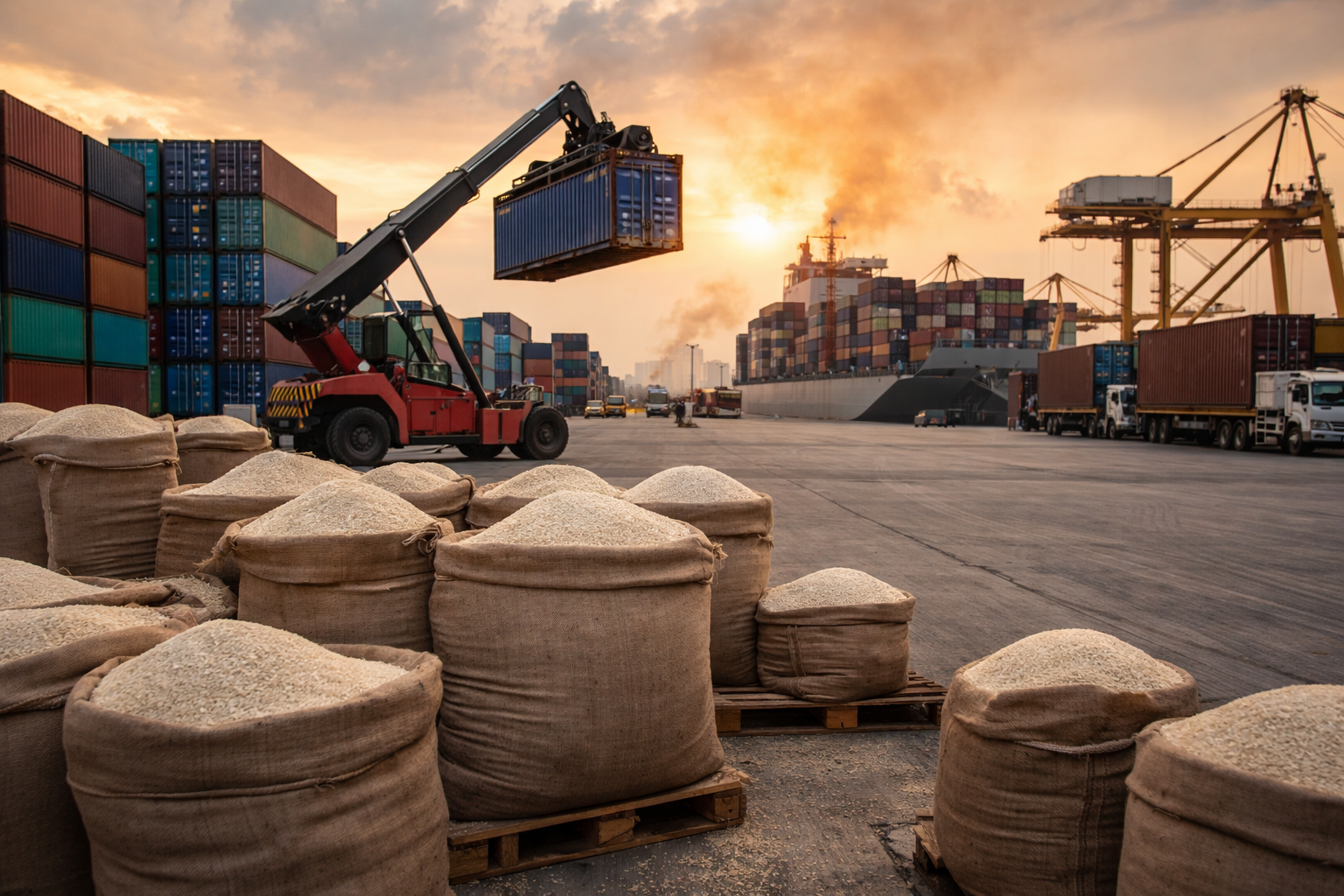
Global rice exports are facing significant disruptions as a worldwide shipping crisis severely impacts trade routes to Iraq. Reports indicate that skyrocketing freight costs and persistent container shortages have brought rice shipments to an almost stagnant position. Exporters who once relied on stable sea freight routes are now grappling with sharply increased transportation costs, making long-distance rice shipments commercially unviable. Many exporters are reconsidering contracts and delaying deliveries due to shrinking profit margins.
Industry analysts note that soaring freight rates and container shortages in global trade are major factors creating logistical bottlenecks. The situation has intensified because of ongoing instability in the Gulf region, including elevated fuel prices and strategic tensions affecting shipping lanes. These challenges have prompted suppliers to divert shipments to closer destinations where transportation costs remain more manageable.
Global rice exports: Impact of Gulf Instability on Rice Supply Chains
Countries like Iraq, which depend heavily on imported rice to meet domestic demand, could experience higher local prices and supply uncertainties in the coming months. Traders report that container imbalances—where shipping units remain stuck at certain ports rather than circulating efficiently—have worsened the crisis. The impact of Gulf instability on global rice supply chains has put governments and industry stakeholders under pressure to find solutions that stabilize trade flows and ensure food security for import-dependent nations.
Experts say that without urgent intervention, the global rice trade could see prolonged delays, affecting both exporters and consumers. Efforts to resolve logistics challenges, reduce freight volatility, and restore container rotation efficiency are critical for returning normalcy to international rice markets.