
India is considering introducing an export duty on some types of rice in an attempt to boost supply and control prices. A 100% broken type rice and select high quality non-basmati rice types – which have both been becoming rarer and more costly in some southern Indian regions – could be included in such an export duty, Reuters reported on November 23. The report was based on information from two government and two industry sources.
The government is currently consulting various ministries on how to move forward. Once inter-ministerial consultations have taken place, a decision is likely to then be made. This is to encourage supply to domestic sectors and consumers who are experiencing greater costs.
Whilst India continues to export large quantities of rice, the government faces pressure to further assess how best to manage supply for both domestic and international markets, given the upward trend in rice prices.
Broken rice and high quality non-basmati rice
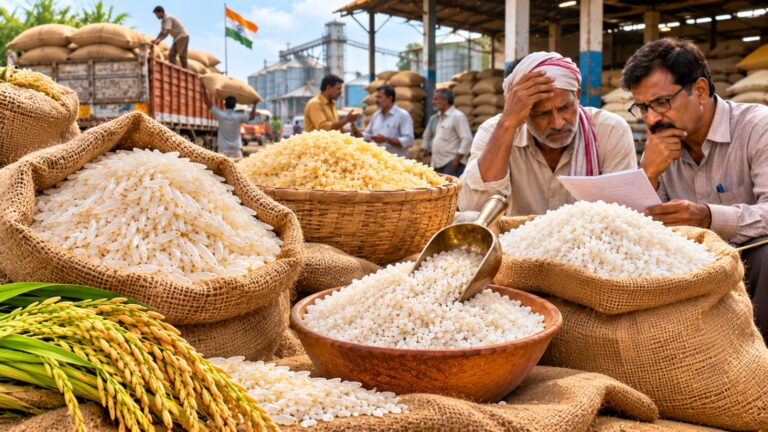
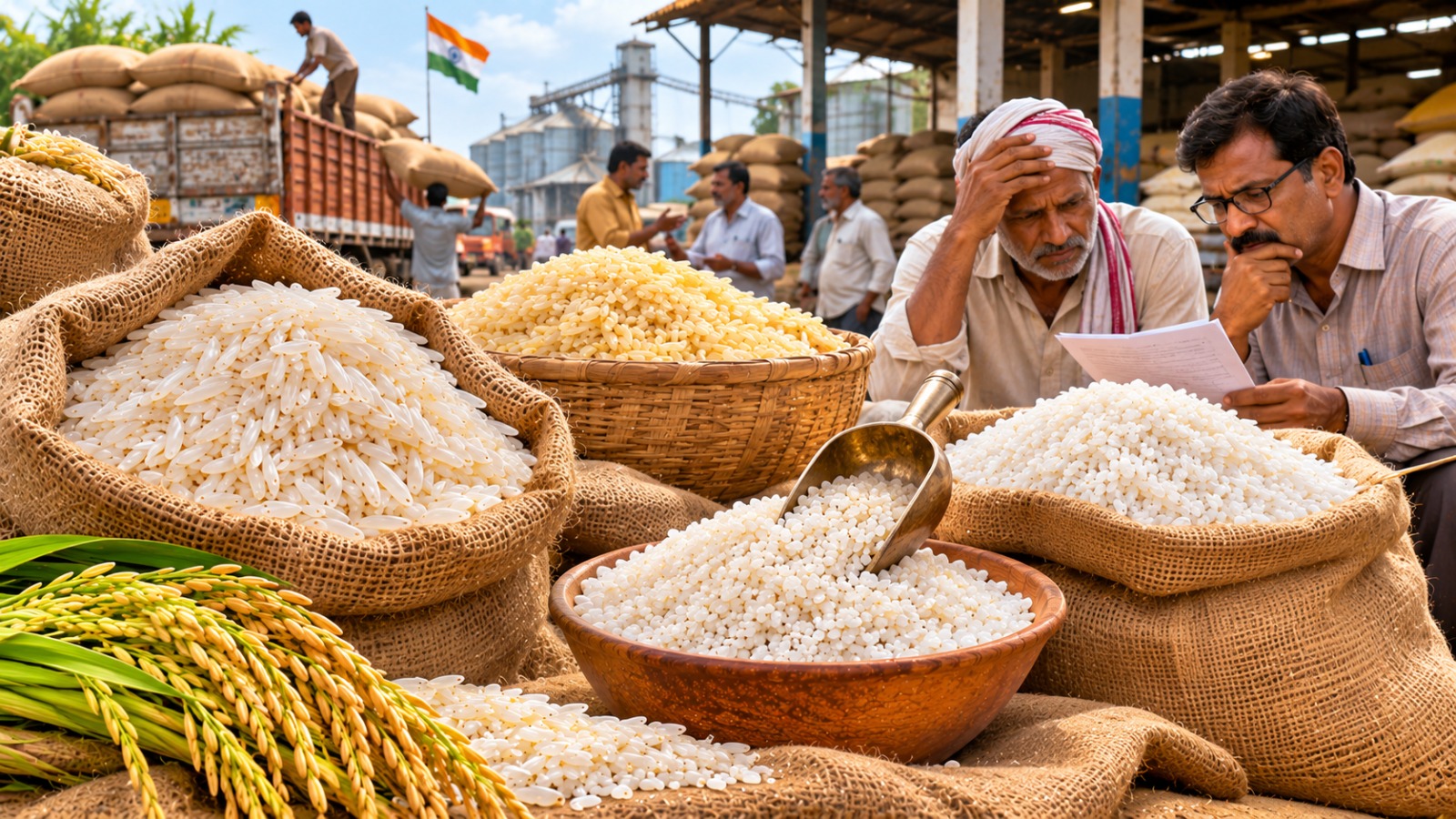
Export duty has particular relevance for broken rice as this is used extensively within the poultry and cattle feed sectors. As the price of broken rice has risen so too have the costs for these sectors. Consequently, industry has called on the government to control rice exports and boost supply.
In addition to broken rice, select high quality non-basmati rice types have also experienced high price rises. Supply issues have also impacted on supply in southern Indian regions.
A government official confirmed that the Centre is reviewing ways to control exports and assist domestic sectors which have been impacted by price rises.
Nevertheless, whilst this is currently being considered, no formal decision has yet been made to control Indian exports.
India’s rice stock levels cast doubt on export controls
Export duty proposals must also be viewed against the backdrop of India’s large government rice stockpiles.
India’s total state stock of unpolished paddy reached a record level of 55.3 million tonnes on November 1 -almost four times the amount required to meet government buffer stock guidelines.
This has prompted debate in the industry on whether export controls are needed to further boost supply.
Whilst acknowledging that supply continues to exceed demand, even allowing for price rises for some rice types, a Raipur-based rice exporter contended that continuous exports would also allow room to be made for the new paddy crop.
Clearly, there is nuance to be understood regarding the relationship between general supply levels and supply of particular rice types. Although stock levels are high, specific high quality regional and broken rice types are now experiencing supply issues.
Thailand, Vietnam and Myanmar could all gain from India’s export duty
A rise in the cost of exporting Indian rice may shift the international rice market landscape.
India is the world’s biggest rice exporter and has traditionally enjoyed a strong market position over other exporters due to its relatively low export prices.
A 20% export duty could reduce this cost differential and thus open up scope for Thailand, Vietnam and Myanmar to enhance their own market profiles.
Nevertheless, traders believe that rather than halting Indian exports, the export duty may simply result in a reduction in the rate at which India is able to export, given its strong price competitiveness.
Any adverse impact on, or rise in, the cost of Indian rice exports is likely to prompt importing nations to look to source rice from a wider range of sources.
Striking the right balance between export competitiveness and domestic pricing
The potential for export controls demonstrates the increasing difficulty faced by the Indian government in simultaneously managing the domestic rice market and upholding India’s strong international market status.
Whilst escalating prices for broken rice and selected high quality non-basmati rice are of concern to both consumers and industry, export controls could also impact on India’s existing trade links, as well as international consumer confidence and India’s export competitiveness.
Such issues are of particular relevance at present as Indian non-basmati rice exports continue to perform strongly. Shipments rose by 6.7% year-on-year to 8.84 million tonnes for the April-October 2026/27 period. This was underpinned by growth in white and broken rice exports.
Consequently, in addition to its influence on domestic pricing, a focused export duty could also impact on export levels and on international sourcing strategies.
Whether or not controlled export policies can successfully alleviate domestic pricing issues, without compromising India’s international market standing, will be of major interest to the rice export, milling and trade sectors, as well as importing nations.