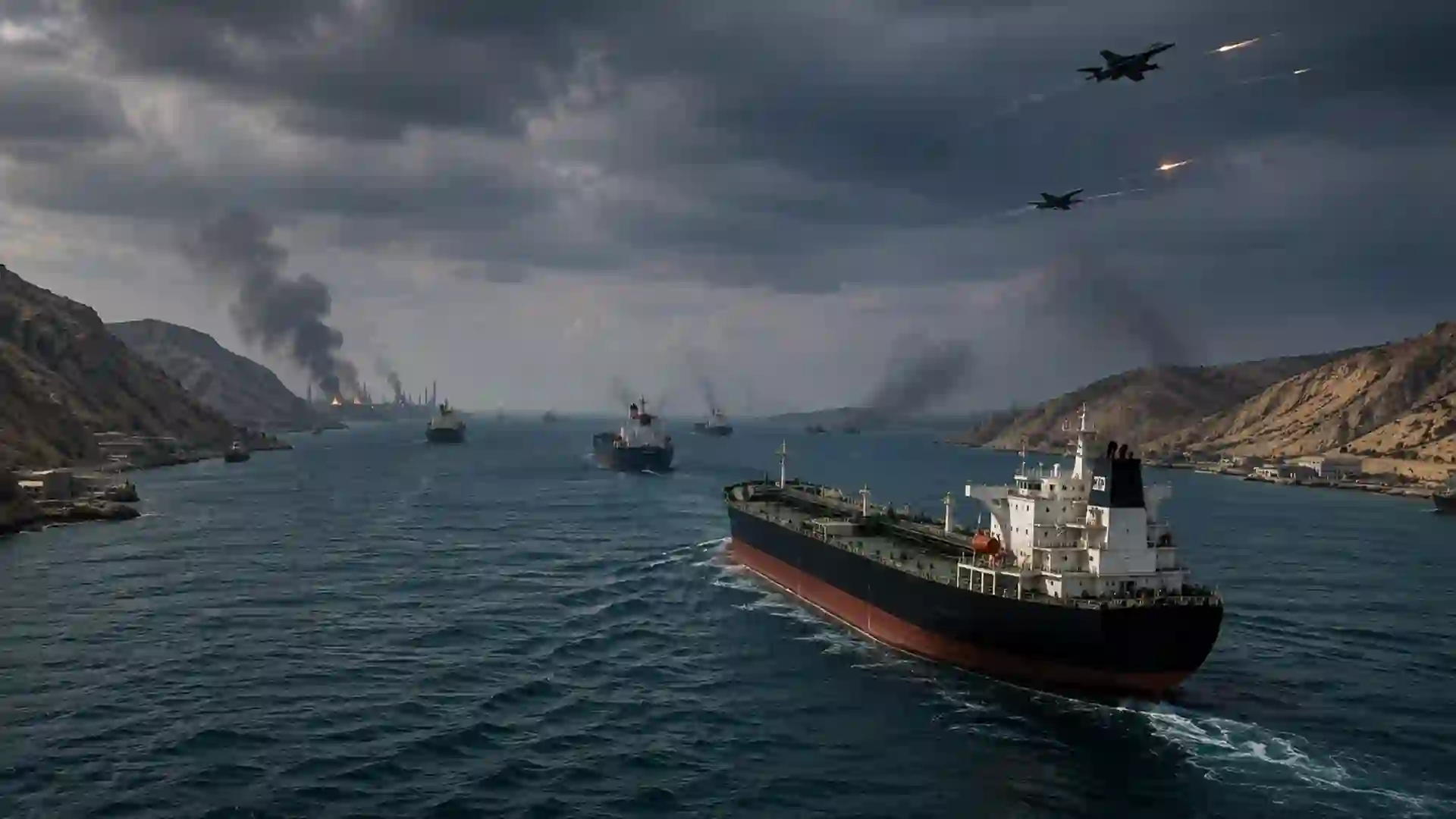
The US-Iran war and escalating tensions in the Middle East are putting renewed focus on the Strait of Hormuz, i. e one of the world’s most important energy chokepoints. Moreover, any prolonged disruption to shipping through the strategic waterway could have major consequences for global crude oil supplies, prices and economies that depend heavily on imports.
As the standoff between the United States and Iran has intensified, US President Donald Trump said that talks with Tehran are not currently taking place. Washington has maintained pressure on Iran, whereas Tehran has reportedly demanded the lifting of restrictions and other concessions before agreeing to restore normal shipping conditions through the Strait.
Strait of Hormuz Becomes Major Flashpoint. Here’s how?
The Strait of Hormuz is critical to global energy markets because a substantial share of international oil shipments passes through the waterway. Therefore, disruptions could trigger a sharp rise in crude oil prices and rise volatility in the commodity markets. In addition, the wider Middle East conflict is creating concerns about regional security. Reports of missile activity involving Iran and the UAE have added to uncertainty, while diplomatic efforts remain vague.
Brent and WTI Prices Under Pressure, but why?
Notably, oil markets have responded to the intensified geopolitical risk. Brent crude is trading nearly $91.74 a barrel, whereas WTI crude is near $85.68. A sustained disruption could push benchmark oil prices higher if traders begin pricing in tighter supplies. Higher energy costs could also raise transportation, manufacturing and logistics expenses worldwide.
Why India Is Particularly Vulnerable?
India is especially exposed to a prolonged oil shock since it imports more than 85% of its crude requirements. A sustained rise in global oil prices could therefore increase the country’s import bill and put pressure on the current account of the economy. An average $10-per-barrel increase in crude prices could raise India’s net oil import costs by nearly $12–13 billion and widen the current-account deficit by roughly 0.3% of GDP. Not only this, but higher crude prices can also put pressure on the Indian rupee and increase costs for airlines and fuel companies. Particularly, Aviation is sensitive because jet fuel represents a major component of airline operating expenses. For consumers, prolonged expensive oil could translate into higher transportation costs, inflationary pressure and more expensive goods and services. The major question now is whether diplomacy can prevent the Strait of Hormuz crisis from developing into a prolonged energy shock.