
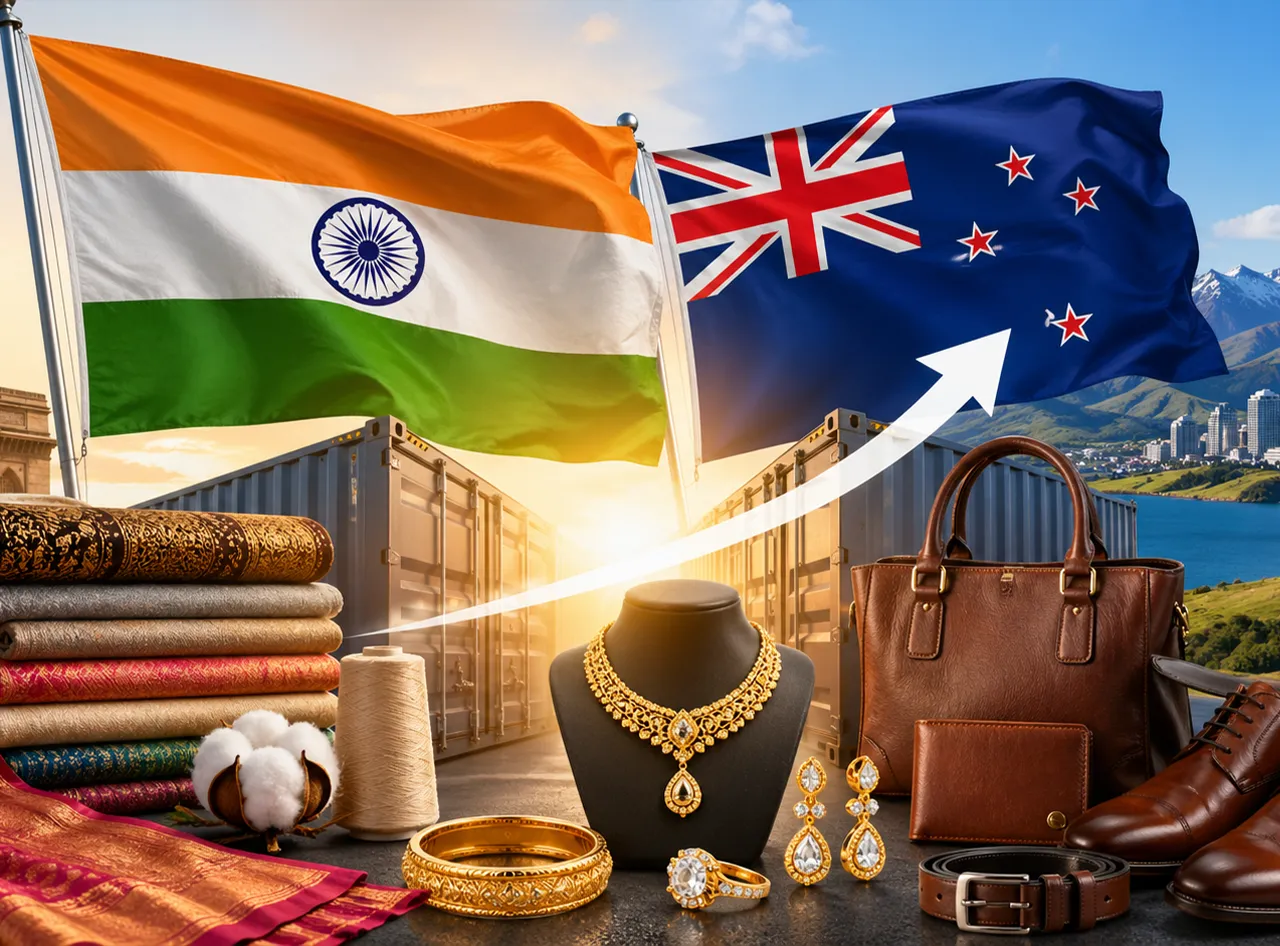
The recently discussed free trade Agreement between India New Zealand is expected to significantly benefit India’s export-driven industries, especially textiles, gems and jewellery, and leather. Under the proposed agreement, Indian exports will gain duty-free access to New Zealand markets, improving competitiveness and opening new growth opportunities.
A free trade Agreement typically reduces or eliminates tariffs between countries, allowing smoother trade flows and lower costs for exporters. In this case, the removal of import duties is expected to strengthen Indian exports, particularly in labour-intensive sectors such as jewellery and apparel manufacturing.
Among all sectors, gems and jewellery is projected to see the highest growth, with exports potentially nearly tripling in the coming years due to improved market access. Similarly, textiles and leather goods are likely to gain strong demand in New Zealand due to better pricing and supply advantages.
The agreement also highlights the evolving trade relationship between India vs New Zealand, where both countries aim to expand economic cooperation while balancing domestic industry interests. While India gains broader access to a high-income market, New Zealand also benefits from reduced trade barriers on selected goods and services.
To understand the broader context, a what is free trade Agreement refers to a trade pact between nations that reduces restrictions such as tariffs, import quotas, and duties, making international trade easier and more cost-effective.
However, experts note that the overall impact on total exports may remain moderate, as many goods already faced low or zero tariffs before the agreement. This means gains will be concentrated in specific high-potential sectors rather than across all industries.
Still, the agreement is expected to provide a strategic boost to key segments of Indian exports, strengthening India’s global trade footprint