

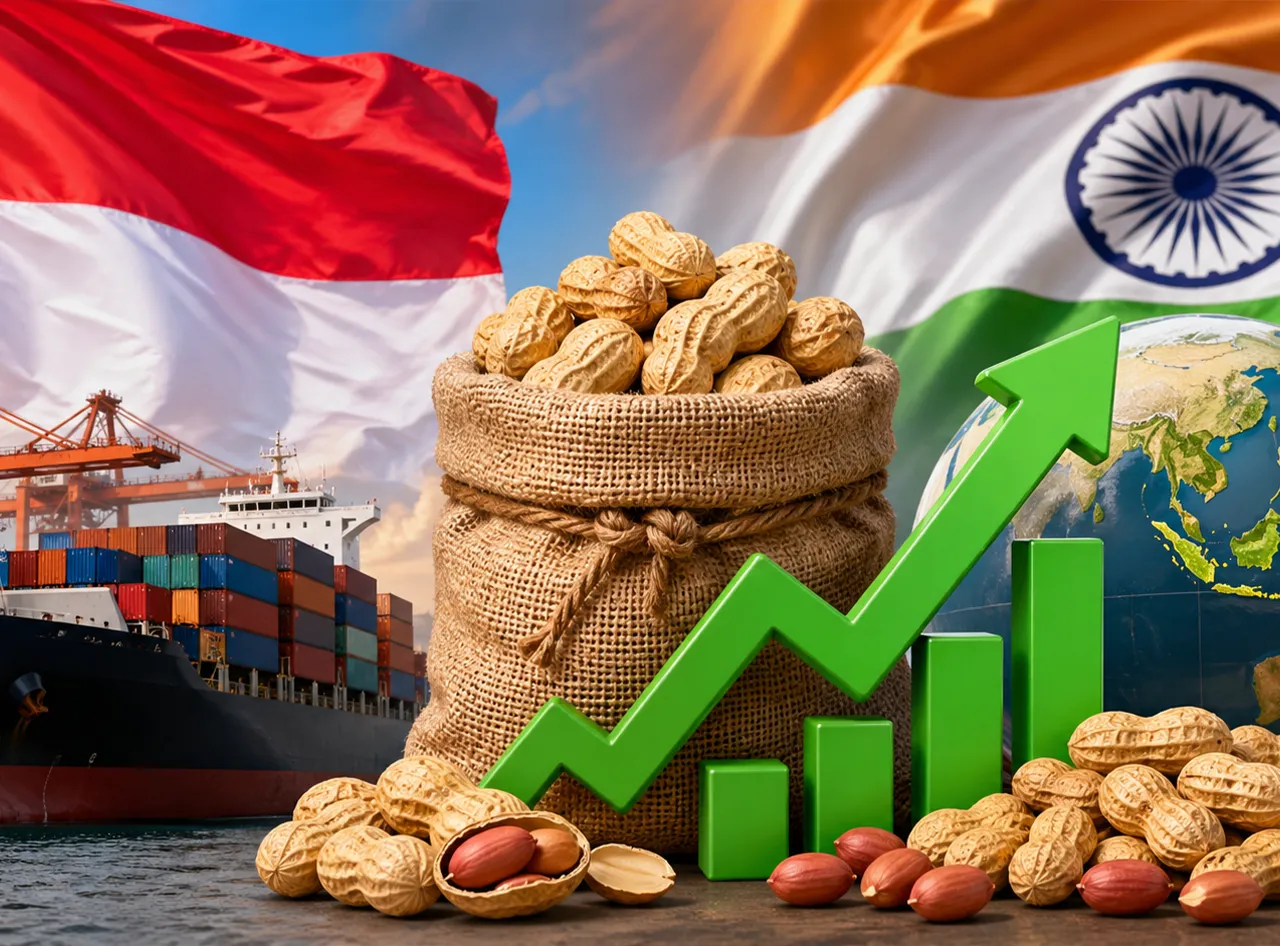
Indonesia Imports New Peanut Quota Hits Indian Export Growth
The latest changes in Indonesia imports policy are set to reshape global agricultural trade, as the country introduces a new quota-based system for peanut shipments. This regulatory shift is expected to directly affect international suppliers, particularly India, which has been a major exporter in the segment.
The tightening of Indonesia imports comes through stricter volume caps and enhanced approval requirements for foreign suppliers. As a result, Peanut exports from India may face reduced shipment opportunities, creating uncertainty for exporters who depend heavily on Southeast Asian demand.
India has traditionally supplied a significant share of peanuts to Indonesian buyers, and Peanut imports from India have played a key role in meeting Indonesia’s growing food processing and snack industry demand. However, with the new quota system in place, exporters may now need to adjust pricing strategies and diversify their target markets.
The policy change is also expected to influence peanut importers in Indonesia, who may face supply shortages or higher procurement costs due to restricted import volumes. Industry experts suggest that these import controls could disrupt established trade flows and encourage sourcing from alternative suppliers.
At the same time, the evolving regulatory landscape highlights broader concerns around indonesia imports and rising protectionist measures in agricultural trade. Exporters are increasingly being forced to adapt to stricter compliance standards and shifting market access conditions.
Despite the challenges, analysts believe this could push Indian exporters to explore new regions, invest in value-added processing, and strengthen competitiveness in global peanut markets. However, in the short term, the quota system is likely to weigh on Peanut exports and disrupt established trade relationships.