
Maharashtra Banana Exports Hit Hard Amid West Asia Conflict
Maharashtra Banana Exports Hit Hard Amid West Asia Conflict
The Maharashtra banana export industry is facing a severe crisis due to ongoing geopolitical tensions in West Asia, disrupting key maritime trade routes and leaving thousands of tonnes of perishable produce stranded. The situation has created significant challenges for exporters, farmers, and the overall agricultural supply chain.
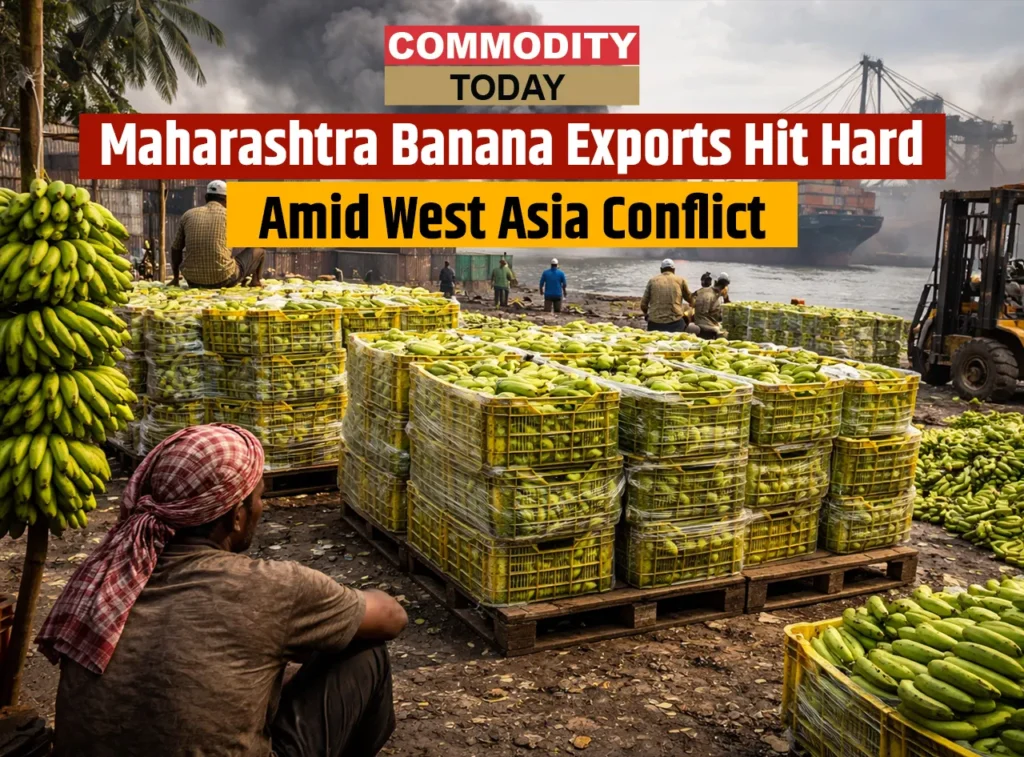
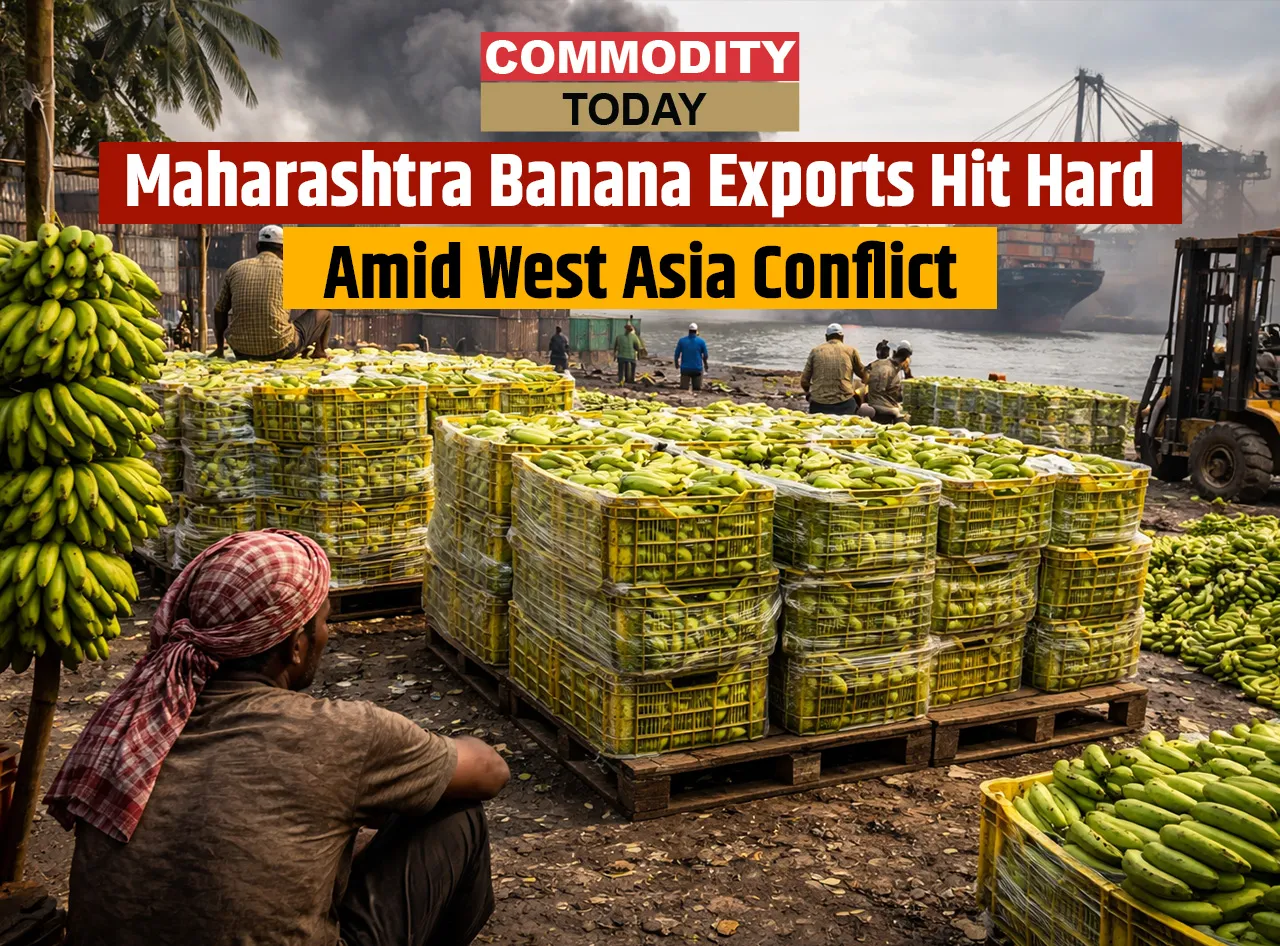
According to recent reports, nearly 150 refrigerated containers filled with bananas are stuck at Mumbai’s Jawaharlal Nehru Port, while additional shipments remain stranded at Gujarat’s Mundra port. Each container carries around 20 tonnes of bananas, highlighting the scale of losses being faced by exporters.
The conflict has led to shipping delays, route diversions, and suspension of cargo bookings, particularly to Gulf countries, which are among the largest markets for Indian bananas. As a result, exporters are unable to move fresh consignments, causing congestion at ports and cold storage facilities.
Maharashtra, especially regions like Solapur and Jalgaon, plays a crucial role in India’s banana exports. The disruption comes at a time when demand in West Asia is usually high due to the festive season, making the losses even more significant. Exporters report that shipping companies are reluctant to operate in conflict zones, further worsening the crisis.
The impact is now being felt at the farm level. With exports halted, excess supply has flooded domestic markets, leading to a sharp drop in banana prices. Farmers, who rely on export markets for better returns, are being forced to sell produce at much lower rates, often below production costs.
Additionally, the perishable nature of bananas makes the situation more critical. Even short delays can reduce quality and market value, increasing financial losses. Cold storage provides limited relief but adds extra costs, further squeezing profit margins.
Experts warn that if the conflict continues, the crisis could deepen, affecting not just banana exports but the broader horticulture sector. There is an urgent need for government intervention, alternative export markets, and improved logistics support to stabilize the situation and protect farmers’ livelihoods.