
UK Food Exports After Brexit Projects Mixed Growth Trends
UK Food Exports Post-Brexit: Record Growth Masks Deeper Trade Challenges
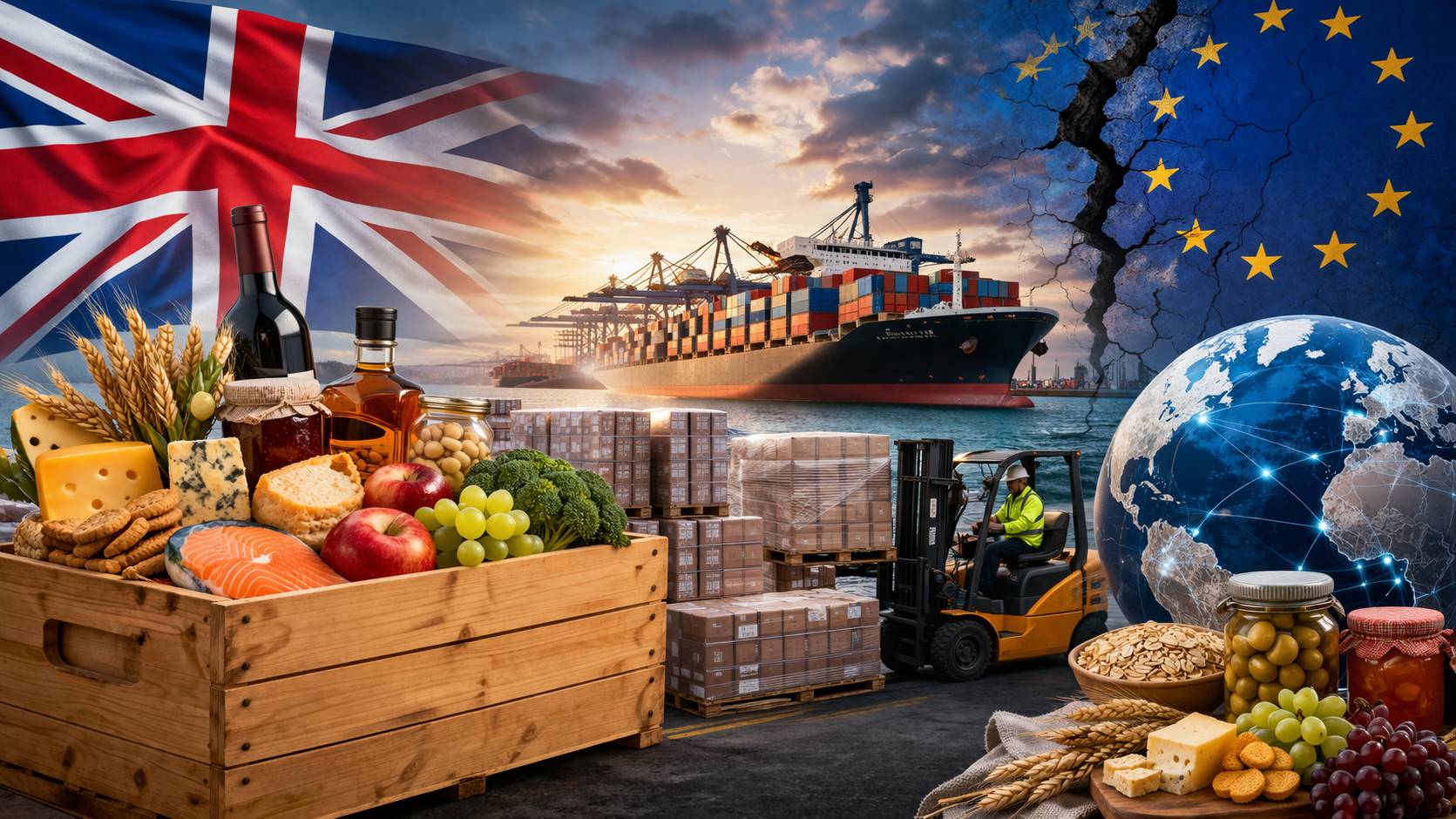
According to the Food and Drink Federation (FDF), the UK food and drink sector has recorded a remarkable year, with exports reaching £25.6 billion in 2025. This represents a 4.8% year-on-year increase and the first time exports have surpassed the £25 billion mark. At first glance, this suggests a strong post-Brexit recovery. But a deeper analysis reveals a more complex trade reality, which is shaped by decreasing volumes and shifting global demand.
Despite rising export value, physical trade volumes remain lower than pre-Brexit levels. Moreover, current figures show volumes are still 27% below 2019 levels, indicating the UK is exporting far fewer goods even as earnings rise. According to Experts, this gap occurs due to inflation, higher production costs, and supply chain disruptions that have inflated export prices. The impact of Brexit is apparent in trade with the European Union, where export volumes have fallen by 31% compared to 2019. In addition, Regulatory checks, border delays, and compliance costs continue to affect trade efficiency with the UK’s largest trading partner.
Additionally, Global trade tensions have affected performance. In late 2025, exports to the United States decreased by 8.9% as a result of tariff modifications; conversely, geopolitical instability in areas such as the Middle East has led to higher shipping expenses, thereby raising global food prices.
But there are strong signs of diversification. UK exporters have expanded into non-EU markets, along with Indonesia recording a 52% rise in imports, Colombia up by 153.7%, and India growing by 12.4%. Besides this, the recently signed India-UK Free Trade Agreement (FTA) is expected to further escalate this momentum by enhancing market access and reducing trade barriers.
Also, membership in the CPTPP trade bloc has supported growth, with export volumes rising 7.8% in member countries. These developments emphasise a strategic shift toward diversified trade partnerships.
While challenges persist in traditional markets, the UK’s evolving trade strategy shows resilience. Notably, the post-Brexit landscape is defined by adaptation, with emerging economies playing a crucial role in shaping future growth.