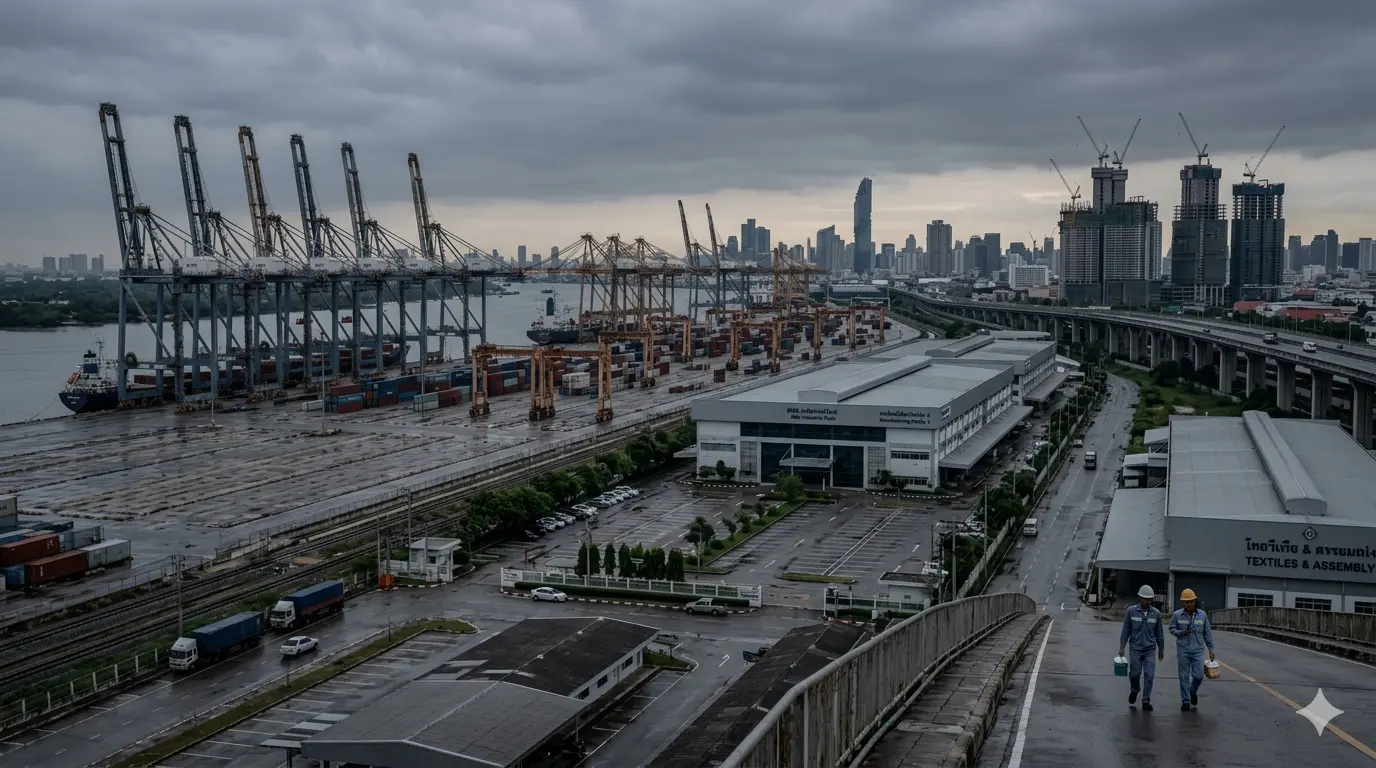
The Thailand economic growth slowdown 2026 has emerged as a major concern, with the country expected to grow only 1.3% to 1.6%, marking its weakest performance in three decades. This projection is backed by the World Bank, IMF, and Bank of Thailand, highlighting serious structural weaknesses in Southeast Asia’s second-largest economy.
According to the World Bank’s April 2026 update, Thailand is among the most vulnerable economies in the region, particularly due to energy dependence and financial pressures.
Thailand economic growth: Rising debt and weak demand drag the economy
One of the biggest challenges behind the Thailand economic growth slowdown 2026 is rising household debt, which stands at 86.8% of GDP. High debt levels are limiting consumer spending, reducing domestic demand, and slowing overall economic activity.
At the same time, Thailand’s manufacturing sector—contributing nearly 25% to GDP—remains heavily dependent on traditional industries, while global competitors are shifting toward EV manufacturing, AI-driven production, and green technology.
Also Read:
Exports, tourism, and currency pressures worsen outlook
Thailand’s export sector is also under pressure due to a strong Baht, making goods more expensive in global markets. Additionally, a 19% US tariff is affecting trade competitiveness.
The tourism sector, a key pillar of the economy, has also seen contraction in 2025. Combined with ongoing political uncertainty following the February 2026 elections, investor confidence remains weak.
Also Read:
Structural bottlenecks limit foreign investment
Experts highlight restrictive policies such as the Foreign Business Act, which limits foreign ownership to 49%. Additionally, sectors like services, logistics, and accounting remain heavily regulated.
This has placed Thailand among the most restrictive economies in OECD services trade rankings, limiting foreign direct investment inflows.
Regional competition intensifies with Vietnam’s rise
While Thailand struggles, Vietnam is growing at over 8%, attracting manufacturing relocation and global investment. This widening gap highlights the urgency of reforms for Thailand.
Without structural changes, analysts warn that Thailand risks losing its regional manufacturing and tourism advantage.
Outlook: urgent reforms needed to reverse the slowdown
The Thailand economic growth slowdown reflects deeper structural issues including debt overload, weak investment policies, and outdated industrial strategy. Experts emphasize that without urgent reforms in trade liberalization, manufacturing modernization, and energy diversification, recovery will remain limited.
Thailand now faces a critical turning point—either embrace reforms or risk falling further behind rapidly rising regional economies like Vietnam.