
India Raises Wheat Export Quota to 5 Million Tonnes Amid Record Production & Global Demand Shift
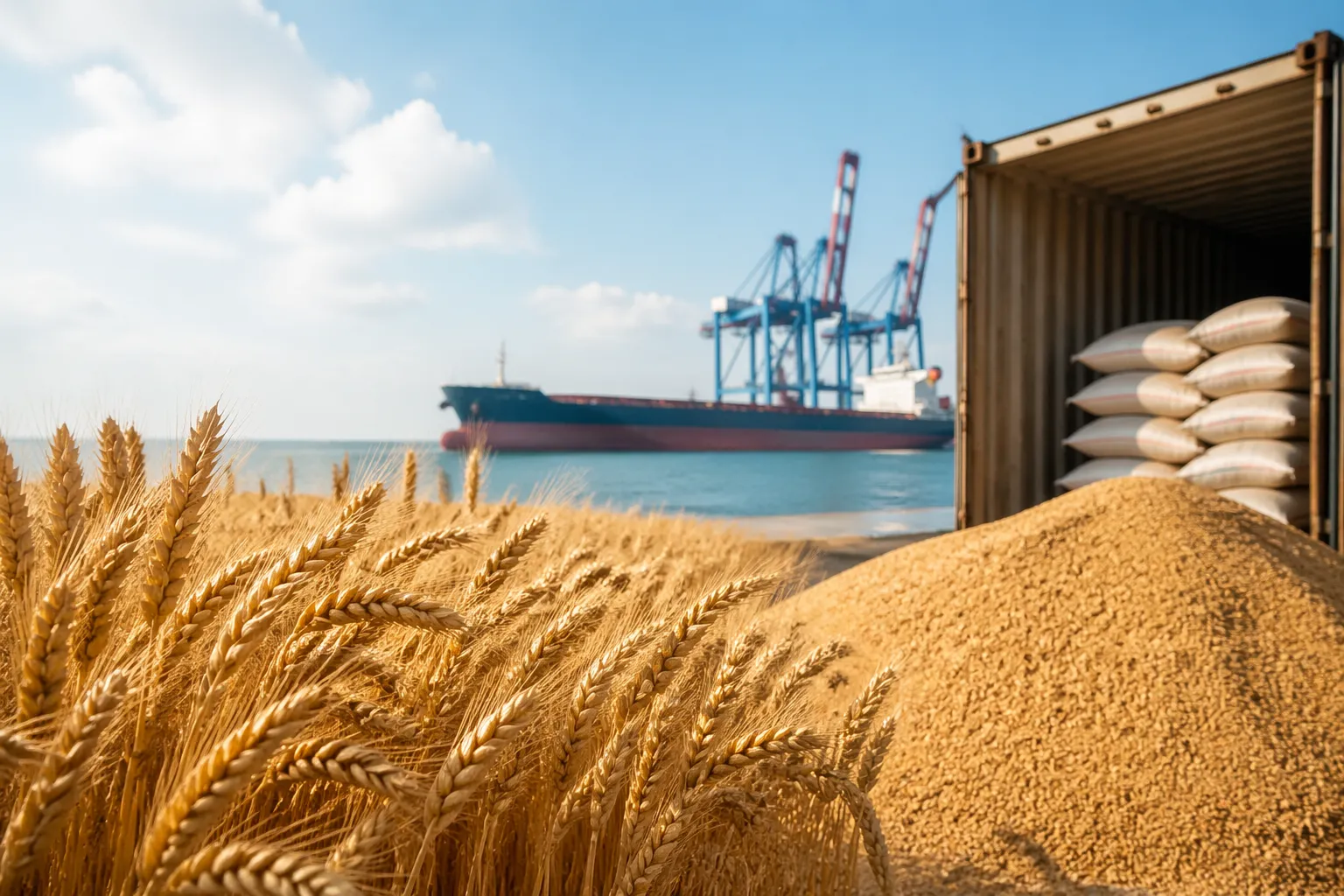
The Wheat export quota in India has been significantly increased by the government, allowing exports of up to 5 million metric tonnes. This move comes after strong domestic production and high buffer stock levels, marking a major step in balancing domestic supply with global trade opportunities.
Officials stated that the decision is based on a comfortable production outlook and sufficient grain availability, ensuring that domestic food security remains fully protected while enabling controlled exports.
Wheat Export Quota: Record production strengthens export capacity
India has recorded a historic wheat output of 120.21 million tonnes in 2025–26, the highest ever. Alongside this, buffer stocks stand at 18.2 million tonnes, nearly twice the required minimum level.
This surplus has created a strong foundation for expanding the Wheat export quota, helping farmers benefit from stable mandi prices and reducing the risk of distress sales in domestic markets.
Global supply disruptions boost demand for Indian wheat
Global wheat markets are currently facing disruptions due to geopolitical tensions and supply chain challenges, particularly in West Asia. These factors have tightened global availability and increased dependence on stable suppliers like India.
Countries such as Bangladesh, Sri Lanka, and East African nations are expected to benefit from India’s increased export availability. However, price competition remains a challenge, especially from lower-cost suppliers like Russia.
Controlled export strategy to protect domestic stability
To avoid sudden market shocks, the Directorate General of Foreign Trade (DGFT) has introduced a managed export system with monthly application windows. This ensures that the expansion of the Wheat export quota does not disrupt domestic price stability or food security.
Unlike earlier blanket bans, this approach allows flexible but regulated trade flows.
Outlook for India’s wheat trade
The increase in Wheat export quota positions India as a stronger global grain supplier at a time of international uncertainty. However, future growth will depend on weather conditions, pricing competitiveness, and expansion into value-added wheat products.
With strong production and strategic policy support, India is set to play a key role in stabilising global wheat markets while supporting domestic farmers and exports.