
US Agriculture Hit by Severe Drought as Wheat Crops Fail and Cattle Herds Decline in the Great Plains
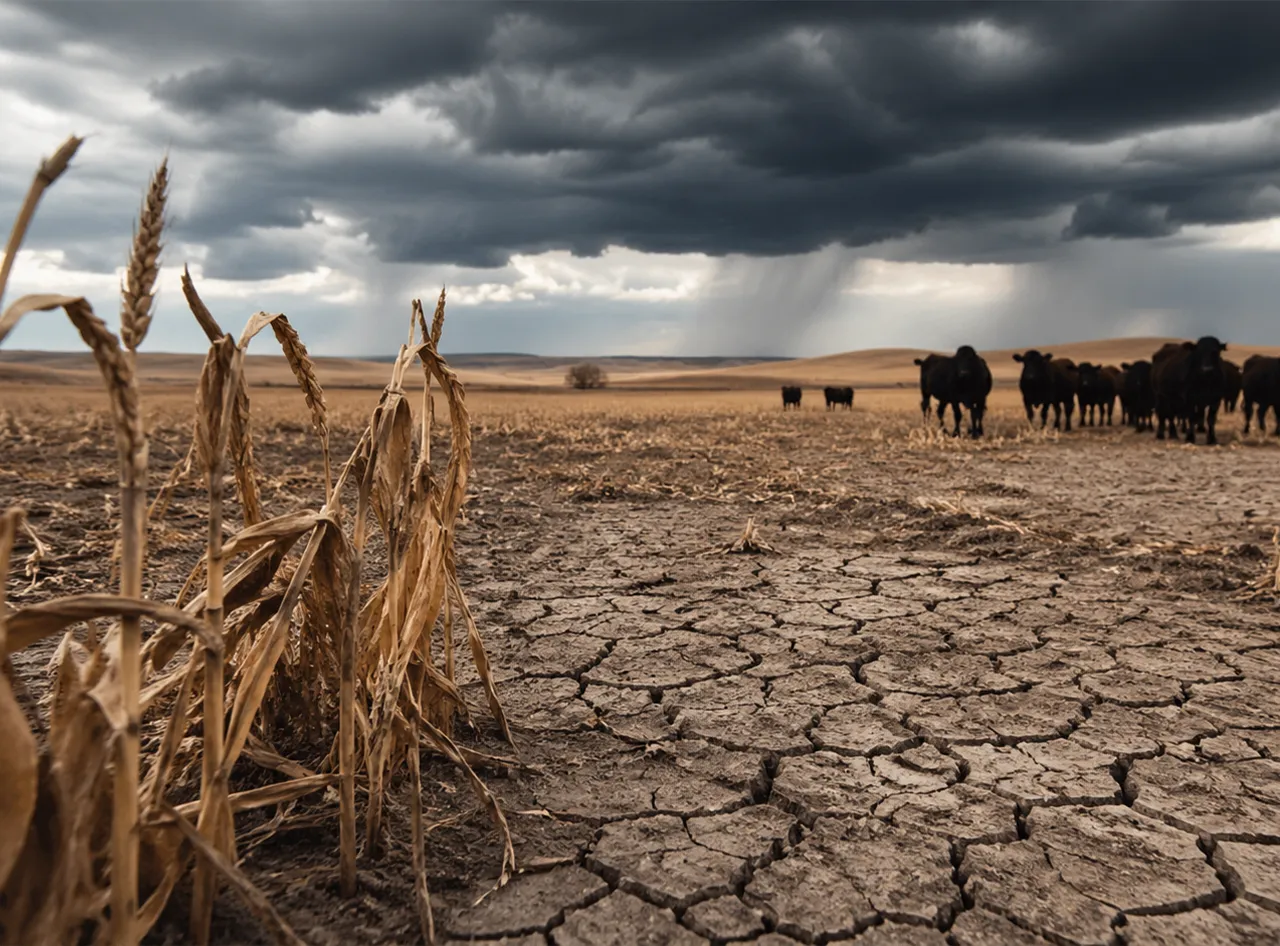
The future of US agriculture is under growing pressure as an intense drought spreads across the Great Plains, damaging winter wheat crops and forcing cattle producers to rethink herd expansion plans. In the United States, worsening climate conditions are now directly affecting both crop yields and livestock operations.
According to recent reports, key farming regions are experiencing widespread extreme drought conditions, with states such as Nebraska, Oklahoma, and Kansas among the hardest hit. The lack of rainfall and prolonged heat stress are causing serious damage to winter wheat crops, which are critical to the nation’s grain supply.
The crisis in US agriculture is also hitting the livestock sector hard. Ranchers are facing rising feed costs as natural pastureland dries up, forcing many to purchase expensive alternative feed or reduce herd sizes. In some cases, farmers are delaying or cancelling plans to expand cattle operations due to uncertainty.
Experts warn that continued drought could significantly reduce agricultural productivity, especially during the crucial wheat growth and harvest cycle. Lower soil moisture is also impacting crop quality and reducing expected yields across the region.
The situation is further complicated by rising input costs, including fuel and fertilisers, which are adding financial pressure on farmers already struggling with weather-related losses.
Analysts say the ongoing US agriculture drought crisis could also influence global food markets, particularly wheat exports and beef supply chains, potentially leading to broader food price fluctuations.
Overall, the challenges facing US agriculture highlight the growing vulnerability of farming systems to climate extremes, with long-term implications for food security, rural economies, and global commodity stability.