
West Bengal Makhana Industry Hit by West Asia Crisis, Exports Disrupted
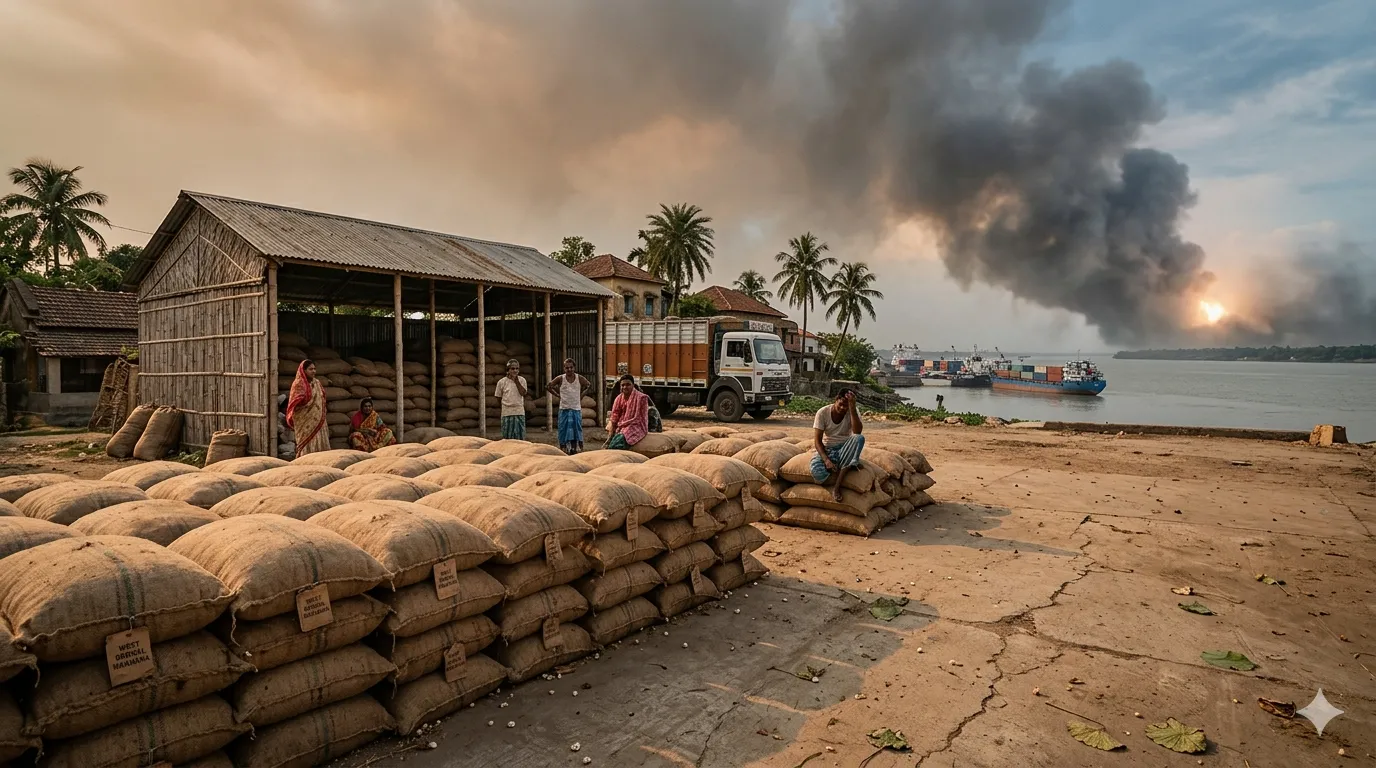
West Bengal Makhana Industry Hit by West Asia Crisis, Exports Disrupted
The West Bengal makhana industry is facing a severe crisis as ongoing geopolitical tensions in West Asia disrupt its primary export market. Malda district, particularly Harishchandrapur, contributes nearly 70% of the state’s makhana production, with annual output of around one crore kilograms. Valued at ₹700–800 crore, the sector heavily depends on exports to the Middle East.
Impact of West Asia Crisis on West Bengal Makhana Industry
The West Bengal makhana industry has been significantly affected due to the West Asia conflict impact on agricultural exports. The Middle East, especially Dubai, serves as a key hub for makhana export from India, with re-exports to markets like China and Europe. However, disrupted shipping routes have halted exports, leading to declining demand and rising stockpiles.
This has created serious ground-level challenges. Traders are facing financial losses in makhana trade, while farmers are struggling to get fair prices. Seasonal workers involved in processing are also losing employment opportunities. The situation highlights the risks of single market dependency in agricultural exports, a challenge also seen in other sectors.
Despite being a superfood with rising global demand, makhana lacks strong branding and diversified markets. India, particularly Bihar and West Bengal, dominates global production, yet the absence of global marketing strategy for makhana limits its potential.
In conclusion, the West Bengal makhana industry must explore alternative markets like the US, Europe, and Japan, while investing in branding, certification, and supply chain infrastructure to ensure long-term sustainability.