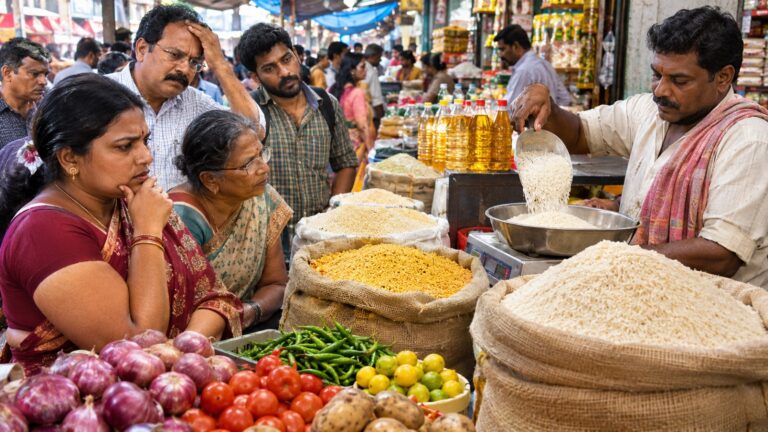

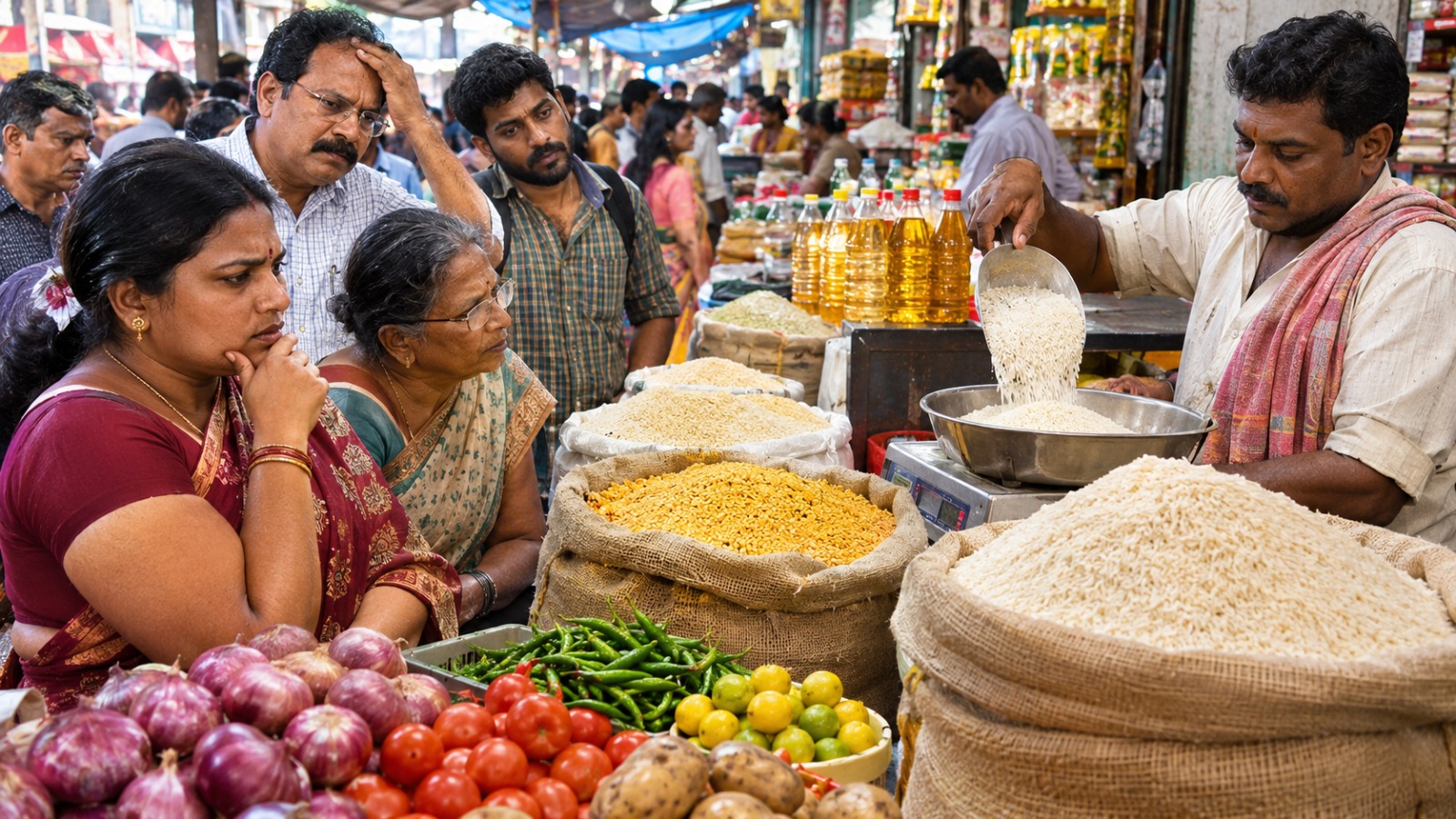
Rice and toor dal prices soar in Visakhapatnam and Andhra Pradesh sees highest food inflation. Prices of food items such as rice, pulses, cooking oil and vegetables are all on the rise in Visakhapatnam, further straining the finances of local people, especially those from middle and lower income groups.
Good quality rice, which was being sold for around ₹70 per kg three months ago, is now being sold for over ₹90 per kg in various parts of the city – representing an almost 30 percent price rise. Loose toor dal is currently being sold for between ₹180 and 200 per kg. Cooking oil has also seen a price rise of around 25 percent.
This follows Andhra Pradesh recording the highest food inflation in the country in October 2026 at 13.23 percent, well ahead of the all-India average of 8.94 percent. This information is drawn from the latest Consumer Price Index data.
Rice prices soar
Rice is one of the main food items contributing to Visakhapatnam’s increasing food costs.
Whilst a 26kg bag of good quality rice used to cost between ₹1,700 and 1,800, it is now being sold for around ₹2,200 for some brands. Popular rice types including HMT and BPT Sannalu are reportedly being sold for between ₹80 and 85 per kg.
This is due to increasing demand and so subsequent price rises for both good and premium quality rice in the local area.
Pulses, cooking oil and vegetables also contribute to food costs
Aside from rice, a number of key food items have also seen their prices rise. As well as toor dal, cooking oil has increased in price and eggs are now also being sold for over ₹8 each – so protein is now more costly.
Visakhapatnam’s vegetable prices on November 24 also demonstrate how food costs are affecting local people. Onions were being sold for between ₹52 and 61 per kg, tomatoes for between ₹31 and 36, green chillies for between ₹67 and 79 and lemons for between ₹99 and 117. Potatoes were relatively more affordable, being sold for between ₹30 and 35 per kg.
Across India, onions saw an annual price rise of 116.22 percent in October. Garlic and ginger also both saw their prices rise, by 60.74 percent and 48.32 percent respectively.
Andhra Pradesh sees highest food inflation at 13.23 percent
Latest data emphasises the high level of food inflation within Andhra Pradesh. The state’s food inflation rose to 13.23 percent in October from 10.2 percent in September and is therefore the highest of all Indian states for that month. All-India food inflation stood at 8.94 percent.
As the prices of staple food items including cereals, pulses, cooking oils and vegetables have all risen, so too has the cost of sustaining normal food consumption.
For those with a relatively low monthly income, this is of particular concern as food often represents a large part of a family’s expenditure.
Government sets rice price and stock controls
To help address the current high rice prices, the Andhra Pradesh government has set maximum retail prices and stock control levels for rice sellers, millers and retailers. These will be in force up to January 31, 2027.
Common MTU rice can now only be sold for no more than ₹47 per kg. Maximum retail prices have also been set for BPT-3291 and BPT-5204 rice at ₹66 per kg and for HMT and RNR rice at ₹76 per kg. Jai Sriram rice can be sold for a maximum of ₹82 per kg.
Furthermore, the government has placed controls on the amount of rice that can be stocked by different types of seller, so as to avoid stockpiling and speculative behaviour, as well as to avoid manufactured food shortages.
These controls are hoped to enhance food supply levels and to ensure that consumers are not charged unfairly high prices.
Balancing act for rice market
Whilst rice retail prices in Andhra Pradesh have risen steeply, there is an ongoing challenge in trying to both keep food items affordable and also to ensure that farmers and others involved in the rice market can continue to earn sufficient income.
Despite government price and stock controls having now been put in place, the success of these will rely upon factors including the actual supply levels of rice, adherence to the controls by sellers, and the ability to deliver food to consumers at the stipulated prices.
Looking ahead, rice prices will continue to be a key barometer for both the food consumption and local food supply situation in Andhra Pradesh given that food inflation remains high.