
Rice Export Ban: India May Impose 20-30% Duty
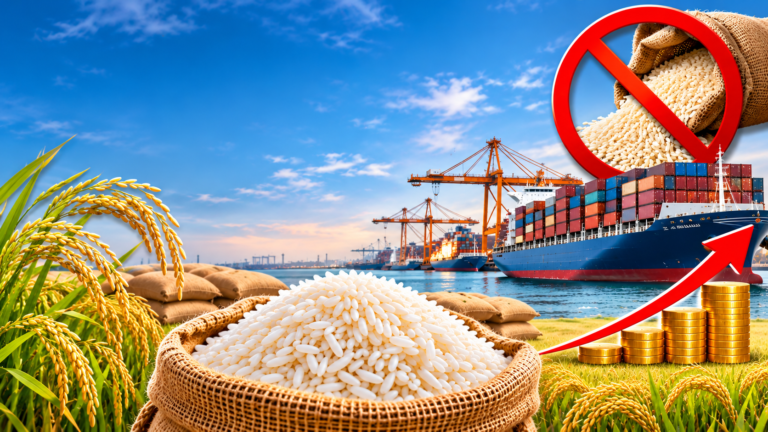
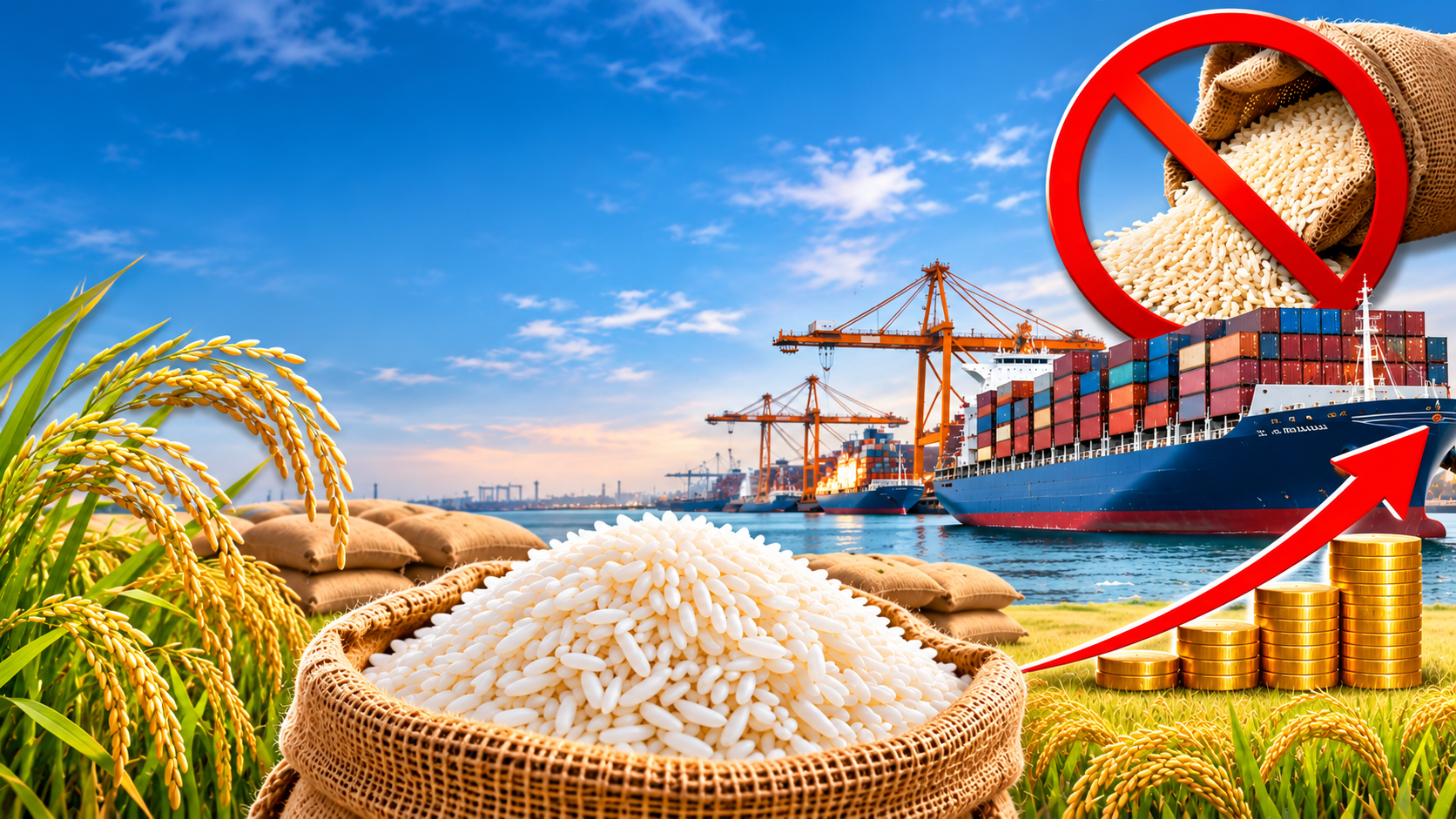
India, the world’s largest rice exporter, is reportedly considering fresh rice export ban as domestic prices continue to rise, particularly in South India. According to media reports dated November 22 and 23, 2026, the government is exploring a 20 per cent export duty on selected rice varieties or a broader 30 per cent duty on non-basmati rice, potentially accompanied by a Minimum Export Price (MEP).
However, no official notification has been issued by the Finance Ministry or the Directorate General of Foreign Trade (DGFT) as of November 24. The proposed measures have brought the possibility of a rice export ban back into focus, raising questions about India’s food security, export competitiveness and farmers’ incomes.
Why Is India Considering Rice Export Ban?
The primary reason behind the reported proposal is rising domestic rice inflation. Retail rice inflation reached 12.51 per cent in October 2026, compared with just 1.72 per cent in June.
The situation is particularly concerning in South India. Karnataka recorded rice inflation of over 43 per cent, while Andhra Pradesh and Telangana reported approximately 25 per cent. Prices of popular Sona Masoori rice have also increased from Rs 51-52 per kg last year to Rs 63-64 per kg by September.
Weak monsoon rainfall has contributed to the pressure. South India reportedly received 26 per cent below-normal rainfall, while paddy acreage declined by around 4 per cent.
Another concern is increasing demand for broken rice. Ethanol manufacturers, poultry companies, cattle-feed producers and international buyers are competing for supplies. India’s broken rice exports increased approximately 74 per cent between April and October, strengthening calls for restrictions from the domestic feed industry.
Record Government Rice Stocks Despite High Prices
Interestingly, India is not facing an overall shortage of rice. Government stocks of rice and unmilled paddy reached a record 55.3 million tonnes on November 1, 2026, nearly four times the required stocking norm.
The Food Corporation of India (FCI) also holds substantial central pool rice stocks, estimated at approximately 38 million tonnes on October 1.
To improve domestic availability, the government increased the Open Market Sale Scheme (OMSS) rice sales target from 2.5 million tonnes to 5 million tonnes on November 6. Bharat Rice supplies have also been increased in South India.
However, the problem is largely related to the availability of specific non-basmati rice varieties. Government warehouses primarily hold common rice, whereas consumers in Karnataka, Tamil Nadu and neighbouring states prefer varieties such as Sona Masoori and Ponni.
20% or 30% Export Duty: What Are the Proposals?
Two different possibilities have emerged from media reports:
20% export duty: Reuters reported that the government was considering restrictions on selected varieties, particularly 100 per cent broken rice and certain premium non-basmati rice varieties.
30% export duty: Financial Express reported a broader proposal covering non-basmati rice exports, potentially alongside a Minimum Export Price.
A rice export ban has not been officially announced, and neither proposal should be treated as a confirmed government decision. Basmati rice has not been specifically included in the reported proposals.
An export duty generates government revenue and increases export costs, whereas an MEP prevents exporters from selling below a specified minimum price.
Impact on Rice Exporters, Farmers and Global Markets
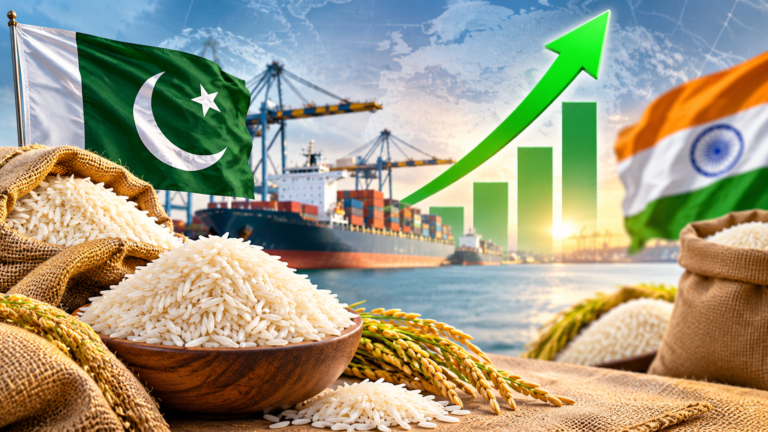
India’s export competitiveness could weaken if higher duties are introduced. In early November, Indian 5 per cent broken white rice was priced at approximately $385 per tonne, compared with $415 for Pakistan, $480 for Vietnam and $495 for Thailand.
A 20 per cent duty could reduce India’s price advantage, while a 30 per cent duty could make Indian rice significantly less competitive.
For farmers, lower export demand could put pressure on prices of export-oriented non-basmati rice varieties. Meanwhile, feed manufacturers and ethanol producers could benefit from greater domestic availability of broken rice.
What Happens Next?
India faces three possible outcomes: a selective 20 per cent duty, a broader 30 per cent duty on non-basmati rice, or continued domestic supply interventions without introducing a major export restriction. The previous rice export ban experience in 2022 and 2023 demonstrated how sudden restrictions can disrupt global rice markets and encourage buyers to shift towards competing exporters. Ultimately, India must balance affordable domestic food supplies with farmers’ earnings and its position as a leading global rice supplier. Selective, temporary measures and better distribution of existing stocks could offer a more targeted solution than broad restrictions.