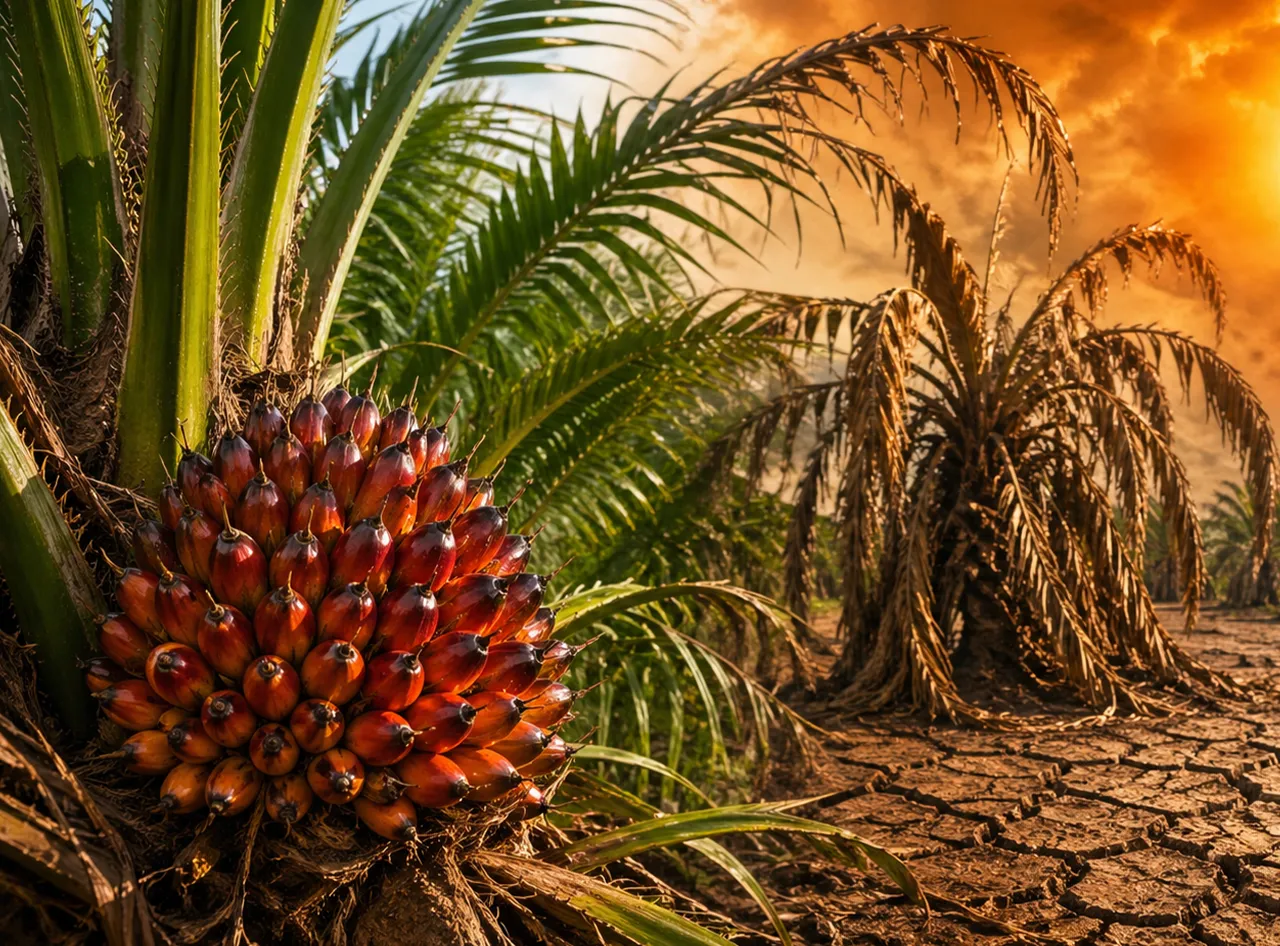
Palm Oil Production, El Niño conditions are creating serious concerns for Indonesia’s agricultural output, as climate and input cost pressures converge to threaten stability in the global edible oil market.
The El Niño effect has led to irregular rainfall patterns and extended dry spells across key plantation regions. This has directly impacted soil moisture levels, reducing oil palm productivity and slowing down the natural growth cycle essential for stable yields in the palm oil industry.
At the same time, a worsening fertiliser crisis is increasing production costs for farmers. Oil palm cultivation is highly dependent on nutrient-rich inputs, and shortages or price spikes in fertilizers are making it difficult for growers to maintain optimal field conditions.
Experts warn that disruptions in Palm Oil Production Process—from plantation management to harvesting—could lead to a noticeable decline in output. Since Indonesia is the world’s largest producer, any slowdown has global implications for edible oil supply and pricing.
While discussions on palm oil production in India continue to grow due to rising domestic demand, India remains largely import-dependent, making it vulnerable to global supply fluctuations caused by Indonesia’s production risks.
If El Niño conditions persist alongside input cost pressures, the combined effect could tighten global supply chains, pushing up prices and increasing volatility in the vegetable oil market.
Overall, the intersection of climate stress and the fertiliser crisis highlights the fragility of the global palm oil industry, where production stability is increasingly dependent on both environmental and economic factors.