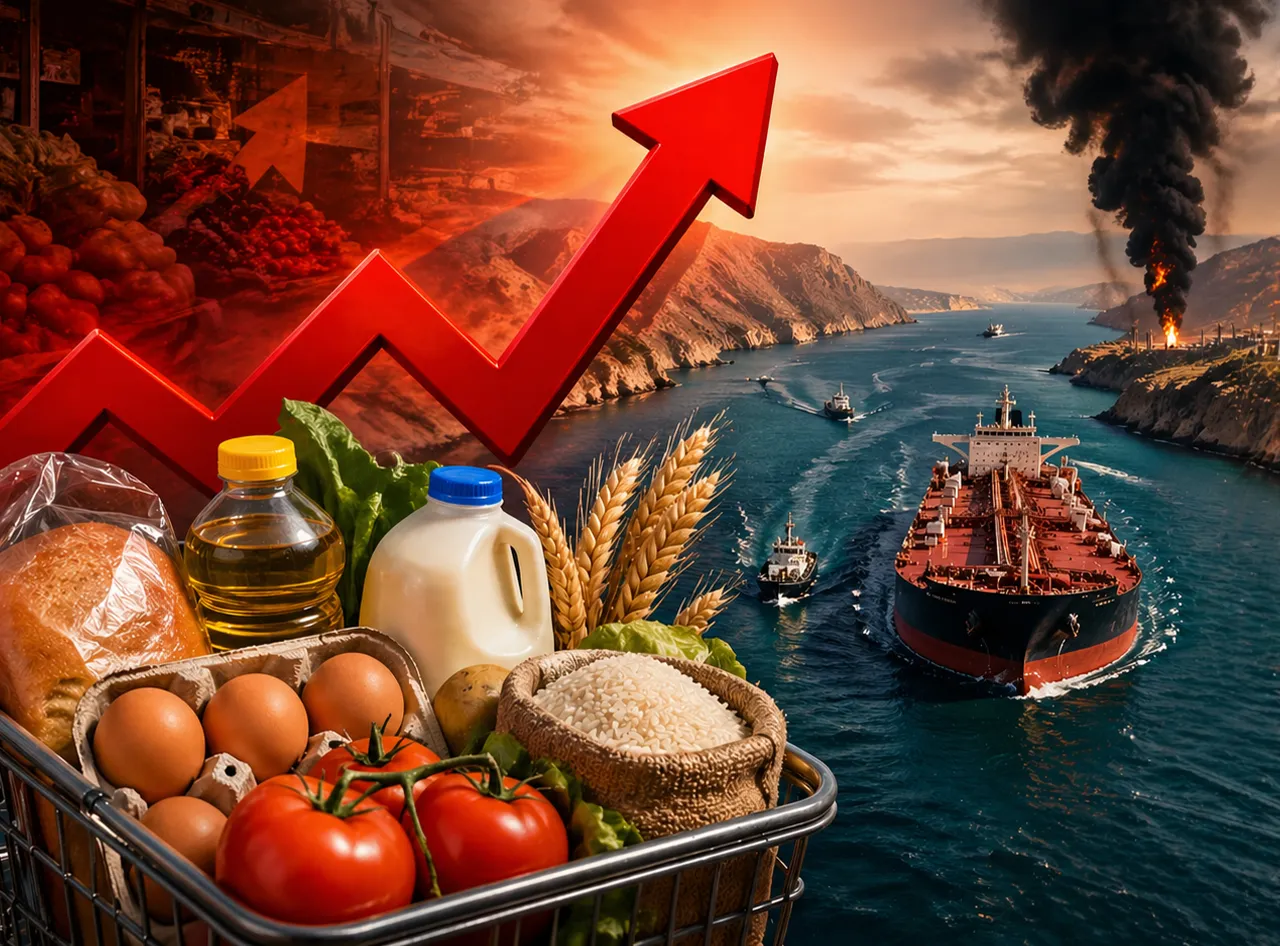
Food inflation is expected to rise sharply as tensions around the strait of Hormuz continue to disrupt global supply chains, warn experts. The strategic waterway is crucial for the movement of oil, fertilizers, and agricultural inputs, and any disruption is quickly reflected in global markets.
The ongoing Middle East Conflict and broader West Asia Crisis have increased uncertainty in energy markets, pushing up crude oil prices. Since fuel is a key input in agriculture and transportation, this directly contributes to rising food costs worldwide.
Analysts note that higher fertilizer prices are also adding pressure on farmers, increasing production costs and threatening crop yields. This situation is expected to worsen food inflation in India, where agriculture is highly sensitive to input cost changes and global energy trends.
The Food inflation rate in India could see upward pressure if disruptions persist, especially in essential commodities such as cereals, edible oils, and vegetables. Experts warn that developing countries will bear the brunt of these rising costs, with weaker economies facing increased risks to food security.
Supply chain disruptions caused by the strait of Hormuz crisis are also impacting shipping and logistics costs, further fueling global inflationary pressures. Combined with geopolitical instability in the region, the outlook for food prices remains uncertain.
If tensions continue, global food inflation may remain elevated, posing a long-term challenge for policymakers trying to balance energy security and agricultural stability
Food inflation may rise as the Strait of Hormuz crisis disrupts oil and fertiliser supply chains, impacting global food security and prices.