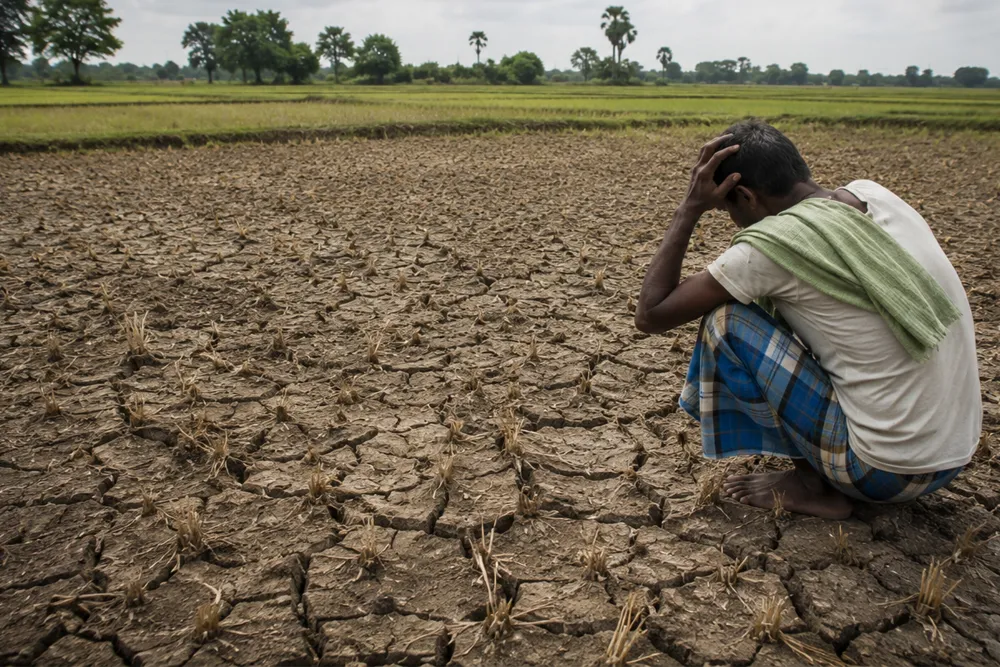
India’s kharif season has begun on a challenging note, with the kharif sowing area decreasing by 23% in comparison to the same period last year. A deficient early southwest monsoon has delayed planting activities in several agricultural states. It affects the timely cultivation of major kharif crops such as rice, pulses, and oilseeds.
Moreover, the delayed rainfall has slowed down the field preparation and sowing operations, which has created uncertainty for farmers who depend heavily on monsoon showers for crop establishment. Notably, rice-growing regions have witnessed significant planting delays, whereas pulses and oilseed cultivation have also been impacted. If rainfall remains below normal over the upcoming weeks, the reduction in kharif acreage could affect overall agricultural production and put upward pressure on food prices. In addition, the progress of the southwest monsoon will play a decisive role in determining the outcome of this year’s kharif season. However, adequate rainfall during July and August could help farmers recover some of the delayed sowing, enhancing crop prospects and stabilising production. Not only this, but this slowdown in planting is expected to influence the upcoming kharif marketing season, as lower production may decrease market arrivals and impact the availability of key food commodities. Policymakers and agricultural experts will closely monitor rainfall patterns to evaluate the crop conditions and plan necessary interventions if required.
With agriculture remaining highly dependent on monsoon performance, the next few weeks will be vital for enhancing sowing progress, safeguarding farmer incomes, and ensuring food security in the country.