
Why is Nepal’s Tea Industry Facing Crisis?
Nepal’s tea industry is battling with one of its biggest challenges in recent years after India introduced stricter export regulations, which require certification for tea shipments destined for third countries. Significantly, this move has disrupted cross-border trade, affecting the smooth movement of Nepalese tea through Indian transit routes.
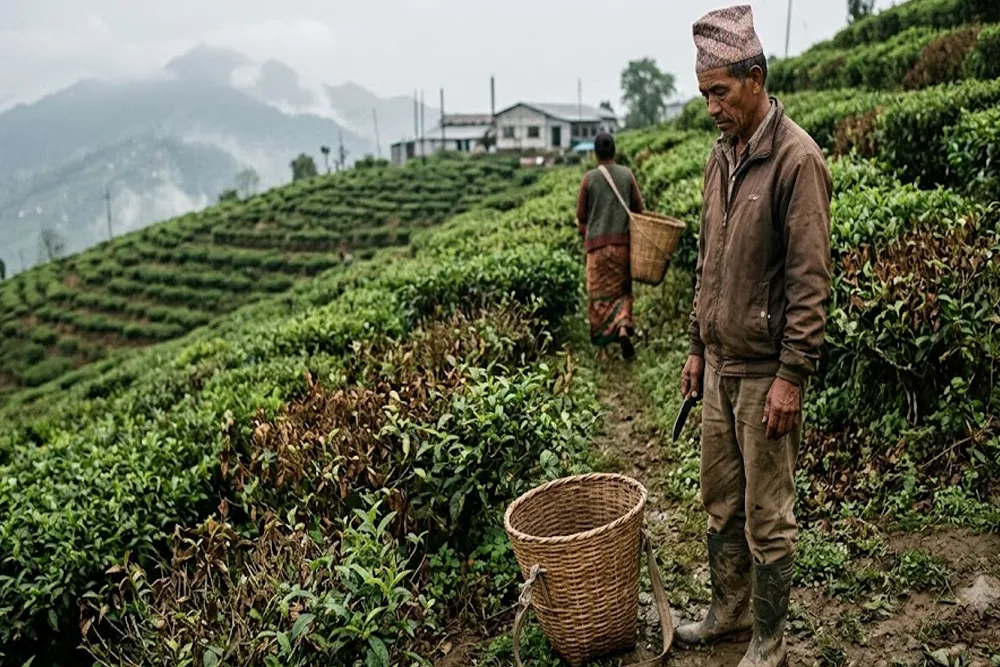
According to industry representatives, the new requirements have already led to delays in shipments, forcing many processing factories to halt their operations. Moreover, the actual crisis is threatening the livelihoods of nearly 60,000 workers who rely on the tea sector for employment. As exports slow, concerns are also growing regarding declining tea prices and less revenue for producers.
Notably, these restrictions come at a time when Nepal is striving to work on its presence in global markets. Due to the limited alternative trade routes available, the country’s tea exports remain heavily dependent on India’s transportation network. Undoubtedly, any prolonged disruption could decrease Nepal’s competitiveness in international markets and negatively affect future trade opportunities for the country.
According to experts, the situation could also affect tea production, as lower demand and operational challenges led to low investment in the sector. In addition, uncertainty is hovering over tea imports and export logistics which may further restrain businesses already dealing with rising costs. The latest developments focus on broader concerns within Nepal’s agriculture, where access to regional markets plays a crucial role in supporting rural incomes and economic growth. Industry leaders are requesting both governments to engage in dialogue and find a practical solution that ensures uninterrupted trade.