India’s decision to halt Nepal
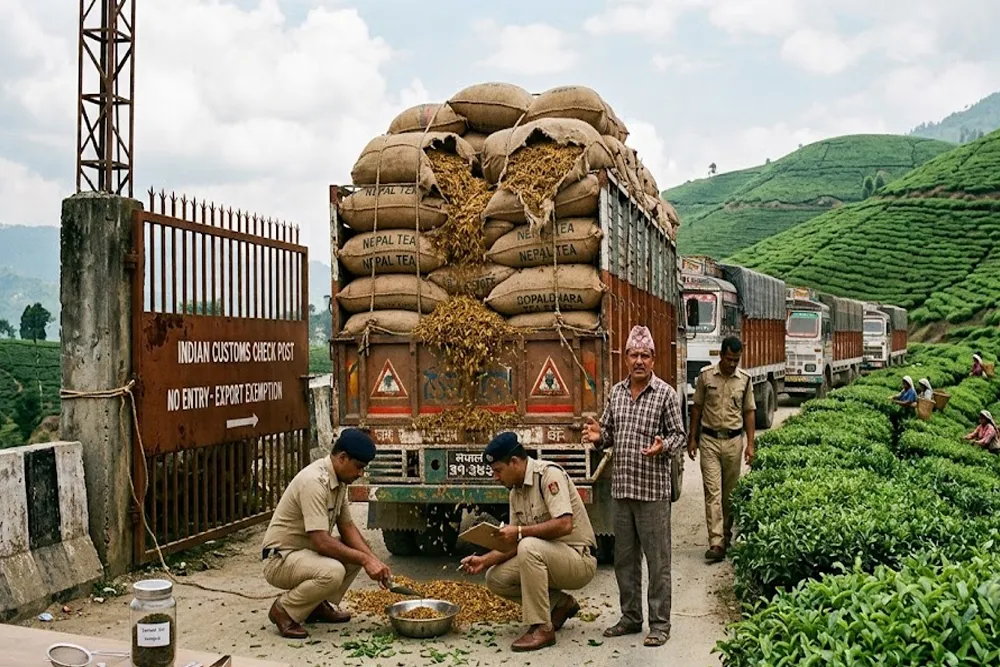
tea exports for nearly two months disturbed one of Nepal’s most important agricultural industries. Notably, It is one of the largest and most important markets for Nepal’s Tea. The suspension, triggered by stricter import inspections and quality compliance requirements, affected farmers, processors, and exporters across the country before exports resumed on June 30.
Why does India impose stricter norms on Nepal’s tea exports?
Notably, the issue began when India introduced stricter import norms and improved quality inspection requirements for
Nepalese tea. Consequently, shipments were paused from May 1, leaving consignments stuck, production slowed, and uncertainty spread through
tea-growing regions. The impact turned out to be immediate and severe for an industry heavily dependent on India.
In the background, Nepal’s officials, including Foreign Minister Shisir Khanal, held discussions with Indian authorities to resolve the issue. The talks also focused on ensuring compliance with quality standards. A breakthrough finally came after weeks of negotiations. India agreed to ease the inspection process, allowing
tea exports to resume from June 30. Under the revised system, only 20% of consignments are now subject to sampling which is down from the earlier 100% checks, easing trade flow. Trucks carrying
Nepalese tea once again began crossing into India, restoring relief in the supply chain.
Can Diversifying Export Markets Reduce Nepal’s Dependence on India?
According to industry leaders like Kamal Mainali of the
Nepal Tea Association, this continuation has restored confidence among producers who had been forced to slow or halt operations during the disruption. But the crisis has also exposed a deeper structural weakness, overdependence on a single export destination. Even as trade normalises, Nepal is now accelerating efforts to diversify its tea markets beyond India. Focus is shifting toward improving quality standards, strengthening branding, expanding certification systems, and exploring new international buyers. As per Industry experts, this diversification is essential to reduce vulnerability to sudden policy changes.
As
tea exports continue,
Nepal’s tea sector is actually recalibrating its future strategy for greater resilience and global reach.