

Kazakhstan China Deal: $125 Million Agriculture Exports Show Key Trade Lessons for India
Kazakhstan has signed agricultural export contracts worth $125 million with China in a single day, underscoring how the Kazakhstan China deal is redefining global food trade dynamics and offering a crucial lesson for India. The development highlights the increasing importance of diplomacy, strategic alignment, and market access in boosting agricultural exports.
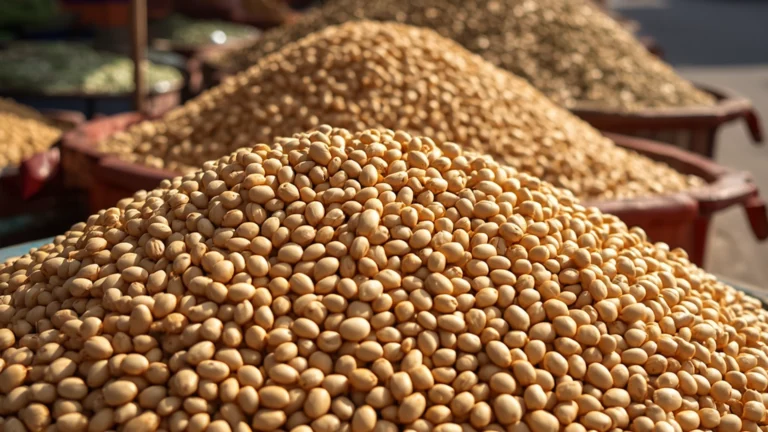
On April 1, 2026, Kazakhstan’s Minister of Trade and Integration, Arman Shakkaliyev, led a delegation of 25 companies to China to participate in a trade forum titled “Export to China — Shanghai Cooperation Organisation Selection.” During the visit, Kazakh firms signed multiple business-to-business (B2B) agreements with Chinese partners covering products such as feed flour, oilseeds, dairy, honey, and confectionery.
Kazakhstan China Deal Highlights Trade Diplomacy Advantage
The Kazakhstan China deal clearly demonstrates how agricultural trade diplomacy plays a crucial role in determining export success. China remains the world’s largest importer of agricultural commodities, and countries that effectively tap into China food imports demand can significantly boost their export volumes. Kazakhstan has successfully aligned its trade outreach with diplomatic engagement and regional cooperation.
Rapid Deals Reflect Strategic Alignment
The speed and scale of these agreements are significant. Within just one day, contracts worth $125 million were finalized, demonstrating strong coordination and access to Chinese markets. Kazakhstan has also recorded consistent growth in bilateral trade with China, rising from $41 billion in 2023 to $48.7 billion in 2025. Officials have described this relationship as an “eternal comprehensive strategic partnership,” indicating long-term cooperation beyond simple trade exchanges.
A Contrast with India’s Experience
This development comes at a time when India exports to China are facing challenges. Recently, several Indian rice shipments were rejected due to GMO rejection India concerns, raising questions about non-tariff barriers. While these restrictions have impacted Indian exporters, Kazakhstan’s products have not encountered similar issues, suggesting stronger trade alignment and smoother diplomatic engagement.
Role of Regional Platforms
Kazakhstan has leveraged the SCO trade platform to strengthen its engagement with China. The Shanghai Cooperation Organisation provides a framework for economic collaboration among member nations, including India. However, analysts point out that the effectiveness of such platforms depends on active participation and strategic use for trade promotion.
The Larger Takeaway for India
For India, the key takeaway is that agricultural exports are no longer driven solely by production capacity or pricing competitiveness. Instead, strategic diplomacy and international engagement are becoming equally important. As global supply chains become more politically influenced, countries that combine strong production capabilities with proactive diplomatic strategies are more likely to secure stable and scalable market access.
The Kazakhstan China deal serves as a clear example of how coordinated efforts between government and industry can unlock new export opportunities in a competitive global environment.