

Maharashtra Agri Market Near Vadhvan Port to Boost India’s Farm-to-Port Export Ecosystem
The Maharashtra government has announced plans to develop a 1,200-acre Maharashtra agri market near the upcoming Vadhvan Port project in Palghar district, positioning it as potentially the largest agricultural market in the world. The initiative is designed to strengthen India agri exports infrastructure by creating a fully integrated farm-to-port supply chain, linking farmers directly to global markets.
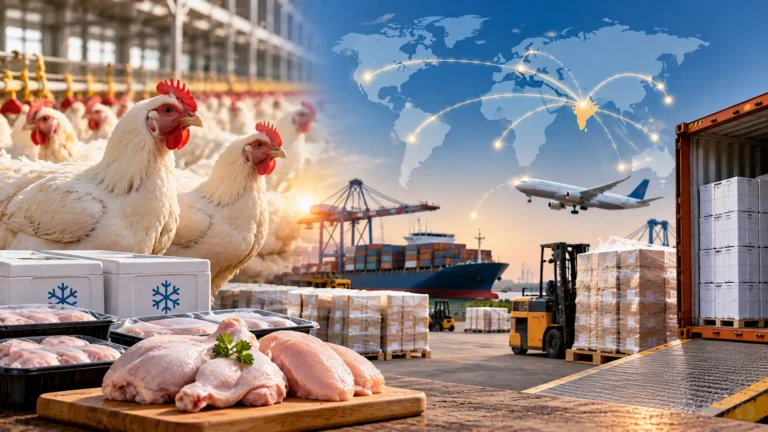
According to state Marketing Minister Jayakumar Rawal, the proposed market will function as a comprehensive logistics hub, connecting road, rail, port, and airport networks. The goal is to streamline the movement of agricultural produce from farms to international buyers with minimal delays and reduced costs. By integrating multiple transport modes, the project aims to enhance efficiency and improve export competitiveness.
Integrated Farm-to-Port Vision of Maharashtra Agri Market
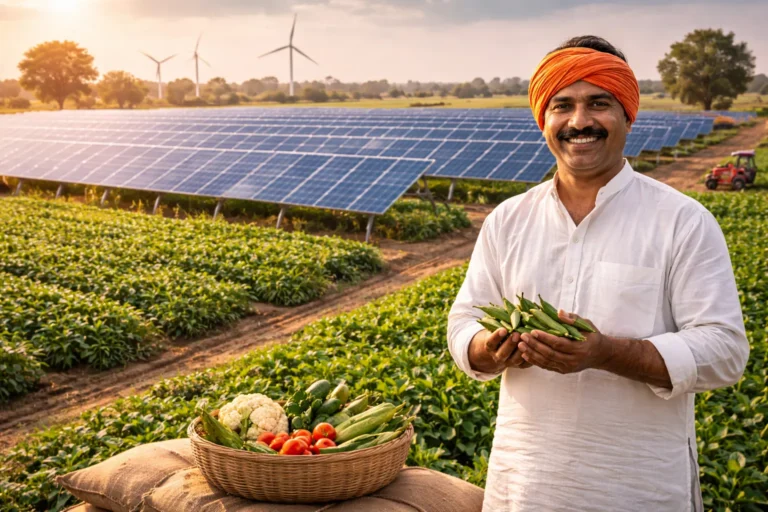
The proposed Maharashtra agri market envisions a seamless supply chain where agricultural produce moves directly from farms to the market via road transport. Once at the facility, the produce will undergo grading, processing, and storage before being exported through nearby port infrastructure. This model is expected to reduce wastage, improve quality control, and ensure faster delivery to global markets.
Experts believe such integrated infrastructure could significantly boost India’s logistics agriculture, enabling farmers to access international markets more directly. By reducing reliance on intermediaries, the project could also help farmers achieve better price realization for their produce.
Vadhvan Port: A Mega Infrastructure Anchor
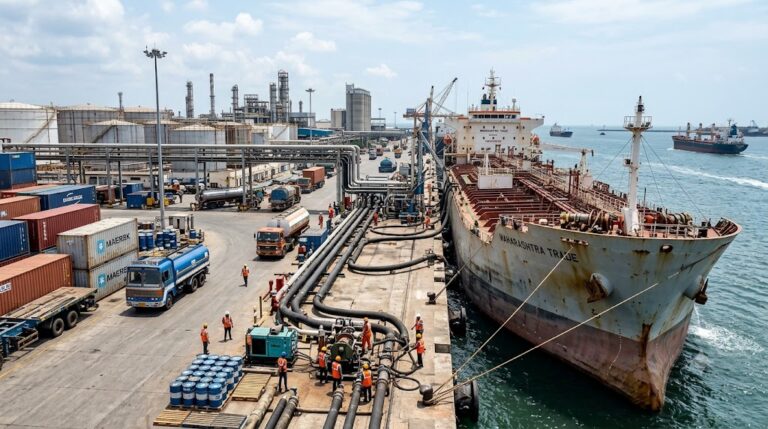
The agri-market proposal is closely tied to the Vadhvan Port project, a major maritime initiative being developed under JNPA port development and the Maharashtra Maritime Board. With an estimated investment of ₹76,220 crore, the port is expected to be completed by 2034 and is projected to rank among the world’s top 10 ports, with a capacity of 24.5 million TEUs.
The proximity of the Palghar agriculture hub to the port is expected to ensure a steady supply of export-ready goods, enhancing port throughput and strengthening India’s position in global agricultural trade.
Potential Impact on Agri Exports
If executed effectively, the project could significantly reduce logistics costs and turnaround times for exporters. By integrating storage, processing, and transportation within a single ecosystem, the initiative has the potential to transform agri export India by making supply chains more efficient and competitive.
Such infrastructure development is increasingly important as global food supply chains become more time-sensitive and competitive. Countries with strong logistics and export ecosystems are better positioned to capture international demand.
Key Questions Around Execution
Despite its ambitious vision, the project faces several practical challenges. Key concerns include land acquisition, environmental clearances, and infrastructure timelines. The absence of a clear development schedule for the agri-market raises questions about how it will align with the port’s phased construction.
Given that Vadhvan Port is expected to be operational by 2034, the timing of the agri-market’s completion will be critical. Analysts suggest that if the market becomes operational by 2029–2030, it could significantly boost early export activity. However, delays could limit its immediate impact.
Vision vs Implementation
India has often demonstrated strong policy vision in infrastructure and export strategy, but execution has been inconsistent across projects. The success of the Maharashtra agri market will depend on timely implementation, efficient coordination, and sustained policy support.
The Bigger Picture
The proposal reflects a broader shift toward integrating agriculture with global trade and logistics infrastructure. By combining scale with efficiency, Maharashtra aims to create a model that could redefine agricultural exports in India.
As global markets become increasingly competitive, projects like this will play a crucial role in determining how effectively India can leverage its agricultural strengths in international trade.