

Indian Agriculture Faces Growing Threat from Declining Bee Population
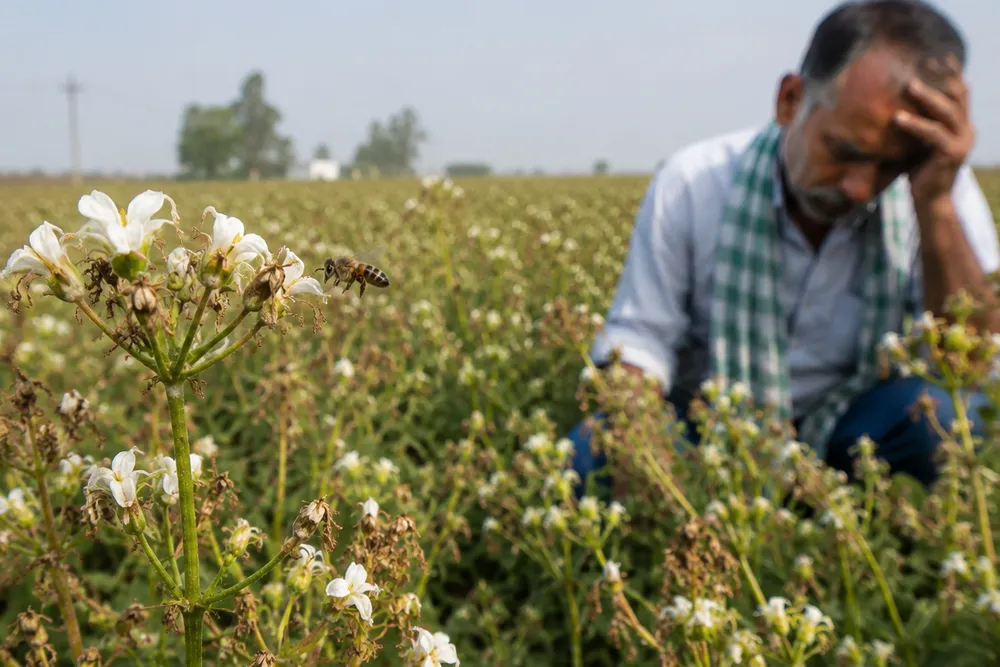
Indian Agriculture Faces Growing Threat from Declining Bee Population
Bees are emerging as one of the most important yet overlooked contributors to Indian Agriculture. While they are widely known for honey production, their real value lies in pollination, a process essential for improving crop yields and maintaining food quality across India’s farming sector.
Experts warn that declining bee populations could seriously impact farm productivity, especially for crops such as fruits, vegetables, pulses, and oilseeds that heavily depend on pollination. Bees play a crucial role in increasing both the quantity and quality of agricultural output, making them vital for long-term food security.
However, several environmental and human-driven factors are threatening pollinator populations. Excessive pesticide use, habitat destruction, pollution, and climate change are reducing bee numbers across agricultural regions. Rising temperatures and changing weather patterns are also affecting flowering cycles, disrupting the natural relationship between crops and pollinators.
Agricultural experts believe that protecting bees is now critical for ensuring sustainable growth in crop production and maintaining ecological balance. They stress the need for more awareness among farmers regarding sustainable farming practices, including controlled pesticide usage, organic farming methods, and the preservation of natural habitats.
In addition, policymakers and environmental groups are calling for stronger conservation initiatives to support pollinator protection and biodiversity. Encouraging bee-friendly farming methods could help secure India’s agricultural future while supporting rural livelihoods.
As concerns over climate change and food shortages continue to rise globally, safeguarding bee populations may become one of the most important priorities for strengthening Indian agriculture in the years ahead.