
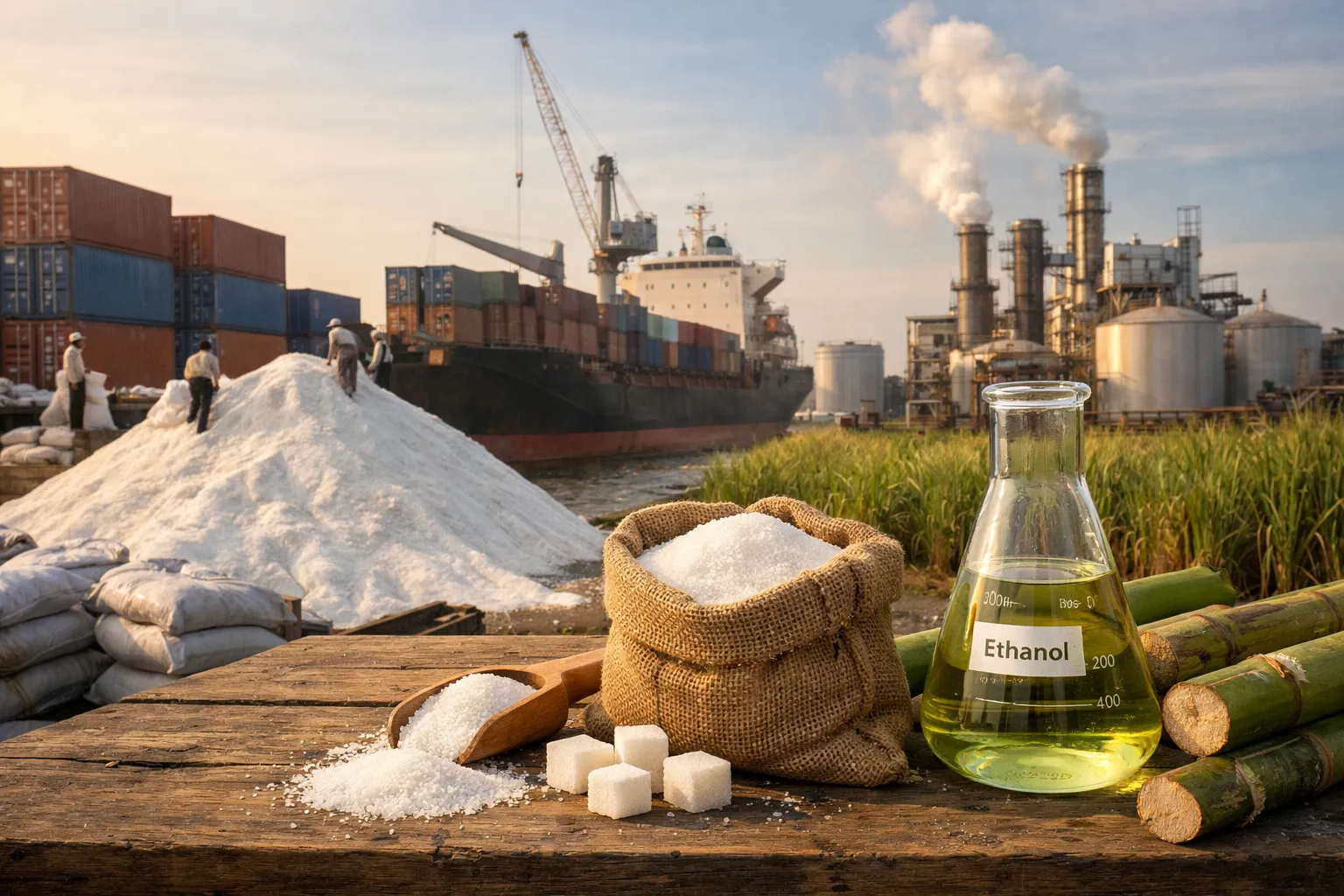
India’s Sugar Exports May Be Restricted for Ethanol Blending Push
India’s sugar exports could be restricted as the government accelerates its plan to increase ethanol blending in petrol. This move is aimed at strengthening energy security and reducing dependence on crude oil imports.
India has set an ambitious target of achieving 20% ethanol blending by 2025-26. To meet this goal, more sugarcane is expected to be diverted toward ethanol production rather than sugar manufacturing for export. This shift reflects the country’s growing focus on biofuel strategy and sustainable energy solutions.
As one of the world’s largest sugar producers, India plays a crucial role in the global sugar market. Any restriction on India’s sugar exports could tighten global supply and potentially push international prices higher. However, domestically, it will help ensure adequate availability and price stability.
The government has been encouraging sugar mills to boost ethanol production capacity through policy support and incentives. This transition is also expected to benefit farmers by creating a stable demand for sugarcane while improving mill profitability.
In the long run, limiting India’s sugar exports aligns with the country’s vision of reducing oil imports, saving foreign exchange, and promoting cleaner fuel alternatives through higher ethanol blending.