
Pakistan Basmati Exports Record 62% Growth in October
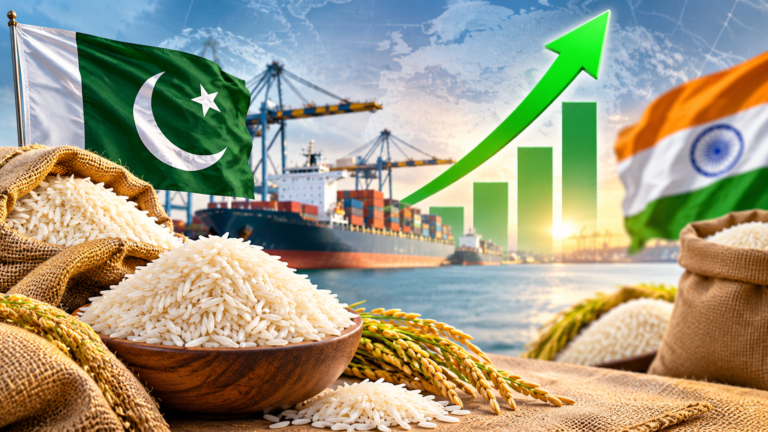
Pakistan’s rice exports witnessed a significant increase in October 2026, with basmati shipments recording particularly strong growth. According to reports published by Profit by Pakistan Today and Dawn on November 23, Pakistan Basmati Exports increased 62% year-on-year to 301,000 tonnes. Meanwhile, non-basmati rice exports grew 16% to 1.049 million tonnes. The Philippines emerged as Pakistan’s biggest buyer in October, followed by Tanzania and Kenya. However, there is an important discrepancy in the reported figures. The report puts total export growth at 353,000 tonnes, while the combined increase in basmati and non-basmati exports comes to just 256,000 tonnes. This leaves a difference of 97,000 tonnes, which has not been explained in the available report.
Four Reasons Behind Pakistan’s Basmati Exports Growth
The rise in Pakistan Basmati exports has been attributed to four major factors, with government support emerging as the most significant.
The first is the extension of the DLTL (Drawback of Local Taxes and Levies) scheme. Under this programme, exporters receive financial incentives against domestic taxes and levies. According to Pakistan’s government notification dated January 23, 2026, eligible basmati exports were entitled to a drawback of up to 9% of the Free on Board (FOB) value, subject to a minimum export price of $750 per metric tonne. In July, the government extended the scheme until September 30, 2026. Export incentives for non-basmati rice were also increased from 3% to 5%. The other contributing factors include leftover stocks from previous years, improved production and favourable weather conditions. Together, these factors supported Pakistan’s Basmati shipments.
India Still Leads Pakistan in the Global Basmati Market
Despite Pakistan’s recent growth, India continues to dominate the global basmati rice trade.
In FY2025-26, India exported a record 6.521 million tonnes of basmati rice, compared with approximately 6.065 million tonnes in the previous financial year. Export earnings stood at around Rs 50,138 crore. However, India’s export performance has faced challenges in 2026. According to a report dated July 28, Indian basmati exports declined 5.5% to 3.36 million tonnes between January and June 2026. Disruptions in trade with Iran and Gulf markets were among the major reasons behind the decline.
In April 2026, Indian basmati exports fell approximately 27% to 474,000 tonnes. Domestic prices also declined by around 10%, raising concerns about the impact on farmers and future basmati rice cultivation.
Can Pakistan Challenge India’s Basmati Market?
Pakistan’s growing exports do not necessarily indicate that it is replacing India in international markets. There is currently no confirmed evidence establishing such a shift. However, government incentives, improved production and competitive pricing could strengthen Pakistan’s position among international buyers. For India, the bigger concern is maintaining export competitiveness while protecting farmers’ interests. Future basmati acreage, crop production, international demand and export prices will determine how the competition develops. The rise in Pakistan Basmati Exports is worth watching, but India’s much larger export base means the two countries are still operating at significantly different scales.