
US-Iran War: Oil Crosses $100 as Global Energy Risks Rise
US-Iran War: Oil Crosses $100 as Global Energy Risks Rise
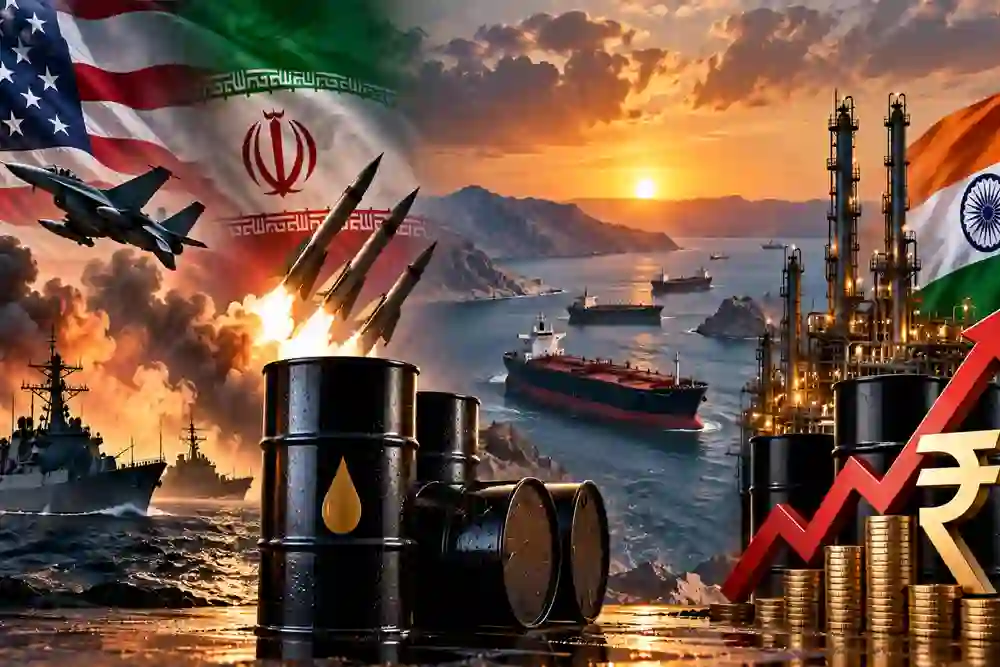
The US-Iran war has entered a dangerous phase, with the conflict moving beyond military targets and threatening global energy and shipping routes. Not only this, but the crude oil has crossed the $100-a-barrel mark which has raised concerns over fuel prices, inflation, shipping costs and economic growth.
Moreover, the biggest concern is the Strait of Hormuz, which is a crucial waterway connecting the Persian Gulf with the Arabian Sea, as a significant share of the world’s oil and gas normally passes through this narrow route. Reports of attacks on commercial vessels and disruptions to shipping have increased fears about the security of global energy supplies.
Brent Crude and WTI Crude Surge amid the escalation of US-Iran war
The escalation has pushed Brent crude above $100 a barrel, while WTI crude has also climbed sharply. Higher oil prices can impact almost every part of the global economy, from airlines and transportation to manufacturing, agriculture, plastics and chemicals. If the US-Iran war continues for an extended period, sustained high crude prices could increase inflationary pressures. Companies facing higher energy and transportation costs may eventually pass those expenses on to consumers.
Why India Is Watching Closely?
Significantly, India imports a large share of the crude oil it consumes, making it particularly vulnerable to a prolonged oil shock. Higher crude oil prices mean a larger import bill and greater pressure on the Indian rupee.
The relationship between the US Dollar and the rupee will also be important. If the Indian rupee weakens against the US Dollar along with crude prices remain elevated, India’s oil-import costs could rise further. This could affect fuel prices, transportation expenses and the broader cost of goods and services.
Donald Trump Faces Political Pressure
This crisis also has a major political aspect in the United States. US president Donald Trump has suggested that the conflict could end after the November midterm elections, while reports indicate that some advisers are preparing for the possibility of a much longer confrontation. The political stakes are significant for the republicans, particularly as rising living costs and fuel prices could impact voters. Trump has also discussed a $5,000 dividend for Americans, adding another economic dimension to the debate.
What Happens Next?
The US-Iran war is going beyond between two countries. Its consequences could spread through energy markets, shipping networks, currencies and stock markets. For India, investors and consumers should closely track Brent crude, WTI crude, the Indian rupee, the US Dollar and developments around the Strait of Hormuz.
The longer the US-Iran war disrupts energy flows, the greater the risk of higher inflation, weaker economic growth and increased market uncertainty worldwide.