

Vehicle Export Growth: How China Is Remodifying Global Car Carrier Market?
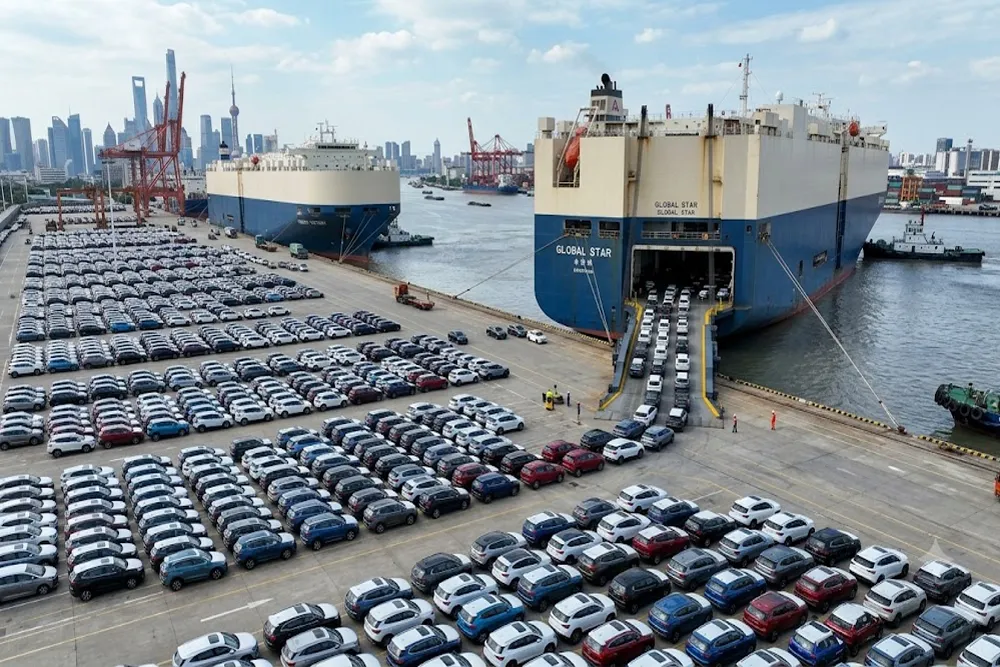
China’s Vehicle Export boom is changing the global automotive and shipping industries as the country boosts its position as the world’s largest automobile exporter. Notably, rapid growth in overseas sales by Chinese automakers has increased demand for specialised car carrier vessels, remodifying global maritime logistics and trade routes.
Moreover, strong vehicle production capacity, competitive pricing, and rising international demand have enabled Chinese manufacturers to increase their presence in Europe, Southeast Asia, Latin America, and the Middle East. As exports continue to grow, shipping companies are investing in larger and more efficient vessels to support the increasing flow of automobiles to global markets.
Not only this, but the expansion of vehicle exports is also affecting the global vehicle carrier market, where limited vessel availability and rising freight demand have encouraged new investments in specialised roll-on/roll-off (RoRo) carriers. Several Chinese automakers are chartering or building dedicated shipping fleets to enhance supply chain efficiency and reduce logistics costs.
Meanwhile, changing trade patterns are influencing vehicle imports in numerous regions as consumers gain greater access to competitively priced electric vehicles and passenger cars manufactured in China. Significantly, the country’s growing role in automotive exports is prompting global manufacturers and logistics providers to adapt to a rapidly evolving market.
Often referred to as China’s vehicle export machine, the sector continues to benefit from strong industrial capacity, government support, and rising electric vehicle production. According to Industry analysts, sustained export growth to keep driving demand for vehicle carriers along with boosting China’s influence over global automotive trade and shipping networks.
As global demand for automobiles evolves, China’s expanding export ecosystem is expected to remain a major force shaping both international vehicle trade and the future of maritime transport.