

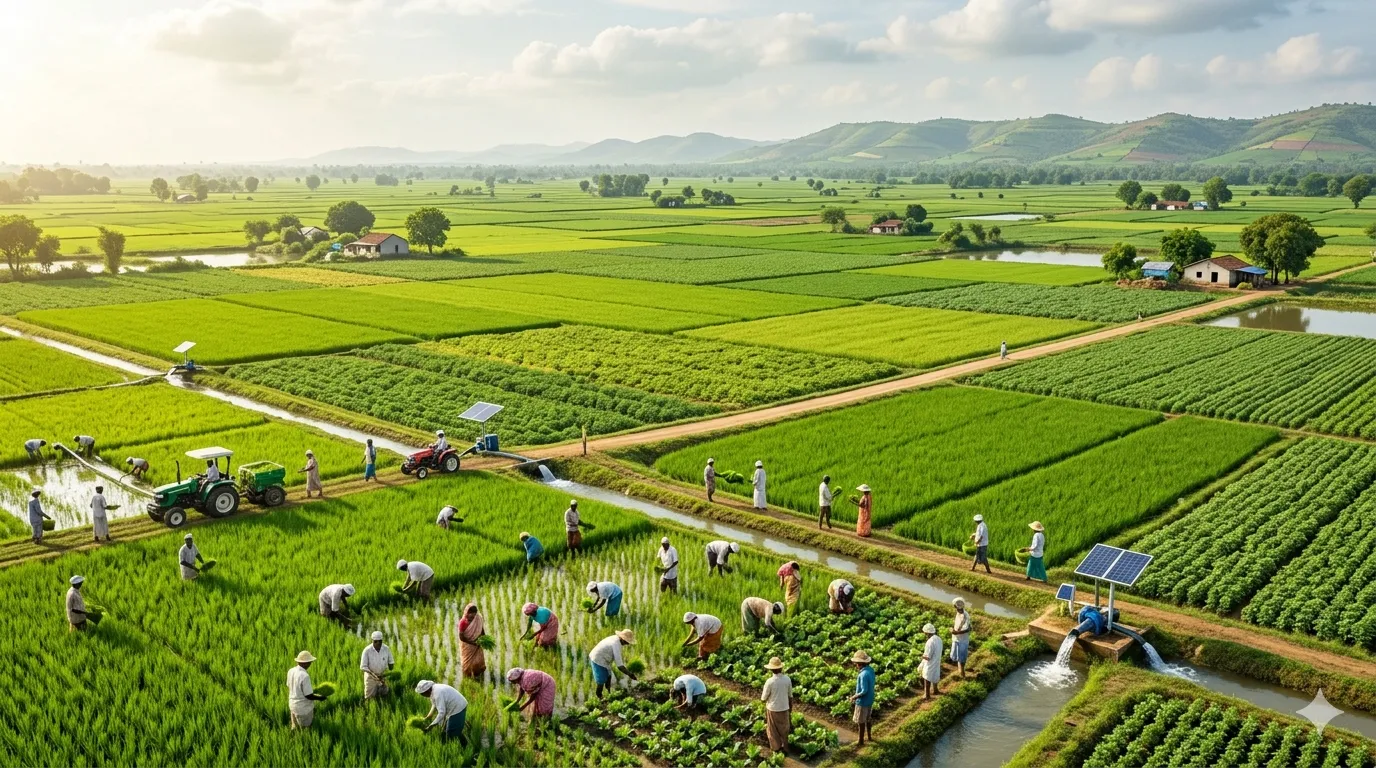
Summer Crop Coverage Crosses 64 Lakh Hectares in India, Shows Steady Agricultural Growth
India’s agricultural sector has recorded steady progress as summer crop coverage crosses 64 lakh hectares, reflecting improved sowing activity across key farming regions. According to official data, farmers have expanded cultivation of major summer crops, driven by favorable weather conditions and better irrigation availability.
Summer crop coverage crosses 64 lakh hectares
The rise in summer crop coverage crosses 64 lakh hectares highlights strong performance in crops such as rice, pulses, oilseeds, and coarse cereals. Better water availability in reservoirs and improved access to irrigation facilities have supported timely sowing activities across multiple states.
Officials noted that regions dependent on canal irrigation have shown particularly strong growth in acreage. Farmers have also benefited from government support programs promoting climate-resilient farming practices and efficient water usage techniques.
Experts believe this expansion is a positive indicator for upcoming harvests, as increased acreage generally translates into higher production, assuming normal weather conditions continue. However, agricultural economists also caution that monsoon variability and temperature fluctuations could still impact final yields.
Impact on food security and economy
The growth in summer crop area is expected to strengthen domestic food supply, stabilize market prices, and support rural incomes. Crops like pulses and oilseeds are especially important for reducing import dependence and improving nutritional security.
In conclusion, summer crop coverage crosses 64 lakh hectares signals a positive trend for India’s agriculture sector, showing resilience and steady progress in seasonal farming expansion.