
India-UK FTA Row: Why Bulk Scotch Whisky Faces 162.5% Import Tax Despite Duty Cut
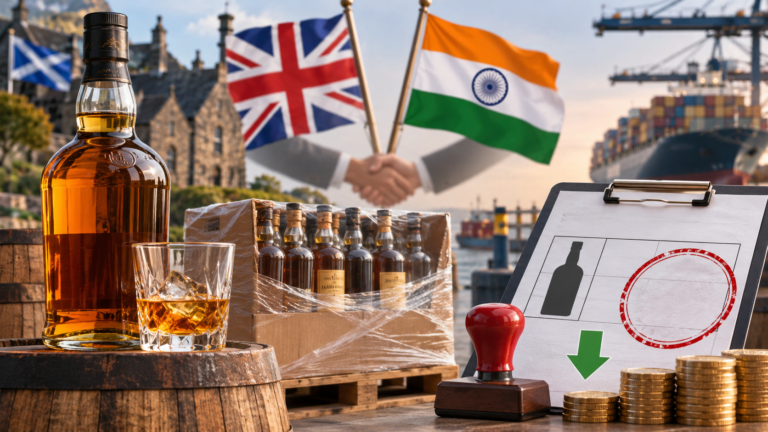
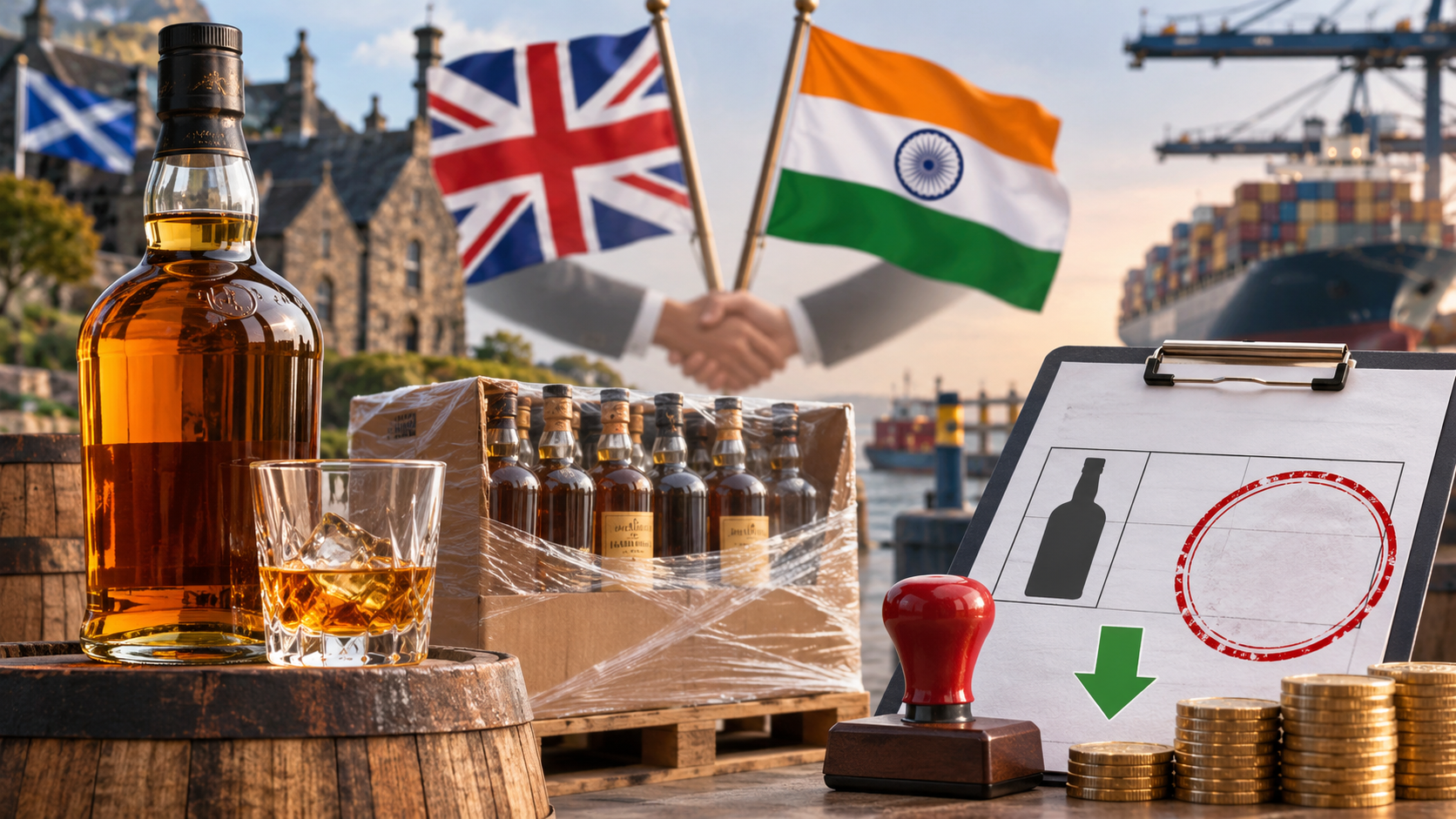
India’s trade agreement with the United Kingdom has run into an unexpected hurdle, with shipments of bulk Scotch whisky facing import duties as high as 162.5%, despite a commitment to reduce tariffs under the India-UK Free Trade Agreement (FTA).
The dispute centres on how imported Scotch whisky in bulk containers should be classified under India’s customs regulations. While the agreement promises lower duties on Scotch, differences over product classification have created uncertainty for importers and liquor companies.
The India-UK FTA, formally known as the Comprehensive Economic and Trade Agreement (CETA), came into effect on July 15, 2026. Under the deal, India reduced the basic import duty on Scotch whisky from 150% to 75%. The duty is scheduled to decline gradually to 40% over the next decade.
However, the tariff benefit has become contentious for bulk Scotch shipments.
Why is bulk Scotch facing higher import duty?
A large share of Scotch whisky imported into India arrives in bulk containers rather than retail bottles. Industry estimates suggest that nearly 80% of imports come in this form.
These shipments are brought to India for dilution, blending and bottling. Domestic manufacturers combine imported Scotch with Indian-made spirits, including Extra Neutral Alcohol (ENA), to produce Indian Made Foreign Liquor (IMFL).
The controversy revolves around the Harmonised System (HS) codes used to classify imported products.
Importers argue that bulk Scotch should fall under HS code 220830, which covers whisky and qualifies for the reduced tariff under the FTA.
However, the Directorate of Revenue Intelligence (DRI) has reportedly argued that certain bulk shipments should be classified under HS code 21069051, covering specified preparations used in making beverages. This category does not receive the same FTA concession and attracts a 150% basic customs duty.
With an additional 5% tax on the duty-inclusive value, the effective burden can reach approximately 162.5%.
Whisky companies face uncertainty at Indian ports
The classification dispute has affected major international liquor companies, including Pernod Ricard, Diageo and Bacardi.
A Reuters report on November 11 said more than 80 containers belonging to these companies had been held at Indian ports amid the disagreement.
On November 18, an interim arrangement reportedly allowed companies to seek release of shipments by depositing 75% of the assessed value and providing a bank guarantee for the remaining amount.
On November 23, Commerce Secretary Rajesh Agrawal said India was not backing away from its commitments under the India-UK FTA. He described the issue as a technical classification dispute and said the Commerce and Finance ministries were working towards a resolution.
What does the dispute mean for Indian businesses?
The issue extends beyond imported alcohol. Bulk Scotch is processed, blended and bottled in India, supporting domestic manufacturing, packaging, warehousing, transportation and distribution activities.
Higher import duties could make bulk imports less attractive and potentially affect domestic bottling operations. Companies may also face additional financing costs and uncertainty over future shipments.
At the same time, the government must protect customs revenue and ensure that imported products are correctly classified.
The India-UK FTA dispute highlights a wider challenge for international trade agreements: tariff concessions must be supported by clear customs rules and consistent implementation.
For businesses, predictable regulations are just as important as lower taxes. The final resolution of the Scotch whisky classification dispute will therefore be closely watched by importers, manufacturers and investors on both sides.