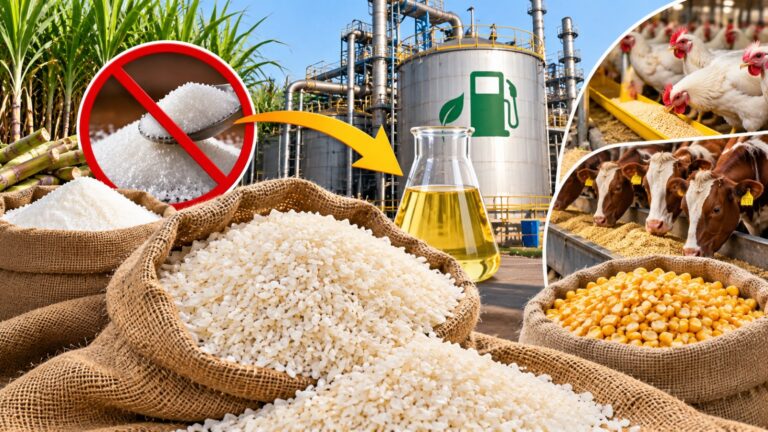

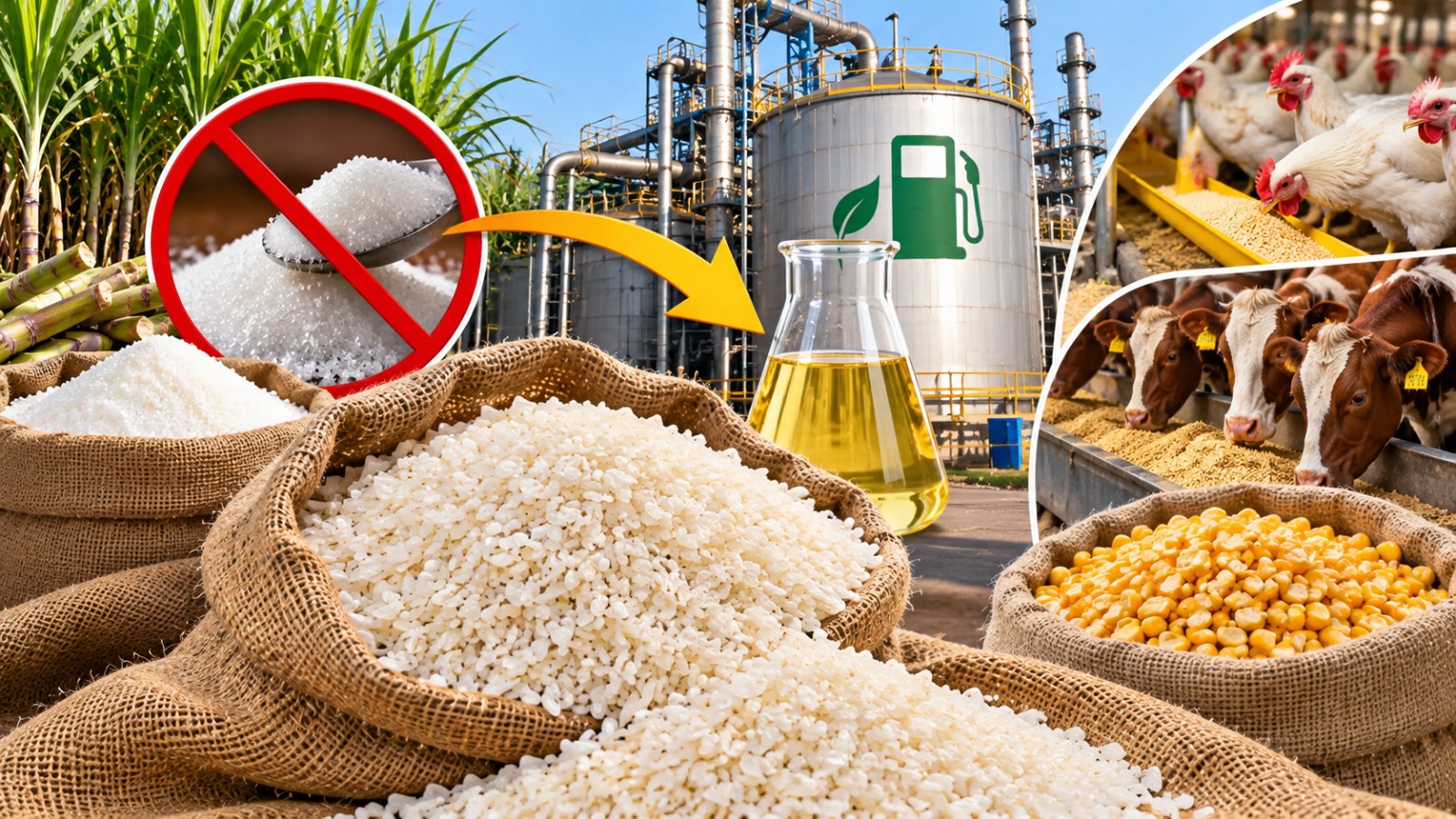
Sugar ethanol producers are switching away from sugar and so there is greater demand for broken rice which in turn is contributing to rising rice prices.
According to reports, alongside ethanol, poultry and cattle feed and food industries, demand for broken rice is contributing to reduced supply in India. This is despite corn prices being high due to a corn production deficit and the government limiting the use of sugar for ethanol production in the 2026-27 ethanol supply year.
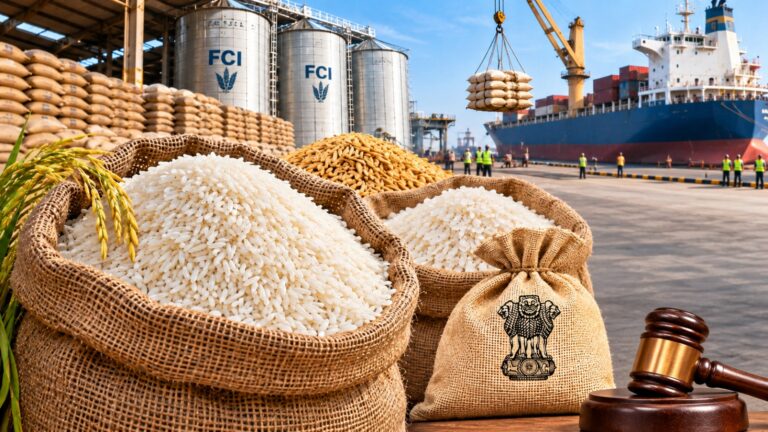
Sugar ethanol producers are now turning to grains such as maize, broken rice and excess rice held by the Food Corporation of India (FCI) as sugar sources are limited.
This is occurring at a time when corn prices are high, and therefore broken rice is becoming a more desirable ethanol source.
Food and feed sectors also compete
Whilst ethanol producers are competing for broken rice, so too are the food and feed sectors.
Historically, broken rice has been a cost-effective source of material for both food and feed. However, as ethanol producers also begin to utilise it, competition for broken rice is increasing.
This is further reducing supply of broken rice within India and is also contributing to price rises.
High-end rice varieties also experience substantial price rises
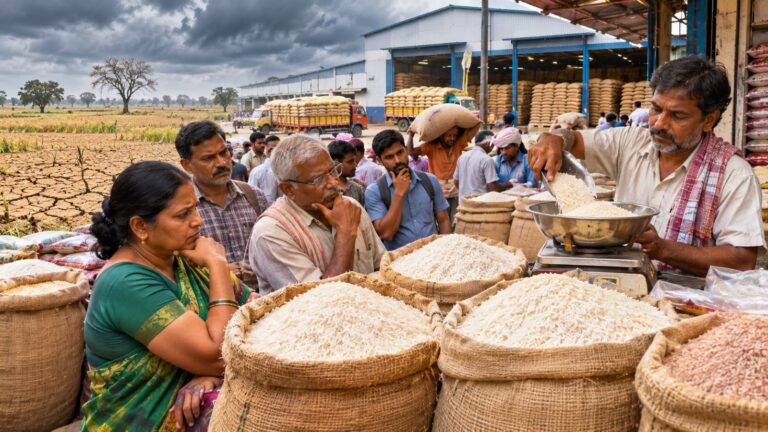
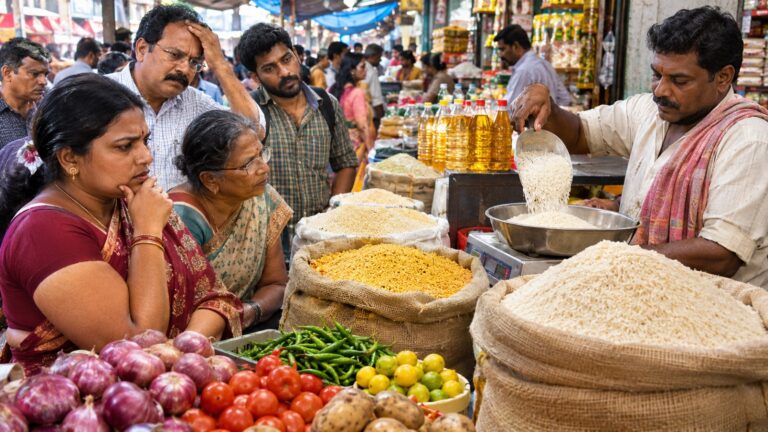
As supply has tightened, there has been a marked increase in the price of various high-end (non-basmati) rice varieties. Particularly in southern India, such price rises have been evident.
Prices of Seeraga Samba, Sona Masoori, HMT and BPT rice have reportedly almost doubled in the last year.
Furthermore, poor monsoon conditions have impacted upon rice production, especially at the time of grain maturation. This has led to lower production levels and has contributed to forecasts that India’s rice production is set to fall.
Production issues thus form another factor which is further pressurising India’s rice sector, alongside heightened industrial demand.
Impacts for India’s rice sector
Increasing broken rice demand exemplifies the intensifying rivalry for agricultural produce between the food, feed and fuels sectors. Ethanol producers are in search of new source materials, as the government is keen to ensure sugar is available for local consumption. Meanwhile, feed producers are contending with higher costs for their inputs as corn prices are high.
India must therefore navigate how best to pursue its goals in relation to ethanol blending, whilst also ensuring that food and feed grains are both available and value for money.
Given that rice prices are already on the rise, further industrial demand for broken rice may further escalate competition for this product. It will be important to closely assess India’s rice supply, together with both its acquisition and industrial consumption, in order to avoid further pressure on consumers and feed producers.