
Why India Reduces Fertiliser Requirement for 2026 Kharif Season?
Responding to the changing weather patterns of the country, the govt has adjusted its agricultural inputs strategy for the upcoming cropping cycle. The government has officially revised down its total fertiliser requirement for the 2026 kharif season to 38.39 million tonnes, which was dropped from an initial projection of 39.05 million tonnes.
Fertiliser Requirement: El Niño Impacts Demand Projections
The primary factor for this revision is the forecast of a below-normal monsoon driven by El Niño conditions. Since the reduced or delayed rainfall can severely limit seasonal sowing activities, the anticipated consumption of critical soil nutrients has decreased. As a result, demand estimates for essential crop inputs like urea and diammonium phosphate (DAP) have decreased to reflect the expected drop in acreage. Despite the lower fertiliser requirement, the Ministry of Agriculture has given assurance to the farming community that the domestic situation remains highly stable.
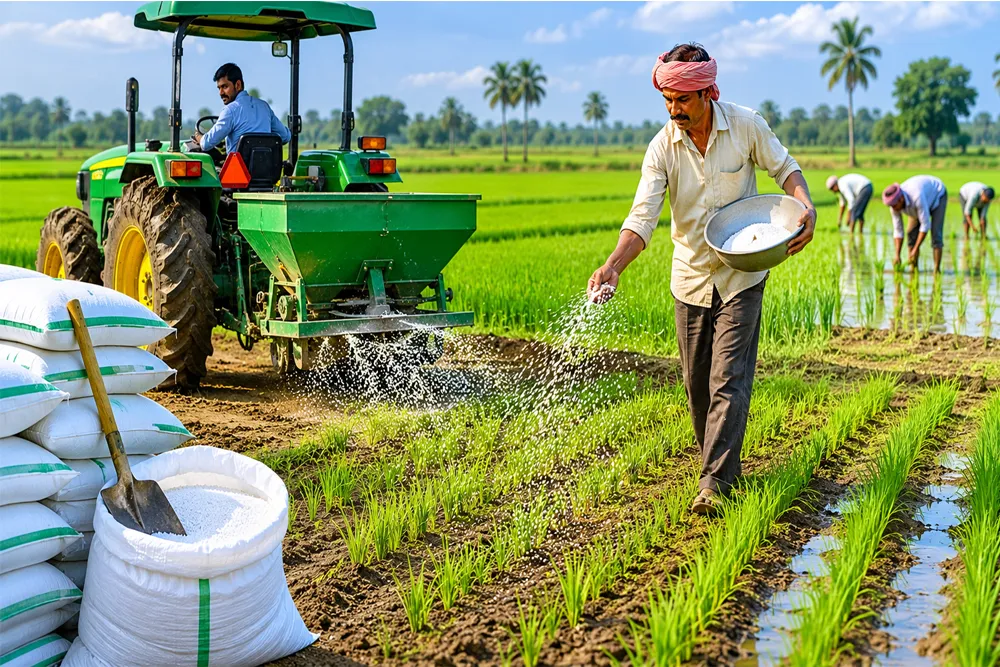
Notably, Agricultural authorities emphasised that the country’s fertiliser supply chain is strong enough to prevent any local shortages. Currently, India has a comfortable fertiliser stock of nearly 20 million tonnes already positioned in several states. To further insulate the agricultural sector from sudden market shocks and maintain stable domestic fertiliser prices, the government has secured a steady pipeline of additional nutrients. This has been attained through a strategic mix of boosted domestic manufacturing and well-timed fertiliser imports. Along with the ample reserves on hand, Indian farmers are well-protected against supply disruptions, making sure that they have sufficient access to necessary inputs even under challenging weather conditions.
Officials have also directed state governments to closely monitor fertiliser distribution and ensure timely availability in key agricultural regions. Regular reviews of stock levels, transportation logistics, and retail supplies will help maintain smooth operations throughout the kharif season, supporting farmers as they prepare for planting despite uncertain weather forecasts.