
Double Blow To India’s Mango Exports Amid Peak Export Season
Double Blow To India’s Mango Exports Amid Peak Export Season
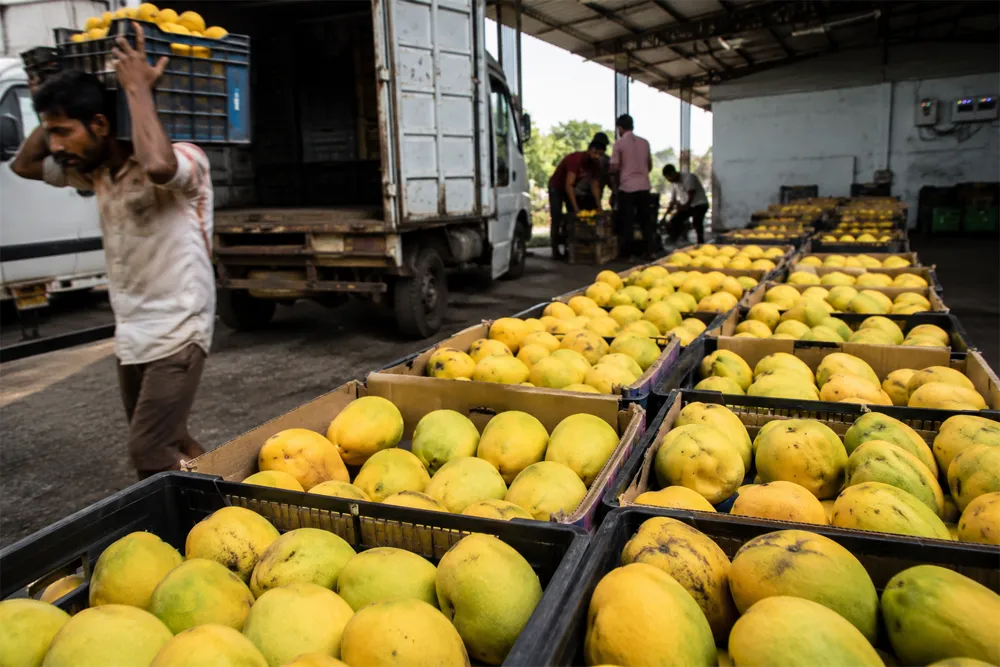
India’s mango exports are witnessing challenges during the peak export season. The combination of trade restrictions and geopolitical tensions disrupts major international markets. Gujarat Kesar Mango growers in Gir–Talala region are affected, raising concerns over export earnings and farmer incomes despite expectations of a strong harvest this year.
Notably, a major setback came after Japan suspended Indian Mango imports due to quarantine compliance concerns. Furthermore, the move has affected Japan mango exports, an important premium market known for its strict quality standards and high-value demand. Now, Exporters fear that these restrictions could affect India’s reputation in the international fruit trade and limit access to foreign buyers. At the same time, geopolitical tensions involving Iran have disrupted shipments to several West Asian destinations. It has created uncertainty in the regional mango markets. Delays in logistics and higher transportation costs have reduced demand from importers, which has affected export volumes during a critical sales period.
The twin challenges have placed pressure on the entire mango supply chain, from growers and traders to exporters and logistics providers. While mango production remains strong this season, weaker export demand could lead to oversupply in domestic markets, potentially affecting prices received by mango farmers.
According to Industry stakeholders, authorities need to address compliance issues quickly and boost market diversification efforts. Moreover, the idea to expand access to alternative destinations in Europe, Southeast Asia, and other regions could help decrease dependence on a few export markets. As uncertainty continues, the outlook for mango exports from India is associated with trade developments and market recovery. For now, exporters and growers are hoping for swift policy resolutions and improved trade conditions to support demand and protect farmer incomes during the ongoing mango season.