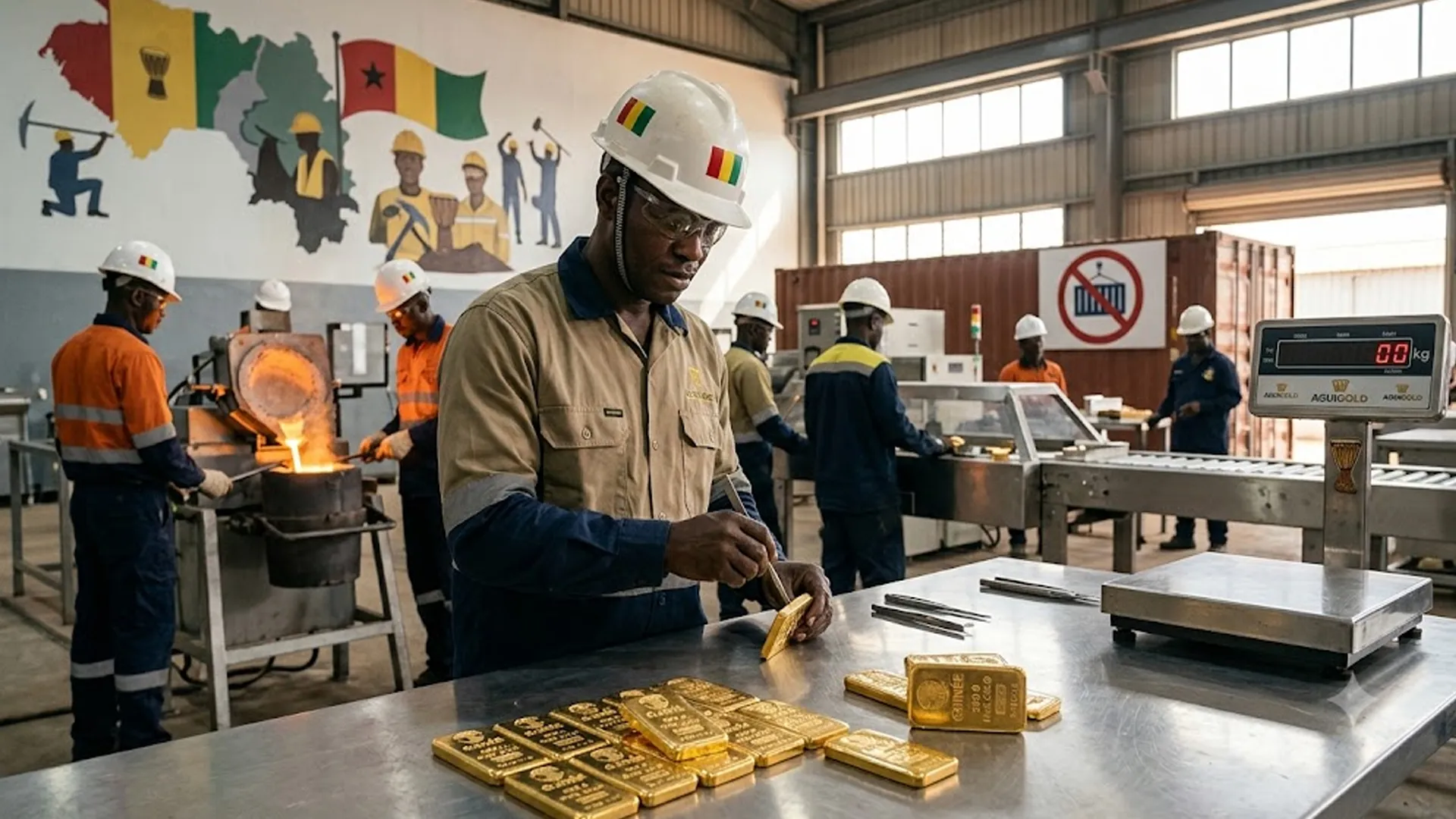
Recently, Guinea has announced an immediate ban on Gold Exports of unrefined gold. This marks a significant shift in the country’s mining and resource management strategy. The decision aims to encourage domestic refining, boost the gold industry, and generate employment opportunities within the country.
President Mamadi Doumbouya unveiled the policy after meeting with industrial and artisanal gold producers and traders. Under the new directive, all gold mined in Guinea must be processed locally before being exported. According to the government. Foreign countries have long benefited from refining and trading Guinea’s raw materials, whereas the nation received limited economic returns. As Africa’s sixth-largest gold producer, Guinea exported around 22 tonnes of gold during the first quarter of 2026. To support the transition, a new refinery in Conakry is nearing completion and is expected to process up to 250 tonnes annually, enough to handle current production levels. The move aligns Guinea with other African nations eyeing greater value addition in the mining sector. Countries including Tanzania and Uganda already prohibit exports of unprocessed minerals, whereas Ghana plans to phase out raw gold exports by 2030. In addition, Zimbabwe restricted lithium concentrate exports to promote domestic processing.
As per Industry experts, the ban could affect regional gold demand, investment patterns, and potentially impact gold prices if more countries adopt similar policies. However, the success of the initiative will depend on Guinea’s refining capacity, regulatory enforcement, and ability to attract long-term investment. The new Gold Exports policy indicates a broader trend across Africa to maximise revenue from natural resources and build stronger local industries.